


Clive Barker’s Hellraiser: Revival: What Critics Think
14 professional reviews · press coverage October 8–13, 2026
In Clive Barker’s Hellraiser: Revival, you play as Aidan, a man trying to bring back his partner Sunny after opening a mysterious box that summons the Cenobites. This first-person horror game mixes exploration, combat, puzzles, and chase sequences, with extremely graphic violence and constant shifts between the real world and the Labyrinth. We compared what we consider the most authoritative international reviews available after launch. Almost everyone agrees that the world of Hellraiser has been recreated with impressive care, but opinions change dramatically when it comes to the gameplay. For some critics, it's a surprisingly successful adaptation; for others, it's a great horror setting trapped inside an uneven survival horror game.
Consensus map
Where the press agrees and disagrees
Five themes that help explain the differences between reviews.
Barker’s universe impresses almost every outlet.
TakeawayThe game’s identity is its greatest strength.
Interesting powers, more conventional gunplay.
TakeawayThe box works better than ordinary weapons.
Mature themes, heavily debated writing.
TakeawayThe ideas work better than some of the dialogue.
Varied situations, uneven pacing.
TakeawayBoss fights and chases weigh down later sections.
Significant bugs reported, especially on PS5.
TakeawayThe technical polish falls short of the atmosphere.
Combat works best when you can use the Genesis Configuration
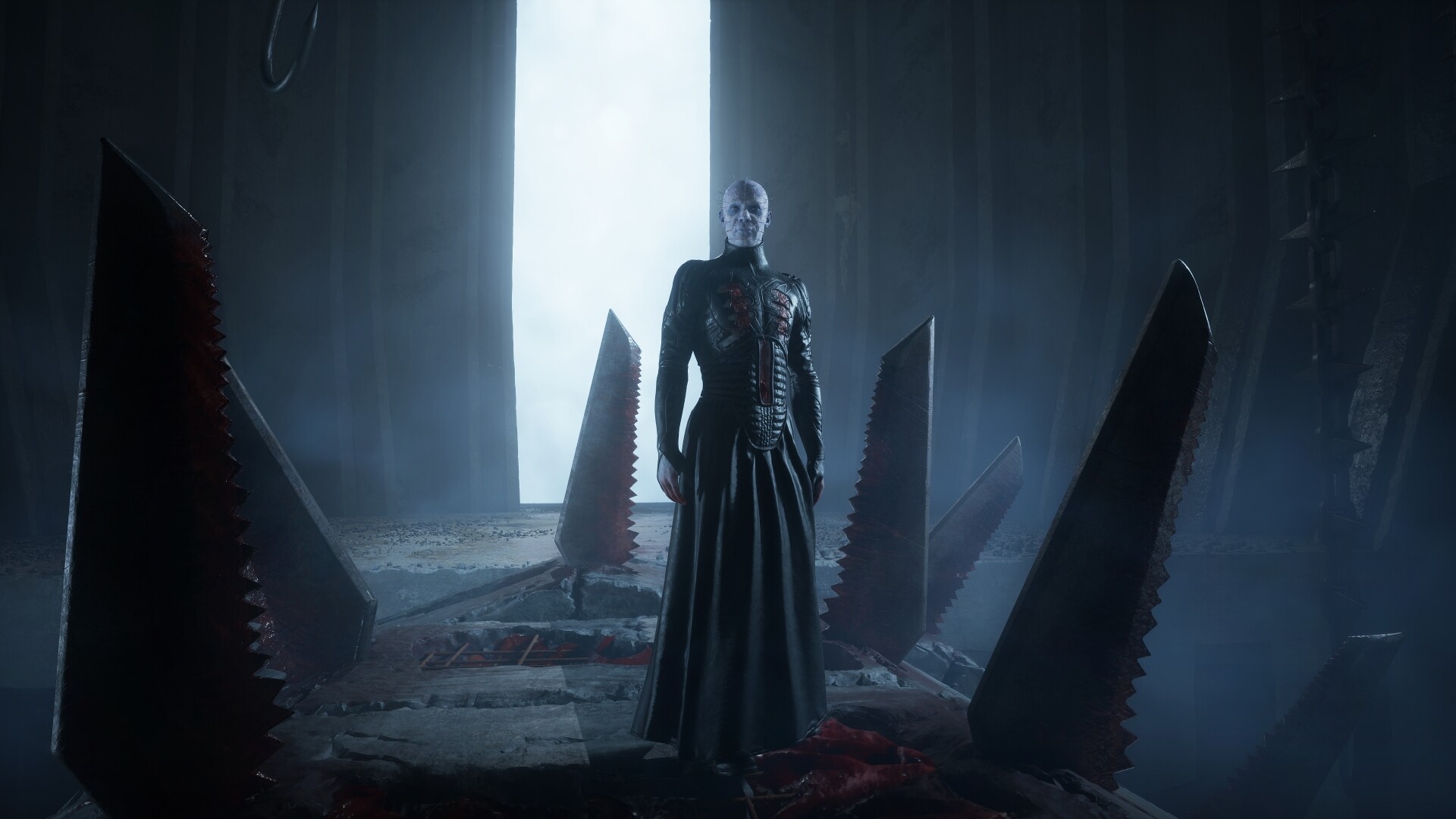
Combat combines pistols, shotguns, melee weapons that wear out, and supernatural abilities. You need to look for ammunition, manage your inventory, and decide whether to fight directly or save supplies for later. The similarities to Resident Evil are clear, but the Genesis Configuration, a puzzle box that lets Aidan turn his surroundings into weapons, gives the system an identity of its own.
You can grab blades and other sharp objects, launch them at enemies, and eventually manipulate fire or unleash chains that strike entire groups. These abilities consume a meter replenished by the suffering you inflict, so you can't rely on them constantly. IGN likes this restriction because it encourages you to alternate between conventional weapons and special powers. GameSpot is even more enthusiastic, describing encounters where setting traps, spreading gasoline, and using objects around the room produces particularly satisfying fights.
The trouble is that ordinary weapons don't consistently reach the same standard. Push Square, reviewing the PS5 version, describes repeatedly running low on ammunition and finding its melee weapons worn out, leaving it struggling against durable enemies with inadequate tools. IGN finds the shooting reasonably solid but criticises the limited range of enemies. Game Informer is harsher about repetition and certain enemy behaviours. TheSixthAxis, by contrast, finds the action brutal and enjoyable, even while admitting that some weapons aren't entirely convincing.
The combat therefore has a strong central idea, executed better than its more familiar parts. When you combine supernatural abilities with your surroundings, the fights gain character and variety. When you're simply emptying magazines into similar enemies, or lack the supplies to deal with the number attacking you, the weaknesses become much clearer. It's not consistently excellent combat, but the Genesis Configuration keeps it from feeling like an anonymous copy of other horror games.
Critical breakdown
Combat and powersGameSpot · TheSixthAxis · Vandal · Pizza Fria · PSX Brasil
IGN · SpazioGames · GamesRadar+ · Gamekult · MeriStation · 3DJuegos
The story explores Hellraiser’s themes, but its writing divides critics
Aidan wants to rescue Sunny from the Labyrinth and becomes entangled with the Scarlet Church, a cult seeking the Cenobites' favour. Along the way, he meets people who challenge his understanding of desire, addiction, pain, and love. You don't need to have watched the films to understand his goal, although fans of Barker's work will recognise many more references. Pinhead's return, once again voiced by Doug Bradley, provides one of the strongest links with the films.
GameSpot takes a particularly favourable view of the story. It argues that the violence and sexuality are not included simply to provoke a reaction, but help explore the protagonists' relationship and their dependencies. The review especially praises Zora, a merchant who forces Aidan to question his motives: loving someone and needing them aren't necessarily the same thing. GamesRadar+ also recognises the attention given to consent and abuse, which makes the adaptation more interesting than a collection of shocking images.
IGN acknowledges the game's loyalty to the first two films but is much less convinced by its storytelling. Too many details arrive through lengthy explanatory conversations, and the protagonist isn't engaging enough. GameSurf is even more critical, describing the writing as shallow and arguing that the constant pursuit of shock cannot sustain the story. Gamekult makes a different point: Revival understands the appearance of Hellraiser, but its emphasis on action moves it away from what made the films distinctive.
The disagreement isn't about whether the original themes are present; several reviewers agree that they are. It's about how effectively the game explores them. Revival deserves credit for addressing desire and control rather than hiding everything behind horror imagery. Yet its characters and dialogue don't always give those ideas the strength they need. The story can be compelling in its ambition and atmosphere even when its writing feels too eager to explain itself.
Critical breakdown
Story and charactersGameSpot · GamesRadar+ · TheSixthAxis · Pizza Fria · PSX Brasil
SpazioGames · Vandal · MeriStation · 3DJuegos · Push Square
IGN · GameSurf · Gamekult · Game Informer
The atmosphere is powerful, especially inside the Labyrinth
Hellraiser: Revival makes no attempt to soften the world Clive Barker created. It shows mutilated bodies, environments shaped by violence, and places where pleasure and suffering are constantly intertwined. This is strictly adult material, but the reviews don't judge its artistic merit simply by how much blood appears on screen. What matters more is the Cenobite design, the lighting, and the feeling of entering a place where ordinary rules no longer apply.
The Labyrinth is the clearest example. Stone corridors, impossible architecture, and walls that shift position create a distinctive setting, even when the route ahead is fairly straightforward. IGN greatly appreciates Pinhead's presence and the appearance of this otherworld. GameSpot particularly enjoys moments when the Labyrinth begins merging with reality, transforming places you've already visited. SpazioGames and TheSixthAxis likewise stress how the art direction gives the project its own strong identity.
Not every location is equally effective, however. Push Square describes a contrast between genuinely memorable environments and far more ordinary spaces. Other reviews observe that, outside the spectacular moments, some areas mainly serve a practical purpose. Doug Bradley's return as Pinhead reinforces the adaptation's authenticity, but that doesn't mean every supporting character receives the same attention.
Even so, the presentation is one of Revival's clearest successes. The harshest reviews still recognise that particular images and encounters capture the essence of Hellraiser. The main weakness is the gap between those carefully crafted sequences and sections that could belong to a much more ordinary horror game. But when Revival fully uses its setting, it offers something distinctive and difficult to mistake for anything else.
Critical breakdown
Atmosphere and art directionGameSpot · IGN · Game Informer · GamesRadar+ · TheSixthAxis · SpazioGames · GameSurf · Vandal · MeriStation · 3DJuegos · Pizza Fria · PSX Brasil · Push Square

Exploration and puzzles add variety, but the pacing is uneven
Between fights, you search for keys, read documents, solve combinations, and return to previously visited rooms after finding ways past obstacles. Limited inventory space forces you to decide what to carry and when to use storage boxes. The game often follows traditional survival horror structure, with relatively small areas linked by objects and locked passages. This isn't an open-ended adventure: the main route remains tightly controlled, and reviewers put the overall length at about nine or ten hours.
GameSpot believes this structure suits the story. The puzzles are rarely complicated, but they're placed in distinctive locations, such as a nightclub or a house explored one room at a time. SpazioGames appreciates the way earlier areas are revisited and finds the progression reasonably balanced. Vandal also regards the changing situations as an important reason the journey stays interesting.
IGN instead sees too many ideas borrowed from other games without being developed enough. Some puzzle solutions are predictable, while certain sequences resemble Resident Evil or P.T. a little too closely. Sections in the Labyrinth look striking but are often more linear than they initially seem. Even GameSpot, despite its positive overall assessment, acknowledges that the constant shifts between stealth, exploration, and gunfights make the opening hours awkwardly paced.
That variety is a genuine benefit: it prevents the game from becoming a long sequence of identical firefights. But not every activity is equally strong, and some feel as though they're there mainly to interrupt the action. The puzzles and exploration work as a link between major events, without often becoming the most interesting part of the experience.
Critical breakdown
Exploration and pacingGameSpot · SpazioGames · Vandal · TheSixthAxis · Pizza Fria
GamesRadar+ · MeriStation · 3DJuegos · PSX Brasil · Gamekult
IGN · GameSurf · Game Informer · Push Square
Boss fights and chases are among the most divisive elements
Revival alternates ordinary fights with encounters involving more dangerous creatures and escapes through the Labyrinth. Sometimes you need to hide; at other times you run down corridors packed with obstacles while a Cenobite pursues you. The first encounter can work wonderfully: the environment changes, you aren't sure where to go, and there's little time to react. The problem starts when the game repeats the situation without changing enough.
IGN is particularly critical of repeated chases and several bosses. According to its review, some fights mainly involve circling the enemy while firing, and one creature returns far too often. Push Square likewise finds certain bosses extremely frustrating, especially when you reach them with almost no supplies left. It's not simply a question of difficulty: in some encounters, working out which strategy is actually effective becomes a problem in itself.
GameSpot interprets the changing scenarios more favourably, seeing them as useful breaks between intense fights. It nonetheless admits that certain escape sequences are excessively linear and that the hardest difficulty is poorly balanced: fewer save points and more enemies can force you to repeat long stretches after a single mistake. TheSixthAxis also flags a few unpleasant sections involving instant death.
The conclusion is less positive here than it is for regular combat. Some encounters make impressive use of the Cenobites, but repetition drains the tension, while the simpler bosses fail to make the most of the puzzle box's abilities. Making mistakes more punishing doesn't necessarily make a challenge better. These weaknesses matter because they affect the very sequences where the game should be at its most intense.
Critical breakdown
Bosses and chasesGameSpot · GamesRadar+ · TheSixthAxis · Vandal · MeriStation · 3DJuegos
IGN · Push Square · Game Informer · GameSurf
Technical problems, particularly on PS5, cannot be ignored
The reviews don't all describe the same technical experience. Some focus on minor visual defects; others report errors that directly affect progress. This needs to be kept separate from the artistic assessment: an environment can look excellent while still containing bugs capable of ruining a fight or forcing you to reload an earlier save.
IGN describes two specific problems on PS5: a container that could no longer be reopened after returning from a save point, and a door that blocked access to the merchant. The second incident forced the reviewer through a long section with limited ammunition. Game Informer reports even more frequent issues, including stuck animations, abnormal behaviour, and a fight that failed to recognise when every enemy had been defeated, forcing a replay. GameSurf likewise describes a game that lacks technical polish.
Other outlets are less severe. SpazioGames notices technical imperfections but doesn't believe they compromise the whole adventure. Reviews conducted on different systems don't, however, justify assuming the same frequency of problems on every version. Nor would it be right to assume subsequent updates have already fixed the reported issues without specific confirmation.
Stability therefore lowers confidence in the game, especially given the more critical PS5 reports. Not everyone encountered problems to the same degree, but some documented incidents are too serious to dismiss as cosmetic glitches. Players hoping to make their way through the adventure without interruptions should bear that in mind.
Critical breakdown
Technical stability