
Fire Emblem: What Critics Think
28 professional and editorial sources · 18 original reviews from 2003–2004 · 10 later reassessments from 2014–2026
When Fire Emblem finally reached the West, reviewers mostly treated it as a revelation: a strategy game that was easy to understand, hard to master, and surprisingly good at making players care about little sprites on a grid. More than twenty years later, most of that praise is still there. What changed is the context. The long tutorial now looks both brilliant and slow, permanent death is judged in a world of rewind buttons and Casual Mode, and a story once praised almost without reservation gets more scrutiny. The biggest surprise is how little the tactical core has aged.
Consensus map
What changed after twenty years — and what did not
| Aspect | Consensus | Dissent / Weight |
|---|---|---|
| Tactical combat | Praised at launch and still praised today | Modern criticism focuses more on unit balance and hidden systems than on the basic combat |
| Lyn's tutorial | A remarkably clear introduction to a complex series | What felt elegant to newcomers in 2003 can feel overlong to experienced players now |
| Permadeath | Gives every move weight and makes characters matter | Save states, rewind and later Casual Modes changed how acceptable its punishment feels |
| Story and cast | Characters remain a major strength | Later writers are more willing to call the main plot conventional, inconsistent or poorly explained |
| Pixel art and animation | Battle animations were admired from the start | Simple map graphics drew criticism in 2003; later retrospectives often treat the whole visual style as a strength |
The two periods are kept separate rather than averaged together. The 2003–2004 group shows how the Western release was judged in its own time; the 2014–2026 group asks how the same design reads after two decades of Fire Emblem sequels and modern quality-of-life features.
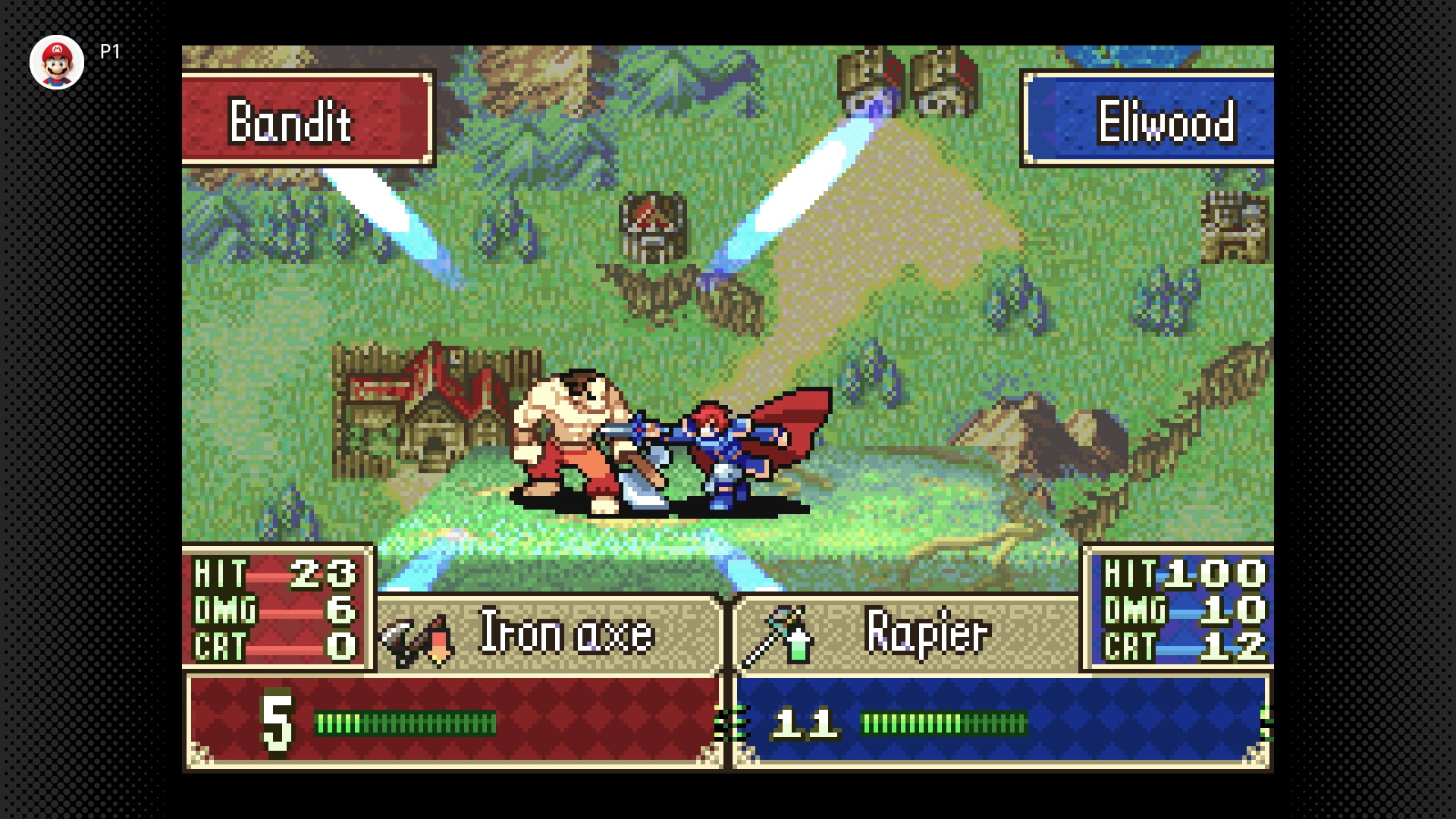
The tutorial did not change. The audience did.
North America received the game in November 2003 under the simple title Fire Emblem. Nintendo now also calls it Fire Emblem: The Blazing Blade, but the plain title made sense at the time: for most Western players, this seventh entry had to explain an entire series from zero. Intelligent Systems solved that problem by turning Lyn's opening story into a long tutorial. Movement, terrain, recruitment, the weapon triangle, shops, classes and other rules arrive one piece at a time while Lyn builds a small army and searches for her family.
At launch, that design was one of the clearest points of praise. GameSpy called Lyn's story an ingenious way to teach a complicated battle system without becoming dull. Eurogamer thought the teaching was almost seamless because learning the rules also meant meeting characters and understanding the world. Everyeye, Gamekult, Vandal and uVeJuegos reached the same basic point in different markets: the game was complex, but it worked hard to make that complexity readable. That mattered in 2003 because Fire Emblem arrived with no Western history to lean on.
There was already one important objection. RPGamer thought Nintendo had gone too far, describing the first ten missions as a mandatory tutorial that could take around five hours. That criticism sounded unusual in the original review set. Today it sounds much more familiar. Nintendo Life still calls the tutorial brilliantly designed, but notes that experienced strategy players can find the pace frustrating. Goomba Stomp says Lyn Mode is wonderfully thorough for newcomers and a chore for veterans. RPGFan reaches almost exactly the same conclusion: one of the series' best introductions is also something an experienced player may wish they could skip immediately.
That does not mean the tutorial aged badly. It means its job changed. In 2003, it was introducing Fire Emblem to a market that had never officially received the series. In 2025, NintendoBoy approached it after playing Awakening, Three Houses and Engage. The rules felt familiar, so some explanations were redundant, but the writer was still surprised by how accessible the game remained. Inverse makes a similar point from another angle: Fire Emblem constantly gives the player enough information to understand why a move is safe or dangerous.
Critical breakdown — original reviews, 2003–2004
Later reassessments — 2014–2026
Nintendo Life · Goomba Stomp · RPGFan · Frog-kun · NintendoBoy
Permanent death went from shocking rule to series identity
The other feature that every early review had to explain was permanent death. Fire Emblem does not give the player anonymous soldiers that can simply be rebuilt. Units have names, portraits, levels, conversations and roles in the story. If most of them fall in battle, they are gone from the usable army for the rest of the game. The practical result is simple: one bad move can cost a character who has been trained for hours.
Original reviews often describe that rule with a mix of admiration and irritation. The partial IGN review argues that it gives Fire Emblem a kind of emotion missing from games built around disposable troops. Nintendo Power connects permanent loss directly to the game's more personal cast. Jeuxvideo.com sees the difficulty as part of the pleasure because a careful victory feels earned. Eurogamer goes even further: having to replay a chapter after a death can become a chance to understand the map better rather than simple wasted time.
But the frustration was visible from the beginning. GameSpy lists inconvenient character deaths among its main complaints. Game Boy Advance – La Rivista Ufficiale praises the strategy while calling the save system punitive: the game records every move, so a mistake cannot be erased with a quick reload. GameSpot likes the attachment created by individual units, yet points out how annoying it can be to replay a long chapter after a late death. RPGFan's 2003 review states the split clearly: some players will welcome the extra challenge, others will find it frustrating. The short German CUBE review is harsher on difficulty in general, warning newcomers that later battles can become overwhelming.
Modern reassessments do not really reject permadeath. They show how the environment around it has changed. The 2014 Nintendo World Report Virtual Console review still praises the tension, but immediately notes that restore points can soften the punishment. Nintendo Life compares the game with later entries that offer easier difficulty options. Nintendo Blast's 2017 essay is especially useful because it asks what happens if the player stops resetting every time somebody dies: the author comes to see loss as part of the story created by the player, not simply a failure state.
By 2025 the difference is even more obvious. NintendoBoy admits using Nintendo Switch Online's rewind feature because accepting a character's death was too hard. The old design is still there, but the modern platform gives the player a way around its harshest consequence. Permadeath remains one of the ideas critics associate most strongly with Fire Emblem; what changed is how many escape routes now sit around it.
Critical breakdown — original reviews, 2003–2004
IGN · PALGN · Nintendo Power · Eurogamer · Jeuxvideo.com
Later reassessments — 2014–2026
The tactical core has aged better than almost anything else
The strongest agreement across both periods is the actual battle system. Fire Emblem uses rules that are easy to describe: swords beat axes, axes beat lances, lances beat swords; terrain changes accuracy and defence; archers punish flying units; weapons wear out; different classes move in different ways. None of that sounds especially complicated on its own. The depth comes from having to use all of it at the same time while protecting a limited group of people who carry their experience from one map to the next.
In 2003 and 2004, reviewers constantly compared it with Advance Wars and Final Fantasy Tactics Advance. GamePro thought Fire Emblem had fewer development options than Final Fantasy Tactics Advance, but praised how quickly the battles moved and how much depth came from apparently simple rules. GameSpy liked terrain, weather, rescue and the need to bring the right units and equipment. GameSpot called the strategy accessible while still challenging. Gamekult praised the balance and ergonomics; Vandal argued that the campaign was deeper than its modest appearance suggested; Jeuxvideo.com was impressed by how many tactical choices grew out of positioning, terrain, recruitment and resource management.
There were a few dissenting notes. CUBE thought it did not reach the tactical depth of Advance Wars. RPGFan's 2003 review called it a good strategy game rather than the best SRPG of that crowded year. GamePro also pointed out how linear the campaign is and how little control the player has over each character's development compared with more flexible RPGs. Those are real limits, but they sit inside an unusually broad consensus: critics across the United States, Europe and Australia thought the maps and rules worked.
Two decades later, that part of the verdict barely moves. Nintendo World Report still finds the combat easy to learn and surprisingly nuanced. Nintendo Life calls the SRPG design tightly tuned. Goomba Stomp spends much of its retrospective explaining how individual maps create several possible routes, side objectives and risks. Inverse still finds pleasure in the basic act of looking at a map and working through the safest sequence of moves. NintendoBoy, arriving from modern Fire Emblem, is surprised by how familiar and addictive the core loop remains even without hubs, social activities or long breaks between battles.
Modern criticism is sharper around the edges. RPGFan's 2023 review argues that high-movement classes such as paladins and flying units dominate too many maps, while slower classes can struggle to justify a deployment slot. Timed villages, recruitments and side objectives make that imbalance worse. The 2026 RPGFan Retro Encounter discussion points to other old restrictions: little room for grinding, shopping during battle, support conversations that are hard to unlock and units that can lose usefulness late in the game. These are more detailed criticisms than most launch reviews offered. They do not overturn the old judgment. They explain where a very strong tactical system shows its age.
Critical breakdown — original reviews, 2003–2004
GameSpy · IGN · PALGN · GBA – La Rivista Ufficiale · Nintendo Power · GameSpot · Eurogamer · Everyeye · Jeuxvideo.com · Gamekult · Vandal · uVeJuegos · neXGam · RPGamer
Later reassessments — 2014–2026
Nintendo World Report · Nintendo Life · Goomba Stomp · Nintendo Blast · Frog-kun · Inverse · NintendoBoy
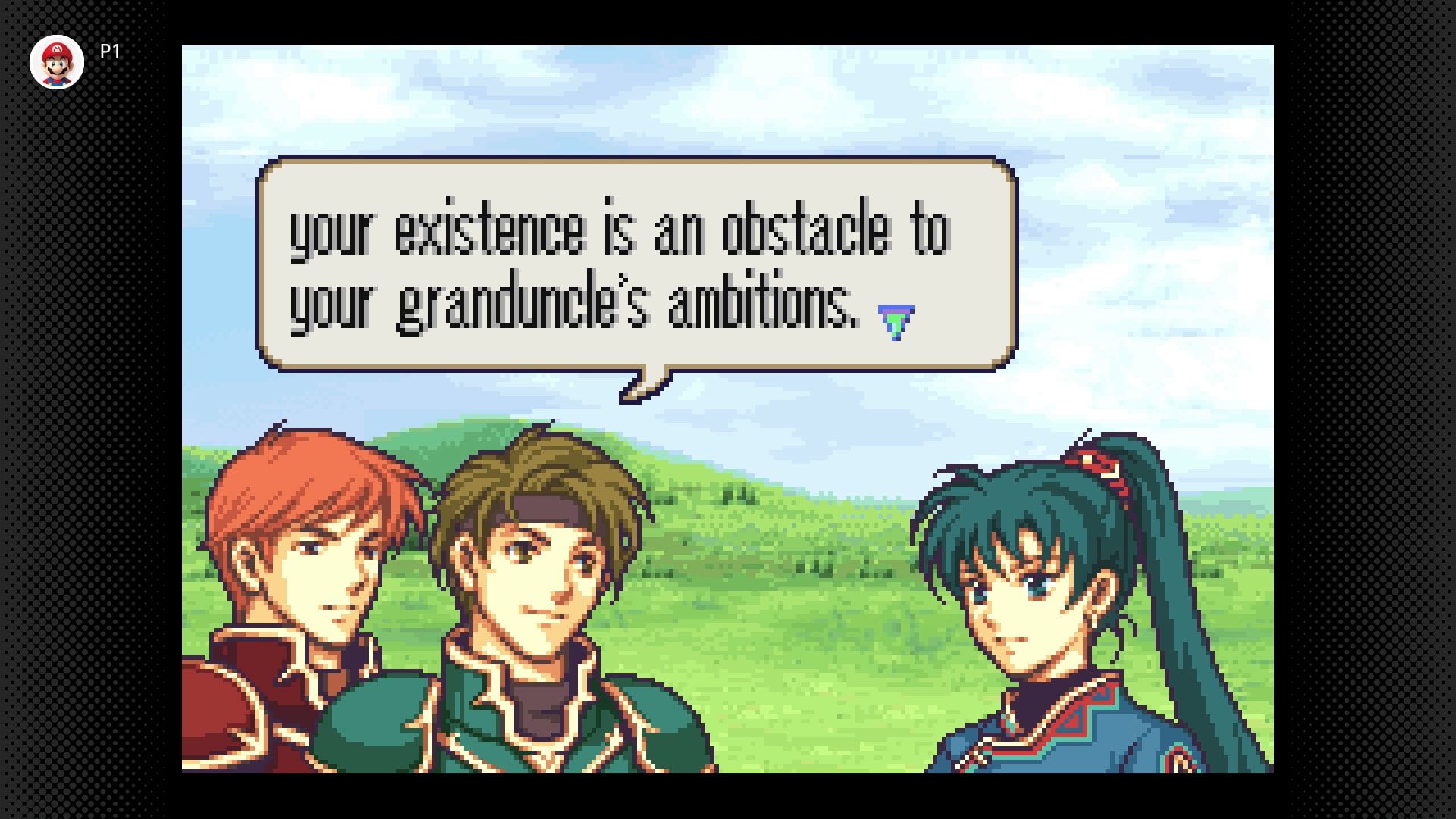
The cast still works better than the plot around it
The biggest softening over time concerns the story. At launch, Western reviews were remarkably enthusiastic. GameSpy praised the sharp writing and the way short scenes build characters without stopping the game for too long. GamePro called the story excellent. Nintendo Power singled out the dialogue. GameSpot admitted that the basic outline is a familiar journey into a fight against evil, but thought the twists, humour and touching moments made it rich and satisfying. Eurogamer liked how story scenes, battlefield conversations and the silent tactician made the player feel attached to the party.
European reviews were just as warm. Everyeye described the plot as detailed, deep and sometimes dramatic. Jeuxvideo.com praised the three connected stories and the individual motives of the cast. Gamekult called the scenario engaging, Vandal highlighted intrigue and strongly defined personalities, uVeJuegos called the story one of the game's main strengths, and neXGam praised its epic scale. The main early outlier is RPGamer: it finds the fantasy plot conventional and says the charming characters are doing most of the work.
That old outlier has become a much more common modern position. RPGFan's 2023 review still loves the characters, especially the way support conversations give side units private histories, but gives the story much less credit. It points to plot holes, contrivances and villains who do not always hold up under scrutiny. Retro Encounter reaches a similar mixed conclusion in 2026: some writers remain deeply attached to Eliwood, Hector, Lyn and the supporting cast, while another finds many story beats forgettable until the deeper lore is explained outside the immediate surface of the plot.
Other modern pieces remain strongly positive, but their praise is often more specific than the reviews from 2003. Goomba Stomp values Lyn's smaller family story and the character-driven structure more than the broad villain plot. Frog-kun describes The Blazing Blade as a quieter story about family and loss rather than simply another war epic. NintendoBoy enjoys the warmth of friendships and family relationships while also noting how conventional the later good-versus-evil structure can be. Nintendo Blast's twentieth-anniversary piece still sees the characters and support system as a major reason the game lasted.
So the story has not exactly been “downgraded.” The target of the praise moved. In 2003, reviewers often treated plot, dialogue and characters as one strong package. Later criticism separates them. The cast, support conversations and emotional moments continue to score very well. The main plot, villain logic and hidden lore receive much more scrutiny.
Critical breakdown — original reviews, 2003–2004
GameSpy · GamePro · IGN · Nintendo Power · GameSpot · Eurogamer · Everyeye · Jeuxvideo.com · Gamekult · Vandal · uVeJuegos · neXGam · RPGFan
Later reassessments — 2014–2026
Nintendo World Report · Nintendo Life · Goomba Stomp · Nintendo Blast · Frog-kun · Inverse · NintendoBoy
The pixels aged upward
The most obvious reversal concerns presentation. In the original reviews, almost everybody liked the battle animations, portraits and important pieces of artwork. The disagreement was about everything around them. GamePro called the battlefield presentation plain and the fantasy look generic. Gamekult said the game was visually sober and found the music ordinary. Jeuxvideo.com compared its tiny map sprites unfavourably with the richer detail of Final Fantasy Tactics Advance. neXGam said the maps were modest. RPGFan thought the field characters looked squashed even while praising the still art and combat animation.
Other critics were already more enthusiastic. PALGN called the battle sprites some of the most beautiful 2D animation on the system and praised Yuka Tsujiyoko's music. GameSpot liked the portraits, critical-hit animations and small sound details. Vandal argued that the simple map view was more than compensated for by elegant artwork, effects and battle scenes. Nintendo Power found the graphics sparse but beautiful. Even Eurogamer, while calling the graphics basic, thought the places where the GBA could show off were handled with real charm.
Later retrospectives are noticeably warmer. Nintendo Life says the presentation holds up beautifully. Goomba Stomp treats the 32-bit look as part of the game's identity rather than a technical compromise. RPGFan's 2023 review gives the graphics very high marks and calls the pixel portraits and exaggerated battle animations beautiful. NintendoBoy goes further: coming from modern 3D Fire Emblem games, the writer says the GBA sprites are so effective that the extra detail of newer games was not missed.
This is a useful reminder of how reviews age. In 2003, “simple graphics” meant comparing Fire Emblem with other new GBA games and asking how hard it pushed the hardware. Twenty years later, nobody is expecting a Game Boy Advance game to compete on raw detail. Clarity, animation, colour and style matter more. The same pixels did not improve. The standard used to judge them changed, and Fire Emblem benefited from that change more than almost any other part of the package.
Critical breakdown — original reviews, 2003–2004
Later reassessments — 2014–2026
Nintendo Life · Goomba Stomp · RPGFan · Nintendo Blast · NintendoBoy