


Phantom Blade Zero: What Critics Think
18 professional reviews · press coverage through October 26, 2026
Soul can switch between two weapons in the middle of a duel, break his opponent's guard, and finish the fight with choreography straight out of a kung fu movie. Then he can take a side path, meet someone who needs his help, and find that same character fighting alongside him against a boss many hours later. That connection between combat and exploration is where Phantom Blade Zero shows its ambition. International reviews describe a substantial, largely successful action adventure, although they disagree on the precision of its combat, how challenging it really is, and how well it tells its story.
Consensus map
Where Critics Agree and Disagree
The issues that matter most across professional reviews.
Weapons, parries, and switching styles impress almost everyone.
Some question precision and the reliance on parrying.
Takeaway An excellent system, though not without rough edges.
Memorable encounters and several difficulty options.
Uneven challenge, with fights sometimes too easy or too long.
Takeaway Spectacle and difficulty do not always go hand in hand.
Hidden paths and quests offer meaningful rewards.
The opening is guided; some cleared areas feel empty.
Takeaway Leaving the main path is genuinely worthwhile.
The world and supporting cast have personality.
The main plot demands patience and a lot of reading.
Takeaway The world works better than the way the plot is delivered.
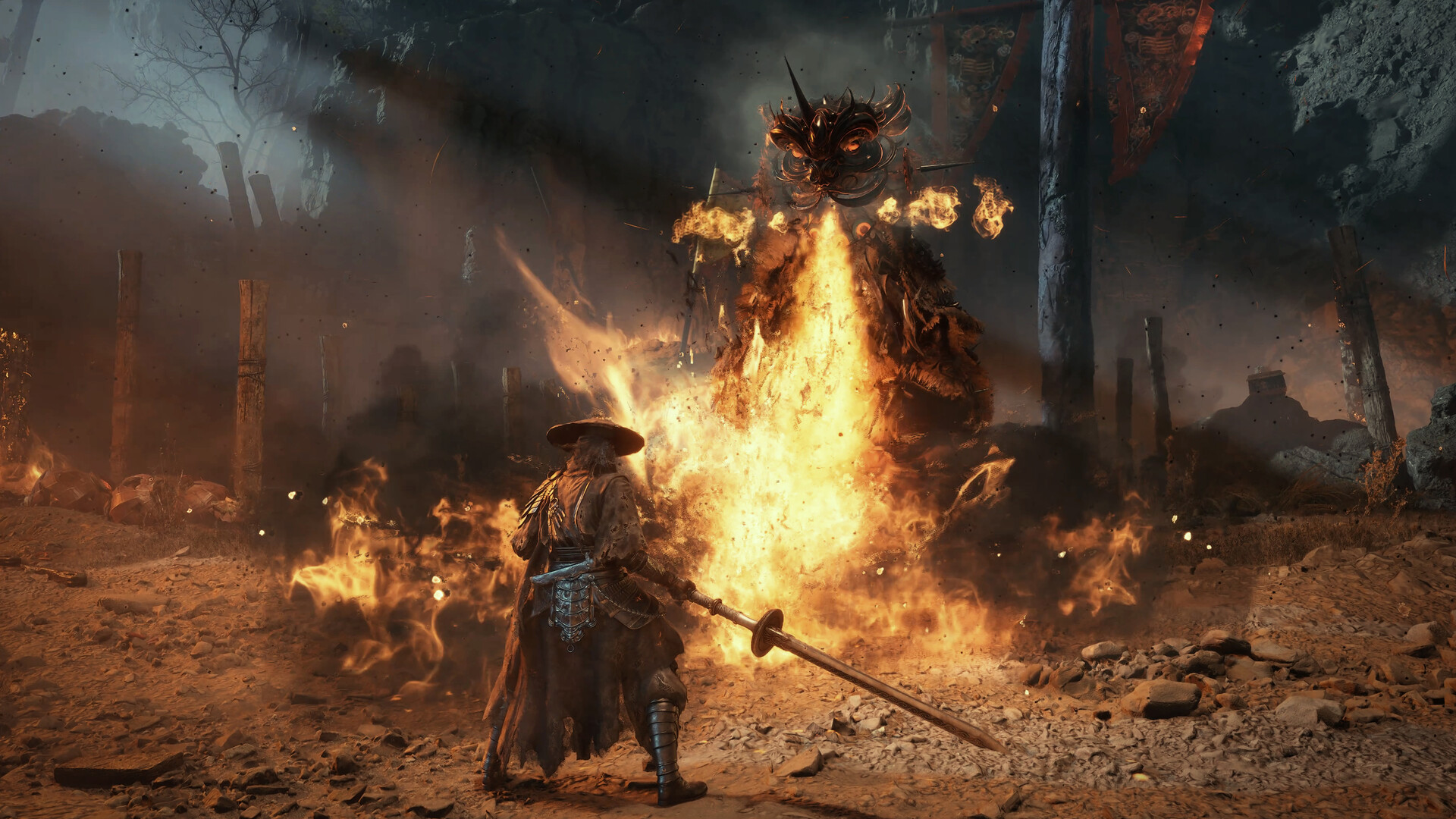
Combat Built Around Switching Weapons
Combat revolves around Sha-Chi, a resource spent on defense and certain heavy attacks. Each main weapon has its own gauge. Switch to your second weapon at the right moment and you gain room to attack or parry without interrupting the action. Alongside regular attacks, there are parries, dodges, and Phantom Edges, special weapons powered by a separate resource. The result encourages you to combine tools and techniques rather than simply learn when to hit the parry button.
Skill Up focuses on a specific pleasure: switching between very different tools even when winning doesn't require it. In his review, he describes a sword that leaves a substance on the ground, draining enemies' defenses. Once upgraded, that same move unlocks entirely new offensive sequences. It is a concrete example of how upgrades change what a weapon can do. GamesRadar+ and Vandal also praise the freedom to combine attacks and the quality of the animations.
Not everyone is convinced by the execution. Gamesurf reports camera, collision, and precision problems that can make a fight harder to control. 3DJuegos argues that particularly long, flashy animations sometimes make you feel less in command of your character. Neither criticism is about whether the game has enough combos. They concern the gap between what you intend to do and what happens on screen.
Overall, combat is the game's strongest achievement. It offers meaningful choices, weapons with genuinely different functions, and resource management that rewards switching styles. But great choreography should not be mistaken for flawless responsiveness. In crowded situations and against particular opponents, the problems raised by more critical reviewers can get in the way of enjoying those fights.
Critical breakdown
Combat Built Around Switching WeaponsSkill Up · VGC · GamesRadar+ · Everyeye · PC Games · GamePro · Vandal · ActuGaming · CD-Action · GamerSky · Ali213 · Game*Spark · Inven
Bosses, Difficulty, and a Different Kind of Challenge
Reviews describe more than fifty bosses, many with distinct fighting styles, weapons, arenas, and changes during the encounter. Blue attack cues call for a parry, while red ones call for a dodge. Learning to read them can turn a seemingly impossible flurry of blows into something manageable. The staging earns widespread praise, but opinions about the actual difficulty are surprisingly far apart.
Skill Up played on Normal and says he beat most bosses on his first attempt. He doesn't see that as a flaw in itself. For him, the point is to make players feel capable of pulling off spectacular fights, not to keep them stuck at one skill check for hours. His comparison with 2018's God of War helps explain that approach. CD-Action, however, finds the late-game difficulty spike too abrupt, with some enemies becoming extremely resilient and dealing enormous damage.
Another design choice changes what defeat means. Dying doesn't cost you resources, defeated regular enemies generally stay dead, and multi-phase bosses can preserve progress between attempts. Game*Spark feels that restarting from the second phase reduces the satisfaction of mastering a whole encounter. PSX Brasil prefers Hard mode because it gives individual decisions more weight even in ordinary fights. Gamekult, meanwhile, criticizes certain bosses for having excessively large health pools.
Simply calling Phantom Blade Zero easy or hard misses the point. The difficulty changes with how much you explore, which weapons you find, and the setting you choose. The real weakness is how inconsistent the challenge can feel. Some sections let you dominate, while others stretch encounters out or push you into a much more defensive style. The bosses remain remarkably varied and often memorable, and their value is about more than how many tries they take.
Critical breakdown
Bosses, Difficulty, and a Different Kind of ChallengeSkill Up · GamesRadar+ · Everyeye · Vandal · ActuGaming · GamerSky · Inven · PPE
GamePro · PC Games · CD-Action · Game*Spark · PSX Brasil · Gamekult · 3DJuegos
Exploration Really Does Make You Stronger
Phantom Blade Zero isn't an open-world game, nor does it follow the usual soulslike structure. A main route moves the story forward, but side areas contain hidden paths, characters, materials, optional bosses, and even entire zones you can miss. Certain obstacles can only be cleared once you've obtained a particular weapon or ability. That encourages backtracking, returning to previously visited locations to open new routes.
Skill Up describes a substantial increase in freedom after a tightly guided opening. Later areas become more expansive, including a lake you explore by speedboat. In his experience, many of the most interesting discoveries are optional, including encounters that give supporting characters' quests consequences further down the line. Ali213 and GamerSky also place particular value on the stories found away from the mandatory path.
The rewards explain why exploring matters so much. Optional bosses give you new weapons, hidden materials unlock further upgrades, and collectibles can increase health and other resources. Revisiting an area is therefore about more than clearing a map. It meaningfully expands what you can do in your next fight. VGC nevertheless points to heavily guided routes and invisible walls, while PC Games wishes the locations felt more alive and varied.
The fact that enemies don't respawn cuts both ways. Returning to look for a hidden path is faster, but an area you've already cleared may feel abandoned, as PSX Brasil notes. Despite these limitations, exploration succeeds because it serves a real purpose. Secrets lead to quests, encounters, and new tools. Curiosity is rewarded often enough to become a central part of the experience rather than something you do between boss fights.
Critical breakdown
Exploration Really Does Make You StrongerSkill Up · GamesRadar+ · Vandal · ActuGaming · CD-Action · GamerSky · Ali213 · Game*Spark · PPE · Inven
VGC · PC Games · 3DJuegos · PSX Brasil

A Messy Story in a World Full of Ideas
Soul is a warrior accused of killing his master. Mortally wounded and saved through a mysterious intervention, he has sixty-six days to uncover the truth. His world blends martial arts, machinery, horror, and wuxia traditions. One of its central ideas is the ability to transfer people's essence into artificial bodies. For some characters, that is a way to wield power. For others, it is a last attempt to save someone who is dying.
Skill Up especially appreciates how this idea shapes the locations themselves. Workshops, laboratories, and settlements tell you what happened to the people who passed through them. Side quests contribute too. Someone you helped much earlier can return during a boss battle, triggering another phase or fighting alongside Soul. According to PPE and PSX Brasil, this work makes the world and its storytelling compelling. Skill Up finds that the narrative grows stronger in the final hours, especially through its supporting cast.
The main plot, however, doesn't always land with the same force. Flashbacks, cutscenes, documents, and memory flowers scatter information across several formats, not all equally enjoyable. GamesRadar+ finds some memory-flower sequences too long and insufficiently interactive. Everyeye and Gamekult question the pacing and clarity of the storytelling. Providing more information doesn't automatically make events easier to follow.
Phantom Blade Zero's world ultimately seems more successful than the way its main story is told. Exploring brings you into contact with people and situations that give the events weight, but anyone following only the main cutscenes may struggle to connect everything. The story is far from disposable, and some reviewers even consider it a major strength. Its structure simply demands attention and patience. It works best when the places you visit and the consequences of your quests do the storytelling.
Critical breakdown
A Messy Story in a World Full of IdeasGamesRadar+ · Everyeye · Gamekult · ActuGaming · 3DJuegos · Game*Spark · VGC
Art Direction and Music Sell the Spectacle
"Kungfupunk" might sound like a marketing label, but in the reviews it points to specific visual and musical choices. Temples and villages exist alongside machinery, artificial limbs, and almost surreal spaces. Fights borrow the rhythm of Hong Kong action cinema, while enemies move through animations carefully built around acrobatic techniques and lightning-fast strikes. Donnie Yen's involvement as a creative consultant is frequently mentioned in discussions of the choreography.
The soundtrack refuses to stick to a single style. Traditional Chinese instruments mix with electronic music, rock, metal, and hip-hop. Major encounters use that range deliberately to support the pace of a fight. Skill Up calls the music one of the game's biggest surprises, while Inven emphasizes how sound, music, and animation combine to make combat feel like a martial-arts movie.
Not every part of the presentation reaches the same standard. Animations outside combat can appear stiff, as CD-Action observes, and several reviewers distinguish striking art direction from less sophisticated textures and environmental detail. Phantom Blade Zero puts the emphasis on the composition of its scenes and the feeling of movement, rather than trying to set the absolute technical benchmark for graphics.
Its presentation is therefore a genuine strength, not just a glossy surface. When music, animation, and art direction come together, the fights have a strong identity of their own. The rougher details in static scenes are still visible, but they don't erase the richness of the locations or the enormous amount of work that makes one weapon feel different from the next.
Critical breakdown
Art Direction and Music Sell the SpectacleSkill Up · Vandal · GamePro · GamerSky · Inven · Ali213 · PPE · ActuGaming · Game*Spark
CD-Action · Everyeye · PC Games · GamesRadar+ · 3DJuegos
Performance and Bugs: Very Different Experiences
Technical impressions vary considerably depending on the version and hardware tested. Skill Up reports roughly forty hours on a high-end PC without a single crash, stutter, or progression-blocking issue. He played at 4K with high settings and DLSS and describes the resulting performance as stable. His video includes an Nvidia sponsorship. That doesn't invalidate his observations about the game, but promotional claims about the hardware shouldn't be confused with independent comparative testing.
The picture changes when you read other reviews. ActuGaming describes repeated crashes and trouble getting through certain sequences on PC. 3DJuegos also reports less convincing PC performance. On PS5, by contrast, GamePro describes a very smooth experience, and PC Games considers the console's Performance mode satisfactory.
The most serious case is documented by Gamekult. In the version it reviewed, a side quest required for the true ending would not complete even after the necessary boss had been defeated. The outlet says an update meant to fix the problem did not resolve it in its playthrough. Vandal also reports a similar progression block encountered by its guides team. This matters more than an occasional frame-rate dip because it can stop players from seeing important content.
It would be wrong to call Phantom Blade Zero technically broken on the basis of such different experiences. At the same time, Skill Up's trouble-free run doesn't erase the crashes and progression blocks reported elsewhere. Until the launch fixes have been verified, polish is the main reason to recommend caution to anyone buying immediately, particularly on PC. Reports from PlayStation 5 are generally more reassuring, although that cannot rule out individual problems.
Critical breakdown
Performance and Bugs: Very Different ExperiencesEveryeye · GamesRadar+ · Vandal · CD-Action · PSX Brasil · GamerSky · Game*Spark · Ali213
Gamesurf · Gamekult · ActuGaming · 3DJuegos