


Silent Hill: Townfall: What Critics Think
16 professional reviews · press coverage through 21 September 2026
The international press is unusually consistent about what Silent Hill: Townfall does well. St. Amelia feels like a real place before it feels like a nightmare, the first-person view makes small rooms and narrow streets uncomfortable, and the game's old technology gives its puzzles a personality of their own. The big argument is stealth. Some critics think hiding, listening and tracking enemies creates exactly the right kind of fear. Others think the same sections become slow, rigid or openly frustrating.
Consensus map
What the press agrees on, and where it splits
| Aspect | Consensus | Dissent / Weight |
|---|---|---|
| St. Amelia and atmosphere | One of the clearest strengths | Very little disagreement; even harsher reviews praise the setting |
| Puzzles and CRTV | Fresh, tactile and strongly tied to the world | The CRTV can reveal too much, and a few later puzzles push into frustration |
| Stealth | Central to Townfall's identity | The main split: tension for some, waiting and repetition for others |
| Story and characters | Themes and mystery are widely respected | Critics differ on Simon, emotional impact and how predictable the reveals feel |
| Pacing and variety | Less consistent than the atmosphere | Small bestiary, uneven final stretches and navigation issues recur across markets |
This is a qualitative synthesis of the selected professional reviews, not an average of their scores. A review is only included in a theme when it clearly discusses that part of the game.
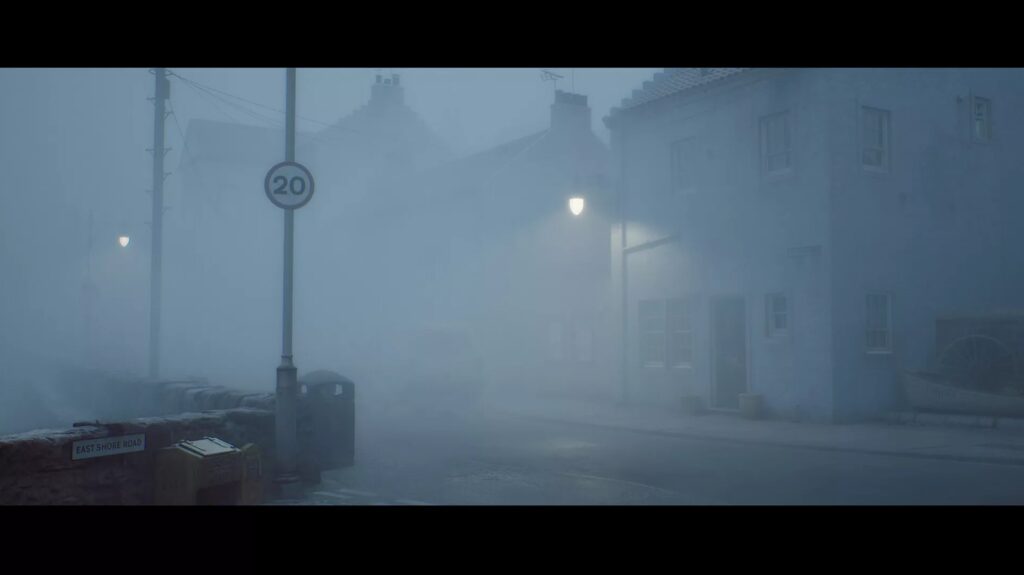
St. Amelia feels like Silent Hill without simply copying Silent Hill
The easiest thing to agree on is the place itself. Townfall moves the series to a Scottish island in 1996, and critics repeatedly praise how quickly St. Amelia feels like somewhere people actually lived. The streets are not just covered in fog. They have shops, protest signs, cramped homes, public phones, hospital rooms and office spaces that tell you what happened before the story explains it. PC Gamer describes the town as a strong mix of familiar Silent Hill unease and a setting with its own identity. Gamekult goes further and argues that the realism of the interactions is exactly what makes the nightmare work: the game first convinces you that this Scotland is real, then starts pulling it apart.
That idea appears across languages. GameMeca focuses on narrow streets, heavy fog and the feeling of being trapped by the first-person view. SpazioGames praises the lighting, colours and environmental detail, especially the way clean medical spaces sit next to damp, decaying ones. GamerSky, despite being less convinced by parts of the story and the late game, still treats the environmental horror as one of Townfall's strongest qualities. Even VGC, the harshest review in this group, calls St. Amelia one of the most detailed and haunting settings in the series.
The move to first person is a big part of this. IGN argues that leaning around a corner and meeting a creature at eye level makes the town more threatening, while the optional letterbox presentation makes already tight spaces feel even tighter. JPGames reaches a similar conclusion: the change of camera may sound odd for Silent Hill on paper, but in practice it increases the sense of being physically stuck inside the place. GameSpot also sees the perspective as a good fit because it lets Screen Burn fill desks, windows and rooms with readable details that make the town's history feel close.
Critics also rarely describe St. Amelia as a Scottish skin placed over the old American town. Its labour history, industrial spaces, medical system and 1990s technology matter to the story. DUNGEN argues that Townfall works best when Screen Burn uses Silent Hill to tell a local story instead of copying old games. That may be the safest conclusion in the sample: almost everyone thinks Townfall has found a place worth being afraid of.
The CRTV is the idea almost everyone remembers
Townfall's most recognisable object is a portable television. Simon can tune the CRTV to different frequencies, use it to sense creatures and read their position, and receive strange images that point toward places or puzzle solutions. On paper, it sounds like a modern version of the radio static from old Silent Hill games. In practice, critics keep coming back to it because it does several jobs at once. It is a navigation tool, a stealth tool, a clue machine and part of the story's 1990s texture.
PC Gamer is especially enthusiastic about the way it turns exploration into a puzzle. IGN likes the pressure created when several monsters occupy different frequencies and the player has to keep switching between them. JPGames calls it the game's biggest new idea because it changes both how puzzles are read and how danger is approached. PC Games also places the puzzles near the centre of Townfall's identity, seeing them as part of the series' old strengths rather than a side activity between fights.
The praise is not only about the CRTV. Floppy disks, printers, telephones, pagers, medical machines and old computers all become things the player has to understand. DUNGEN likes the best puzzles because they fit the room and the character. PPE.pl finds the early town puzzles rather obvious, but thinks the later medical areas are much stronger. Everyeye also praises puzzles that reveal something about the people involved while you solve them.
There is one repeated warning. The CRTV is so useful that it can take fear away as easily as it creates it. IGN says that seeing danger through walls makes the opening hours less frightening. GameMeca makes this the centre of its review and calls the device a double-edged sword: it improves control and immersion, but once the player understands enemy patterns, uncertainty falls. SpazioGames and GamerSky also become less positive about the puzzle flow later in the game. So the broad verdict is not that every puzzle lands. It is that Townfall has found a strong language for puzzles: old machines that you can touch, read and slowly understand.
Stealth is where Townfall splits the room
The central gameplay rule is simple: Simon is not built to clear rooms. Melee weapons break, ammunition is scarce, gunfire can bring more trouble, and many encounters are easier to survive by watching, waiting and moving around enemies. Bottles, bricks, radios, cupboards and the CRTV give the player ways to create a path instead of winning a fight. This is where the review sample stops sounding united.
On the positive side, IGN sees this slow rhythm as one of the best ways Townfall separates itself from the much more aggressive Silent Hill f. Tracking several creatures, deciding when to move and saving a gun for an emergency keep the pressure high. GameSpot reaches much the same place: most fights feel dangerous enough that avoiding them becomes a real choice, not a fake option. GAME Watch is also strongly positive and treats sneaking past patrols as a new kind of fear for the series. Famitsu, PC Games and JPGames broadly support the same reading: weakness is useful because it forces the player to think before acting.
The problem is that stealth depends heavily on the room, the enemy and the checkpoint. VGC is the clearest outlier. It likes the story, setting, performances and puzzles, then says encounters with The Weight drag the game into outright frustration. DUNGEN has a similar complaint in softer terms: normal patrols can become mechanical, and the dynamic music sometimes tells you so clearly what state an enemy is in that the horror starts to feel like a visibility puzzle. GamerSky also criticises sections built around an unkillable enemy, especially late in the game, where repeating the same avoidance pattern creates irritation instead of fear.
Several reviews sit between those extremes. PC Gamer likes the system but notes that a player who understands the CRTV can make some encounters much easier than expected. Gamekult sees the stealth as more conventional than the game's strongest ideas. Everyeye is useful because its opinion changes as the game goes on: early stealth can feel unclear, but later stalker sections use the level design and tracking tools far better. SpazioGames is more critical of enemy behaviour and resource balance. GameMeca again points to the CRTV problem: knowing too much can flatten the fear.
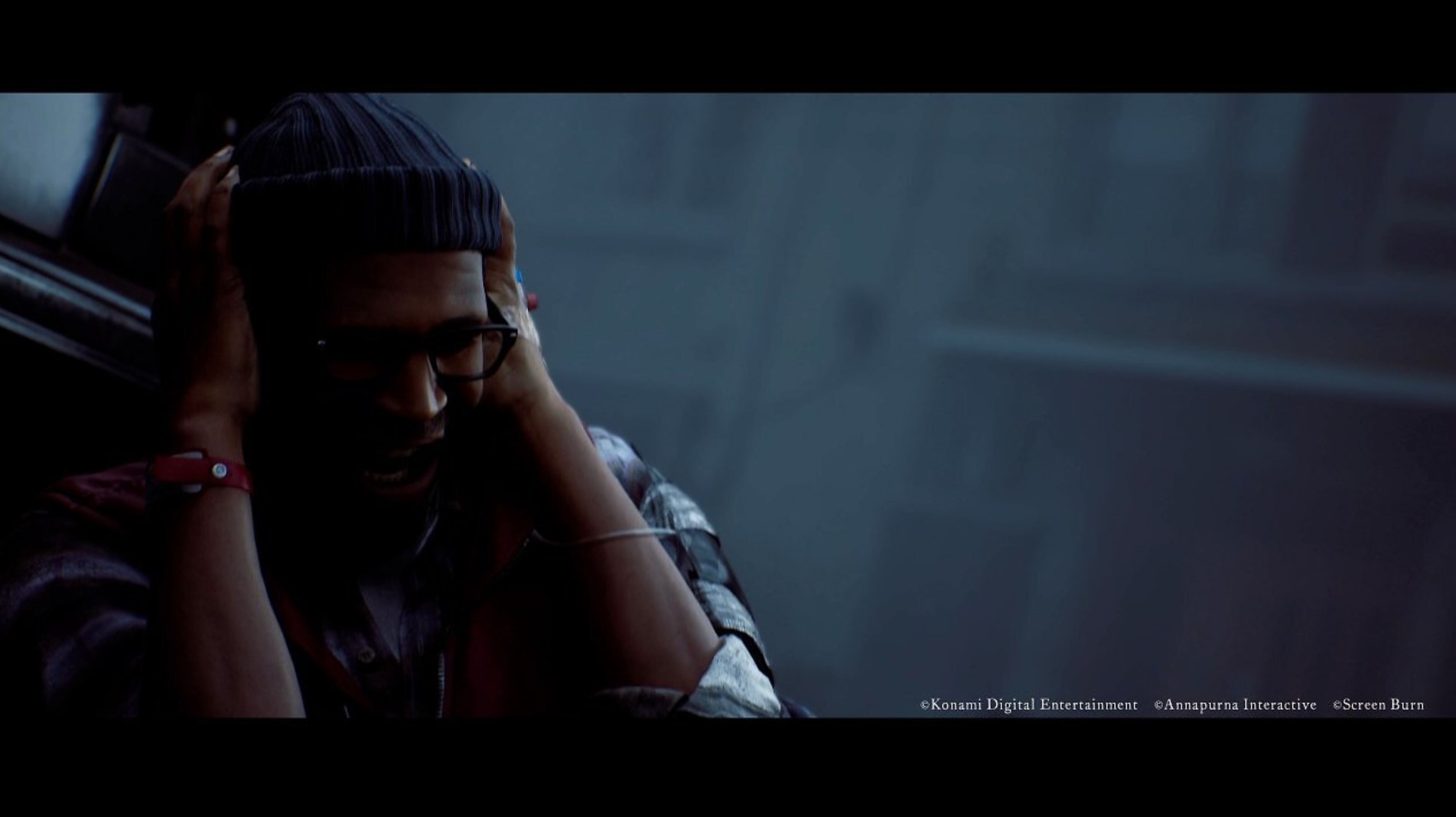
The story works best when it looks beyond one man's guilt
Townfall starts with a very familiar Silent Hill shape: a confused man arrives in a dead town carrying a past he does not fully understand. Simon Ordell washes ashore with a hospital bracelet and an IV line, then follows fragments of information through St. Amelia. The obvious question is what he did, what happened here and why the place seems to know him. Critics generally think the mystery is strong, but the most interesting part of the response is that many of them care just as much about the town as they do about Simon.
The game deals with trauma and guilt, but it also moves into corporate negligence, environmental damage, pressure on medical workers and a community left to absorb the cost of decisions made above them. The IGN review supplied for this analysis calls that mix a fresh twist for the series and is especially positive about how the mystery slowly reveals Simon's place in the disaster. It also likes the quieter way Simon is written, even if he first appears emotionally flat. GameSpot similarly values the way Townfall asks what Silent Hill can mean outside the original town and sees the Scottish setting as more than a backdrop.
The use of multiple playable characters also helps. Famitsu highlights how different viewpoints make the town's history easier to understand without turning it into one long explanation. PPE.pl finds the second half much stronger once the story starts joining its pieces together, although it is disappointed that returning to some locations with a different character does not always change the space enough. DUNGEN is especially positive about the medical and corporate material because the trauma is built into places and tasks: work, guilt and institutional failure become things the player has to move through.
The disagreement is mostly about emotional force. PC Gamer likes Simon more as the story develops but finds Zoe and Richard easier to connect with earlier. Gamekult respects the structure but thinks the writing can hide information too aggressively. ActuGaming sees the story as solid but predictable for players who already know Silent Hill's habits. Everyeye praises the social themes but reaches a similar point about some of Simon's revelations. GamerSky is the clearest negative voice: it thinks the industrial disaster is interesting to investigate, yet the characters and their relationships do not leave the same emotional mark as the series' best stories.
That split shows what Townfall is trying to change. Guilt and memory still matter, but the source of suffering is not only one person's secret. The more positive reviews see that wider focus as proof that Silent Hill can move to new countries without losing itself. The more cautious ones think the idea is stronger than some of the character writing.
Critical breakdown
PC Gamer · VGC · IGN · GameSpot · PC Games · JPGames · SpazioGames · Famitsu · GAME Watch · DUNGEN
Gamekult · ActuGaming · Everyeye · PPE.pl
The rough edges stand out because the rest is so controlled
Townfall's weaker points are not concentrated in one system. They appear as small limits that become more visible over a long playthrough: a narrow enemy pool, some awkward navigation, sections that reuse a threat for too long, uneven checkpoints, backtracking that does not always change enough and technical problems that vary by platform or mode. None of those complaints erase the broad praise for the setting and puzzles, but they explain why several reviews stop short of treating the game as completely consistent.
Enemy variety is the most repeated issue. VGC says a small group of creature types comes back too often. SpazioGames likes the body horror but finds many monsters less memorable than the series' best. GameSpot also wants more variety even though it likes the danger created by individual encounters. ActuGaming makes a similar point about an overly uniform bestiary. The problem is not simply the number of models. In a stealth-heavy game, repeated enemies often mean repeated patrol logic, so visual repetition and mechanical repetition start feeding each other.
The final stretch also creates more disagreement than the opening. GamerSky thinks the last chapter is the weakest part because it stretches earlier ideas and brings back an unkillable threat too often. SpazioGames finds the rhythm and puzzle quality less convincing later on. GameSpot has almost the opposite gameplay problem in a few late sections: the player is given enough resources to make some fights easier than the rest of the game has taught you to expect. IGN is very positive overall but still points to one late puzzle that becomes far more confusing than the normal difficulty curve.
Technical reports are not consistent. PC Games found crashes and some awkward checkpoint gaps. ActuGaming reports crashes in Performance mode but not in Quality mode. SpazioGames notes texture loading, small frame-rate drops and poor frame pacing in the 30 fps mode on PS5 Pro, while JPGames describes a smooth Performance-mode run. These are different launch setups, so they should not be treated as one universal performance verdict.
Navigation gets a similar mixed response. JPGames sometimes struggled to read the next objective, while PPE.pl thinks some early backtracking changes too little when another character returns to the same place. That creates a simple contrast: critics often like being in St. Amelia more than they like every route through it.