
What happens when the rules force you to condemn someone who, on closer inspection, was trying to do the right thing? That’s the question at the heart of DEADLINE: Afterlife Processing, a game set in an afterlife office where every soul must be sent to heaven or hell. We played through the entire five-day demo and came away impressed. The job is easy to understand, but the cases become increasingly difficult to judge. Once following procedure starts to feel at odds with common sense, what looked like a repetitive office routine takes on an unexpected weight.
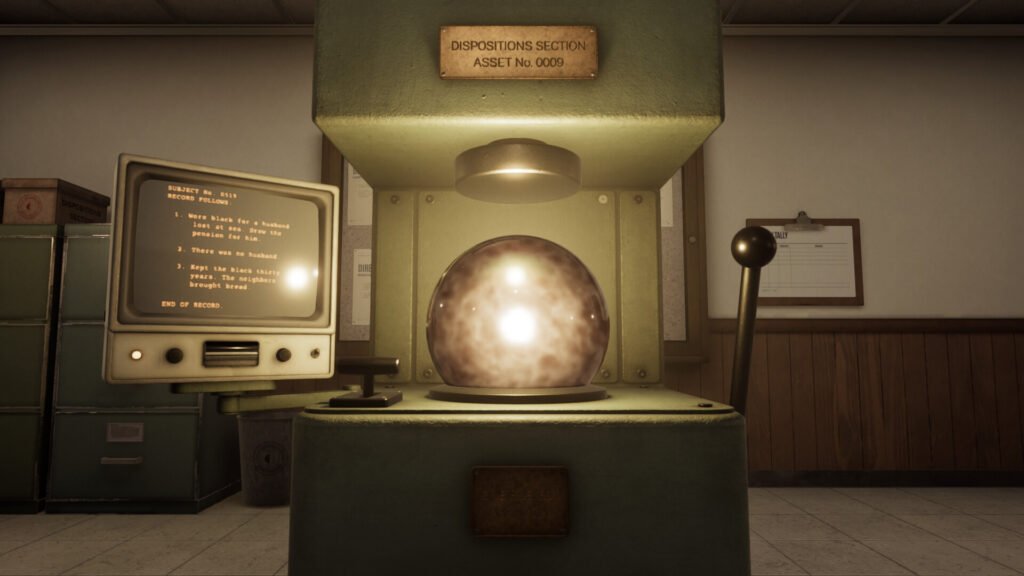
You work at a station responsible for processing the dead. For every incoming soul, a terminal displays three fragments of their life. You read them, check the directives posted around the office and choose a destination. A machine then stamps the verdict, and the next case arrives. It’s deliberately bureaucratic, built around a terminal, levers and equipment rather than elaborate menus. The early repetition matters. It teaches you to follow instructions before the game starts presenting situations that expose how poorly those instructions can handle real human circumstances.
One directive, for example, says anyone who has stolen must go to hell. That’s straightforward until you encounter someone who took dogs that had been left chained up in the sun without water and brought them to a shelter. Other cases involve people stealing out of necessity. The action described in the file may be the same, but the reasons behind it completely change how you understand it. DEADLINE doesn’t need a lengthy speech about ethics to make you uncomfortable with the order you’ve been given. It presents a specific situation and lets the conflict between the written rule and your judgement do the work.
DEADLINE: Afterlife Processing turns a bureaucratic routine into a compelling series of moral dilemmas, with cases that continually challenge the rules you’re told to follow. That’s its most convincing quality so far. The system demands clear answers, even when the lives described on screen don’t really allow for them. You’re given fragments, not a complete account of who someone was. That limitation also raises another question. How can an irreversible decision be justified when the person making it has so little information? What we can’t yet tell is how much room the full game will give you to challenge the directives, or what happens when your judgement conflicts with management’s demands.
There’s an economic side to the job, too. Processing souls earns money that can be spent on upgrades and equipment designed to make each shift more efficient. It fits the setting. Productivity matters, more cases keep arriving, and the machinery is expected to run without interruption. Automating parts of the work sounds appealing when you’re dealing with a queue that never ends, but it creates an interesting tension with the care these judgements ought to require. If the game keeps encouraging faster decisions, will you find yourself paying less attention to the people behind the files? That’s a promising direction for the full experience, rather than a consequence we can claim to have already seen.
The demo doesn’t simply end after five days of increasingly uncomfortable decisions. On the final day, you’re taken to a different and much more mysterious part of the offices, where you encounter souls described as “defective.” Some of them seem to be trying to communicate with you. Suddenly, there’s reason to suspect that something more complicated is happening behind the institution’s orderly procedures. It’s tempting to wonder whether these souls are challenging a judgement system that refuses to consider individual circumstances, but that’s only our interpretation. The demo doesn’t establish their intentions. What it does accomplish is make us eager to learn what the organization is hiding.
The presentation already feels polished. The interface is built into the office itself, and the sequence of reading records, making decisions and processing souls is easy to follow. We didn’t encounter any noticeable problems that disrupted the flow of play. DEADLINE also ran very well on Steam Deck. That level of polish is particularly welcome in a game whose appeal depends on repeating a relatively small number of actions. If operating the machinery became frustrating, it would distract from the stories you’re supposed to be thinking about. Here, the controls and presentation stay out of the way.
The full game is currently planned for the first quarter of 2027, and the biggest question is how far it will take its moral conflicts. It would be disappointing if these carefully written situations ultimately became a quiz with one officially correct answer, regardless of how thoughtfully you approached them. Still, the demo already shows how much tension can emerge from simple interactions, a well-chosen sequence of cases and a mystery introduced at just the right moment. If you enjoy narrative games that ask you to think about your decisions, DEADLINE: Afterlife Processing deserves your attention.