


Valheim 1.0: What Critics and Players Think
8 professional reviews cross-referenced with 100 Steam reviews ranked by helpfulness and 2,000 recent post-1.0 Steam reviews · Steam data through 14 September 2026
Valheim reaches 1.0 without changing the reason people have loved it for years. Exploration, building, preparation, sailing, and co-op still turn simple plans into stories. The main argument is about the time the game asks from the player. Some restrictions make a journey feel important; others feel like chores. The 1.0 launch also brings a second issue into focus: many players still want better quality-of-life features, while save, server, and performance problems are being reported in the first days after release.
Consensus map
Where press and players meet
| Aspect | Press | Players | Relationship |
|---|---|---|---|
| Exploration and atmosphere | A core strength | One of the most consistent reasons to keep playing | Strong positive consensus |
| Building | Deep and expressive | Loved for freedom, criticised for some awkward controls and material handling | Agreement on depth, more user criticism on usability |
| Grind and metal transport | Useful when logistics create an adventure | Strongly divided between meaningful friction and wasted time | Same phenomenon, different weight |
| Death and recovery | Usually secondary | A major divide, especially in solo play and late biomes | Mostly a player concern |
| Quality of life | Improved, but still uneven | One of the strongest complaints after 1.0 | Much stronger among players |
| Late game and Deep North | Deep North generally praised | More mixed; Mistlands and Ashlands remain especially divisive | Press is warmer, user evidence is broader |
| Technical state after 1.0 | Mostly solid with some caveats | Reports of save, server, stutter, and crash problems recur | New post-launch concern |
The player column combines two qualitative samples: 100 public Steam reviews ranked by helpfulness, which include older Early Access opinions, and 2,000 recent reviews published after the 1.0 launch. The percentages shown later use complete Steam totals by review language.
A survival game that keeps creating its own stories
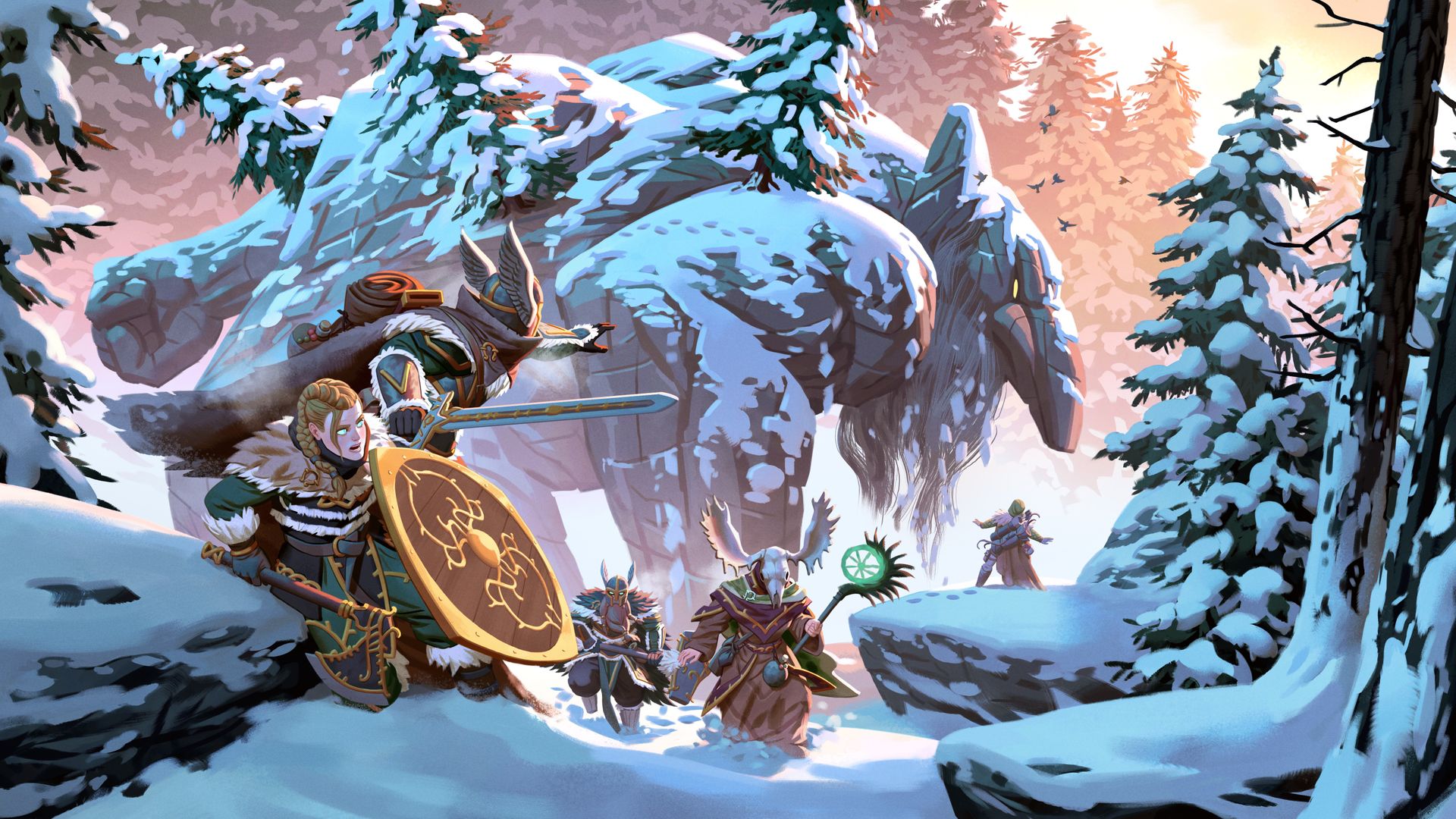
The strongest point of agreement is simple: Valheim is very good at making players set their own goals. IGN treats exploration, sailing, building, food, and combat as parts of one larger journey. PC Gamer makes a similar point: the game rarely needs a quest log because a new coast, a missing material, or the next biome already gives the player a reason to move. MMORPG.com reaches the same conclusion after hundreds of hours, where a planned objective can still turn into a detour, a new base, or a completely different evening.
The Steam samples strongly support that view. Players repeatedly remember failed voyages, emergency rescue missions, lost ships, collapsing houses, dangerous weather, and long trips that became much bigger than expected. Even short and humorous reviews often describe the same pattern. The important part is not simply collecting the resource; it is what happens on the way there and back.
Building is part of that appeal. The system remains one of Valheim's most loved features because bases feel tied to survival rather than placed on top of it. At the same time, the larger post-1.0 sample adds an important distinction: players love what the building system allows, but some dislike how much work it can take to use. Snapping, structural support, workbenches, terrain, smoke, stamina, and moving materials can all become sources of friction. Depth and ease of use are not the same thing.
When friction creates adventure — and when it becomes work
The ban on taking most metals through portals is still the clearest example. PC Gamer and STWGames Italia defend it because ore creates routes, ships, carts, outposts, and risky journeys home. Game*Spark makes the same broader argument: a useful restriction should force the player to solve a problem, not simply press another button.
The 2,000 post-1.0 reviews make the disagreement much clearer. Some players say these slow journeys are the heart of Valheim. Others say they have already proved they can mine the ore and see no value in spending another half hour moving it. World modifiers help because players can increase resource drops, soften death penalties, or change portal rules. But even that creates a new disagreement: some see the modifiers as smart flexibility, while others see them as a workaround for a default balance they still dislike.
Death shows the same split. Many positive reviews remember desperate corpse runs as some of their best stories. Many negative ones describe almost the same sequence as wasted time: die far from home, lose the best gear, travel back under-equipped, die again, and repeat the trip. This is why “difficulty” is too broad a label. Players are often less upset by a hard enemy than by how long it takes to recover from one mistake.
Five years later, quality of life is the biggest user complaint
Version 1.0 improves the interface and adds upgradeable pockets, but the expanded Steam sample shows that quality of life is still the clearest gap between professional reviews and long-time users. Crafting directly from nearby storage is probably the most common request. Inventory space, equipment taking regular slots, sorting, quick storage, the growing crafting menu, and the number of boxes needed in large bases also come up often.
This matters because veteran players are judging 1.0 against more than the 2021 version of Valheim. They are also comparing it with years of mods and with newer survival games that borrowed from Valheim while adding more convenience. A common view is that the game is still one of the best in the genre, but that some basic interactions now feel old. New players are often less bothered because they are discovering the systems for the first time.
Loot Level Chill is useful here because it approaches the final release with relatively little prior baggage and still notices how demanding material gathering can be in solo play. PC Gamer is similarly positive overall while arguing that some friction no longer creates much value. The user discussion pushes this much further, but it is not completely separate from the professional criticism.
Co-op lightens the workload; solo play exposes it
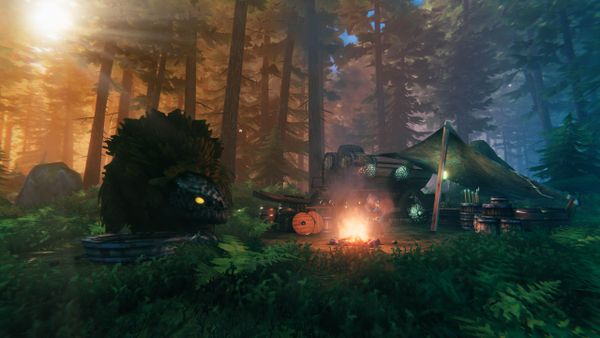
Co-op remains one of Valheim's clearest strengths. Tasks divide naturally: one player explores, another builds, someone farms or cooks, and someone else handles mining or transport. The Steam samples are full of stories where this informal division of labour becomes the identity of a server. It is also why the same resource economy can feel very different in solo play, where one person has to maintain every part of the chain.
That does not mean Valheim fails as a solo game. Many solo players love it. The difference is how much time the default economy asks from one person. Resource multipliers are therefore used by some players not to make combat easier, but simply to reduce repeated work. The 2,000 recent reviews make this a much clearer issue than the professional corpus does.
Combat is similarly divided. The press is generally positive, but users argue over stamina, attacks on slopes, vertical aiming, dodge controls, enemy tracking, and the balance between ranged and melee play. PC Games also finds the controller translation less precise than mouse and keyboard in close combat. Some players enjoy the slower, prepared style; others think the system has aged more than exploration or building.
The late game is still Valheim's roughest stretch
The early biomes receive much less criticism than the later ones. The Swamp is often the first wall: poison, wet weather, iron mining, and difficult corpse recovery arrive at the same time. Mistlands remains divisive because terrain and limited visibility can make movement harder before combat even begins. Ashlands attracts the strongest complaints about enemy density, repeated fighting, recovery after death, and performance.
Some of those complaints describe older balance. The official 1.0 update reduced several Ashlands spawn chances, so pre-launch reviews do not describe the current version exactly. Even after that change, however, the post-1.0 Steam sample still contains many players who find Ashlands exhausting. This suggests that the dispute is not only about raw spawn numbers; it is also about the overall style of pressure in the biome.
The Deep North receives warmer reviews from the press. IGN sees it as the most ambitious biome, while MMORPG.com likes how snow and environmental systems also affect building. IGM.GG sees it as a final test of the skills learned across the whole game. Players are more mixed, mentioning both strong atmosphere and concerns about combat density, resource demands, performance, and reused ideas. That user evidence is still early, because only veterans who were already near the endgame could reach the biome within a few days of launch.
1.0 completes Valheim, but launch issues need watching
The final release is substantial. Iron Gate added the Deep North, more than 40 weapons, new armour, creatures, building pieces, food, mechanics, achievements, upgradeable pockets, a redesigned hammer menu, an engine upgrade, and other changes. The broad agreement is that 1.0 completes Valheim rather than turns it into a different game. That is a strength for players who already liked its basic loop and a disappointment for veterans who expected a larger redesign of old systems.
The 2,000 post-1.0 reviews also reveal a technical concern that was less visible in the launch press. Different users report save rollbacks or corrupted worlds, crashes, stutter, server connection problems, rubberbanding, and desynchronisation. These reports are too frequent to ignore, but Steam reviews alone cannot prove a single cause or show how widespread each issue is. The right description is that the launch has recurring technical reports that need monitoring, not that the game is broken for everyone.
Iron Gate has already fixed some specific launch problems. The 11 September hotfix made Deep North heavy armour repairable, corrected Greydwarf Shaman values, fixed a crash involving unloaded zones, and addressed part of an item-stand bug that could affect durability and upgrade levels. The studio also warns that the item-stand fix is not complete for every world already loaded in 1.0. Achievement rules are another new source of confusion: spawned items can temporarily block achievements by design, while some users say legitimate items are being marked incorrectly. The latter remains a user report rather than a confirmed general bug.
Share of positive reviews. Only language groups with at least 100 reviews are shown, ordered by review count. Simplified and Traditional Chinese, Spanish and Latam, and Portuguese and Brazilian Portuguese are combined before ranking.
Steam total: 547,555 reviews through 14 September 2026, 93.9% positive. The qualitative analysis uses two separate samples: 100 public reviews ranked by helpfulness and 2,000 recent reviews published after the 1.0 launch. Neither sample is statistically representative of the full Steam corpus. Review language does not indicate a player's nationality or location.