


CONTROL Resonant: What Critics and Players Think
17 professional reviews cross-referenced with 9,882 Steam user reviews · Steam data through October 1, 2026
The first reviews of CONTROL Resonant were pretty clear about one thing: Remedy had nailed the world again. The argument was everything around the new melee combat and the much bigger structure. Now we can add 9,882 Steam reviews to that picture, and they make the game easier to read. About 90.1% of the reviews analyzed are positive. Players are especially happy with Manhattan, movement, atmosphere, lore and the way Dylan keeps opening up as you get more powers. The complaints are also easy to spot: fights can repeat too often, enemy variety does not always keep up, getting around can be confusing, progression takes a while to get going, and some users report technical problems. The interesting part is that combat looks better once player reviews are added. It is still the most debated part of the game, but it is not as weak a point as the press-only version made it look.
Consensus map
Where press and players meet
A quick look at where professional reviews and the analyzed Steam corpus agree — and where they don't.
Broadly praised across the press
Strongly positive on atmosphere and spectacle
TakeawayThe clearest success in the whole analysis
Deep system, major critical divide
Mostly positive, but repetition still recurs
TakeawayBetter received by players, with real limits
Strong later, slow to reveal itself
Build depth grows with new abilities
TakeawayA good system with a heavy opening
Traversal praised, navigation can frustrate
Movement loved, map friction persists
TakeawayExcellent to move through, less elegant to read
Fresh viewpoint, some uneven writing
Lore and story are broadly well received
TakeawayThe narrative lands more often than it misses
Player data refers to the analyzed Steam review corpus.
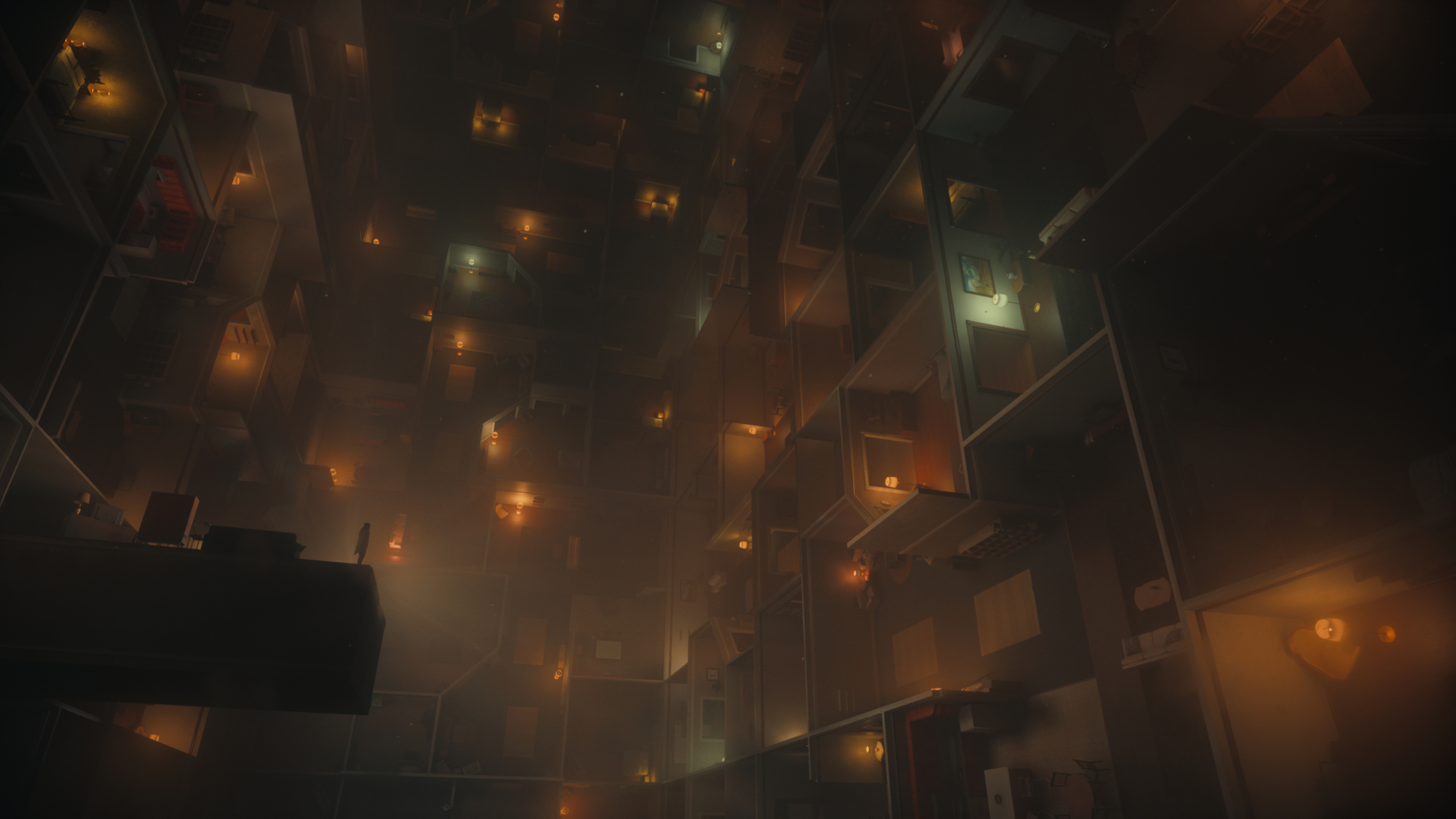
Manhattan is the easy part to agree on
On Manhattan, there really is not much of a fight between critics and players. CONTROL Resonant takes the weirdness that used to live mostly inside the Oldest House and spreads it across streets, offices, rooftops and interiors that can fold into something completely different. It is much bigger, but it does not suddenly feel like a generic open world. PC Gamer is cooler on the game overall and still treats the atmosphere as one of its strongest parts. TechRadar and JVFrance say much the same thing: the bigger spaces feel like an expansion of Control, not a different game wearing its name.
That keeps coming up in the international reviews. Inven, Famitsu, Game*Spark and 4Gamers all talk about the city together with gravity changes and vertical movement, because those things are hard to separate here. A roof is not just a roof if a new ability suddenly turns it into a route. A street can become a wall, a wall can become a floor, and normal-looking spaces stop behaving normally. There are quieter connecting areas, obviously, but the game does not lose Remedy's visual identity just because there is more of it.
Steam reviews tell basically the same story. Even people who complain about combat, progression or technical issues often stop to praise the atmosphere and the city. The one recurring reservation is that some players still prefer the tighter focus of the Oldest House. That is fair, but it does not change the main point: the world is one of the safest bets in the whole game. If the reason you liked Control was walking into a space and wondering what on earth had happened to it, Resonant gives you a lot more of that without making it feel routine.
Critical breakdown
World and art directionPC Gamer · TechRadar · GameSpot · ACG · Jeuxvideo.com · JVFrance · GamePro · Everyeye.it · SpazioGames · Inven · GameMeca · Famitsu · Game*Spark · Gry-Online · PurePC · 4Gamers · UDN Game Corner
Player breakdown
World and art directionWarped Manhattan, atmosphere, visual identity and the scale of the paranatural set pieces are recurring reasons for praise.
Some players admire the spectacle but still prefer the tighter, more concentrated identity of the Oldest House.
The smaller negative group tends to describe parts of the larger city as generic or less atmospheric rather than rejecting the art direction as a whole.
Combat is where the argument really starts
Combat is where the reviews start pulling in different directions. Dylan is not Jesse with a different face: Aberrant forms, telekinesis, shields, summons, air movement and status effects push the game much harder toward close-range action. GameSpot and ACG are very positive about that depth. PC Gamer, SpazioGames and Jeuxvideo.com are much less convinced, mainly because the game asks you to fight so often and does not always give you enough new enemies or situations to justify it.
This is also where the Steam reviews change the tone of the article the most. Players are clearly warmer on combat than the press was. A lot of reviews talk about how responsive it feels once powers, finishers and Aberrant forms start linking together, and about how much stronger Dylan feels later on. But the criticism does not disappear. The problem is that Dylan keeps getting more tools while the game sometimes keeps throwing similar problems at him. So the question is not really whether the combat has depth — it does — but whether the campaign uses that depth often enough. The people who dislike it tend to point at repetition, a limited bestiary, camera readability and basic melee strings that can feel too simple before the build really opens up.
There is one more thing to keep in mind: the game has already changed since those first reviews. Hotfix 1.3.3 reduced enemy health and Falter requirements and made Dylan stronger early on, while Update 1.4.0 toned down combat intensity in the Unknown Zone. So some launch complaints about enemies taking too much punishment are already less relevant. What is left is the more useful criticism: the combat system is good, often very good, but the encounter design does not always keep pace with it. That is a much smaller problem than saying the combat itself does not work.
Critical breakdown
CombatGameSpot · ACG · Inven · Famitsu · Game*Spark · PurePC · 4Gamers · UDN Game Corner
TechRadar · JVFrance · GamePro · Everyeye.it · Gry-Online
Player breakdown
CombatResponsive movement, fast ability chaining, Aberrant forms and the feeling of becoming more powerful are the recurring strengths.
A large middle group enjoys the toolkit but also points to repeated encounters, uneven camera readability or limited enemy variety.
The negative side focuses on repetition, weak impact, simple combo structure and fights that can outstay their welcome.

The game takes too long to show you how deep it gets
The progression system has a strange problem: the good part comes later than it should. Several reviews say Resonant spends too many hours introducing stats, upgrades, materials and choices before all of that starts making sense together. TechRadar calls out the slow opening, and Everyeye also points to how much information the game puts in front of you early on. GamePro is especially clear about it: the reviewer says the combat only really clicked after roughly fifteen hours, when movement, build choices, upgrades and the economy finally started working as one system. Gry-Online describes a similar slow burn across the game.
Once it does click, there is quite a lot going on. Famitsu says resource gathering becomes much easier to understand once you know where materials come from, while ACG likes using the Gap to test and organise builds. New Aberrant forms, movement options, finishers, Artifacts and supernatural abilities are not just bigger numbers on a menu; they change how you approach fights and how you move through spaces. Steam reviews repeat that same pattern. Plenty of players say the opening feels simpler or more restricted than expected, then becomes much more interesting once the game starts giving you enough pieces to build around.
The complaints are mostly about how long it takes to reach that point and how much menu work sits in the way. Update 1.4.0 now explains Build Power better and makes materials easier to track, which should help with the confusion. It does not change the bigger issue, though: Resonant has a genuinely good progression system, but it makes you wait too long before showing why it is good.
Critical breakdown
ProgressionPlayer breakdown
ProgressionUnlocking new abilities, forms and synergies makes combat and exploration noticeably richer as the game opens up.
Many players like the eventual depth but describe the opening hours as slow, overloaded or unclear.
The strongest criticism targets stat-heavy upgrades, grind and systems that take too long to become interesting.
Moving through Manhattan is great; reading the map is not
Exploration works best when you stop thinking of movement as a simple way to get from A to B. The larger zones hide side quests, altered objects, documents, puzzles and routes that only make sense after Dylan picks up another traversal ability. JVFrance praises the vertical design, while Famitsu, Game*Spark and 4Gamers all treat air control and gravity changes as part of the level design. You can walk past a place, come back later with a new power and suddenly realise it was a route all along.
The annoying part is figuring out where the game actually wants you to go. Inven, UDN, ACG and GameMeca all mention moments where the vertical layout and warped geometry make the route harder to read than it needs to be. Steam reviews make the split very obvious: people love moving around, but map markers, backtracking and unclear paths show up again and again in complaints. That distinction matters. Getting lost because you found something unexpected can be fun. Getting lost when you already know the objective and just cannot understand the route is not the same thing.
Update 1.4.0 fixed several marker and signposting problems, but it landed right at the end of the period covered by the Steam data, so we cannot really tell yet how much it changes the experience. For now the simple version is this: traversal is one of the best parts of Resonant; navigation is one of the messier ones.
Critical breakdown
Exploration and navigationTechRadar · JVFrance · GamePro · SpazioGames · Famitsu · Game*Spark · Gry-Online · 4Gamers
ACG · Jeuxvideo.com · Inven · GameMeca · UDN Game Corner
Player breakdown
Exploration and navigationVertical movement, air control, gravity tricks and the freedom to cross Manhattan are repeatedly praised.
Players often enjoy moving through the world while still finding the map, route-finding and backtracking harder than they should be.
The negative side sees some large areas and repeated objectives as tiring, with getting lost becoming friction rather than discovery.
Dylan works better than the early doubts suggested
Changing protagonist could easily have gone wrong, especially after Jesse became so closely tied to the first Control. Dylan works because Remedy does not try to turn him into a replacement version of her. TechRadar likes the sibling relationship as a more direct emotional anchor, while Famitsu pays attention to the small ways Dylan tries to understand a life he barely got to live outside confinement. ACG went into the sequel worried that less Jesse would leave a hole and came away much more positive about Dylan and the supporting cast. The story also ties him into the mechanics quite neatly: the Gap is connected to his mind, and major powers come from dealing with Resonants rather than simply filling out a skill tree.
That does not mean every scene lands. Gry-Online likes the material around the siblings but is less convinced by some of the dialogue, and GamePro also points out that conversations can feel awkwardly staged. A few reviews think the side stories, documents and strange little encounters are more memorable than parts of the main plot. Steam reviews are a bit warmer overall: lore, returning characters, Remedy's humour and the Dylan–Jesse relationship come up often in positive comments, although there is still a smaller group that finds Dylan or some of the cast less interesting than the world around them.
So this is one area where adding player reviews makes the answer simpler. The writing is uneven in places, but Dylan is not the problem many people expected him to be. He gives the sequel a different point of view without making the universe feel less like Control, and for most players the story seems to be something that keeps them going rather than something they have to tolerate.
Critical breakdown
Story and DylanPlayer breakdown
Story and DylanLore, world-building, Remedy's tone and the Dylan/Jesse material receive broad praise across the corpus.
Some players like the larger mystery but find particular dialogue, pacing choices or character beats uneven.
The main negative thread is that Dylan or parts of the supporting cast feel less distinctive than the world around them.
The technical side is harder to pin down
The technical side is the hardest part to reduce to one clean answer because the reviews are talking about different hardware, platforms and builds. ACG reports strong performance on a high-end PC for most of the game, while also noting how expensive the heaviest ray-tracing settings can be. GamePro is much more critical of the PS5 build it tested, while UDN reports a mostly stable experience on a standard PS5. SpazioGames and PurePC spend more time on reconstruction artefacts and other rough edges than on the art direction itself.
Steam is just as mixed. Plenty of users say the game runs smoothly for them; another noticeable group reports crashes, frame-rate drops, audio issues, visual artefacts and other technical problems. Those reports are too different to blame on one single cause, and there is no point pretending otherwise. The useful thing to say is simply that technical problems affected part of the early audience, but they are not what defines the game's reception as a whole.
Update 1.4.0, released on October 1, includes performance work, crash fixes and a long list of visual, audio and progression corrections. Most of the 9,882 Steam reviews analyzed were written before that update, so they cannot tell us exactly what the game looks like after all of those fixes. For now, technical stability is something to keep in mind, not the reason to buy or avoid Resonant.
Share of positive reviews. Only language groups with at least 100 reviews are shown, ordered by review count.
Steam corpus: 9,882 reviews through October 1, 2026, 90.1% positive. Review language does not indicate a player’s nationality or location.