


CONTROL Resonant: What Critics Think
17 professional reviews · press coverage through 18 September 2026
The first international reviews of CONTROL Resonant agree on its biggest achievement more than on anything else: Remedy has found a convincing way to move Control outside the Oldest House without making its world feel ordinary. Warped Manhattan, vertical movement, strange side stories, and the studio’s art direction receive broad praise across the corpus. The main argument begins when Dylan starts fighting. Some critics see the Aberrant, supernatural abilities, and build system as Remedy’s deepest action design yet. Others think repeated encounters, limited enemy variety, uneven impact, and a long opening stop the combat from matching the world around it. The split is less about whether the system has ideas than about how long those ideas stay fresh.
Consensus map
What the international press agrees on
| Aspect | Consensus | Dissent / Weight |
|---|---|---|
| World and art direction | The clearest strength: Manhattan feels recognisably Remedy while giving the series a much larger canvas. | Some prefer the tighter brutalist focus of the Oldest House, but very few reviews question the sequel’s visual identity. |
| Traversal and exploration | Movement becomes fast, vertical, and increasingly expressive as Dylan gains powers. | The same warped geometry that makes exploration memorable can make maps, routes, and objectives hard to read. |
| Combat | The system has many forms, powers, synergies, and build choices. | This is the biggest split: some call it exceptional, while others find the encounters repetitive, chaotic, or short on impact. |
| Enemy variety | A recurring weakness, including in several highly positive reviews. | The disagreement is how much build freedom and boss design compensate for a bestiary that grows more slowly than Dylan’s toolkit. |
| Progression | The game becomes richer as new powers, weapon forms, movement options, and synergies unlock. | Several critics think it takes too long to reach that point, or that resource and upgrade systems interrupt the story’s pace. |
| Story and Dylan | Changing protagonist gives the sequel a different emotional centre and a reason to revisit familiar lore from another angle. | The sibling relationship is well received, but dialogue, main-plot pacing, and character charisma draw more mixed responses. |
| Technical presentation | Art direction and effects are consistently praised. | Performance, reconstruction artefacts, ray tracing cost, and review-build roughness vary by platform and configuration. |
This press-only edition is a qualitative synthesis of the selected professional reviews. It does not average their scores, and the thematic breakdowns reflect what each source says about that specific subject.
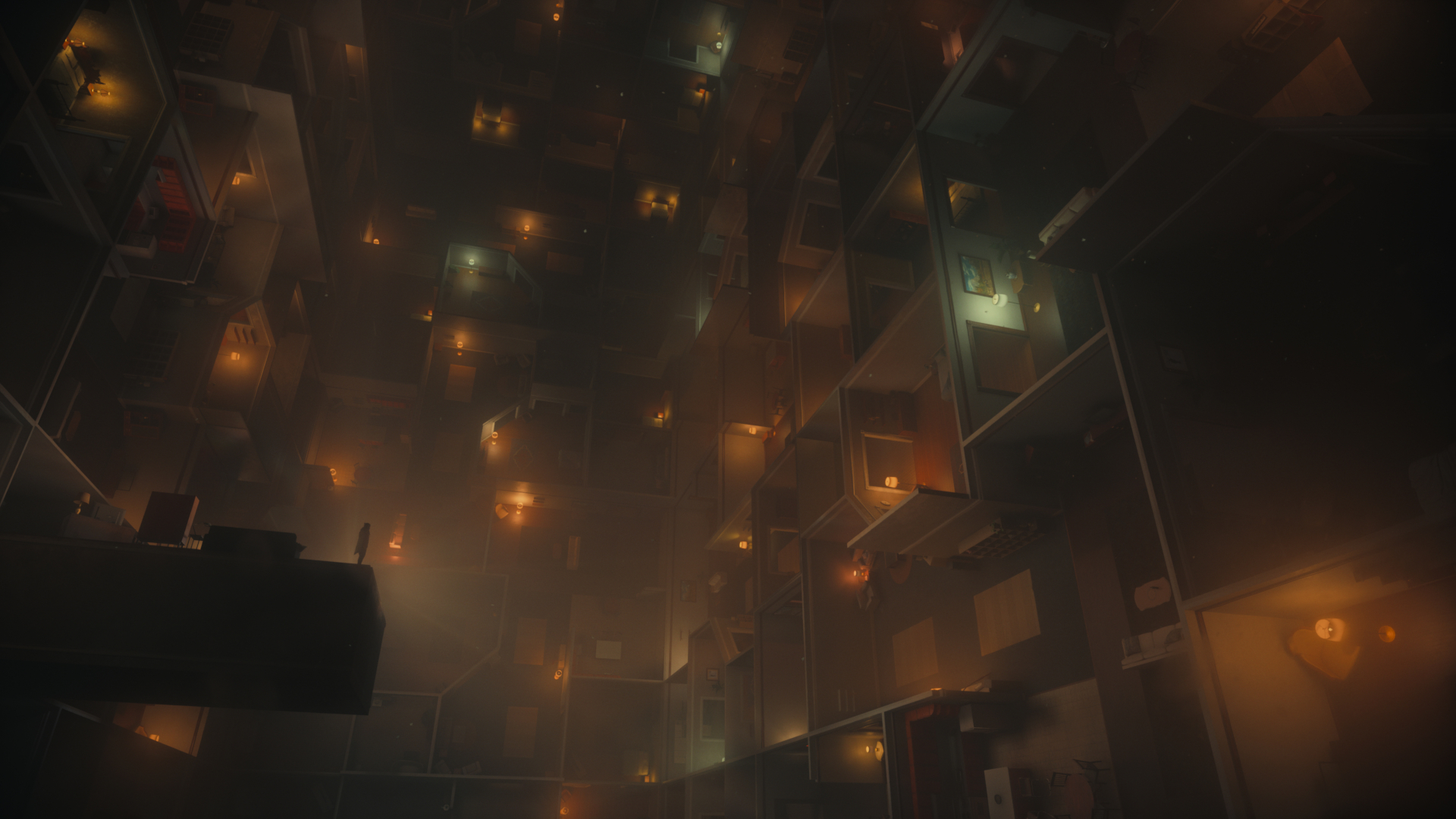
Manhattan works because it expands Control without making it ordinary
CONTROL Resonant is built around an inversion. The first game sent Jesse Faden into the Oldest House, a sealed brutalist headquarters where the Federal Bureau of Control tried to contain things that should not exist. The sequel puts Dylan Faden at the centre and pushes the crisis outward. Manhattan is no longer a familiar city surrounding one impossible building: streets, offices, apartments, rooftops, and public spaces have been distorted by paranatural forces. Remedy describes the game as open-ended rather than a conventional open world, with large distinct zones instead of one continuous map. The reviews generally support that distinction. They talk less about clearing icons and more about spaces that have to be read, revisited, and understood differently as Dylan gains new ways to move.
This is the strongest point of agreement in the corpus. PC Gamer is cooler on the whole package than many other outlets, yet still treats the environments and atmosphere as major reasons to keep moving forward. TechRadar sees the larger structure as a successful expansion of the first game’s mystery rather than a dilution of it. The French reviews reach a similar point from different directions: JVFrance praises vertical level design and the way the city supports freedom, while Jeuxvideo.com remains frustrated by several systems but still highlights the art direction, scale of movement, and inventiveness of the environments.
The same pattern appears outside Western coverage. Inven is impressed by areas transformed by supernatural events and by the way action changes when the terrain stops obeying normal rules. Famitsu pays particular attention to how precise movement remains when fights and traversal spread across different gravity planes. Game*Spark treats that floating, unstable sensation as one of the game’s most distinctive qualities. The Chinese reviews from 4Gamers and UDN Game Corner likewise connect traversal, gravity effects, and visual direction rather than treating them as separate features.
The result is important because the sequel could easily have looked like a larger but safer version of Control. The reviews do not describe it that way. Manhattan gives Remedy room to create wider vistas and longer routes, but the strongest locations still work like compact visual riddles. A street can become a wall; a building can be crossed from an angle that makes no architectural sense; a familiar route can become usable only after a new power changes Dylan’s relationship with height or gravity. Even critics who prefer the first game’s concentration inside the Oldest House generally recognise that the sequel has not traded identity for scale. The debate is about how comfortably players can navigate that ambition, not whether the ambition is visible.
Critical breakdown
PC Gamer · TechRadar · GameSpot · ACG · Jeuxvideo.com · JVFrance · GamePro · Everyeye.it · SpazioGames · Inven · GameMeca · Famitsu · Game*Spark · Gry-Online · PurePC · 4Gamers · UDN Game Corner
The combat system is the real critical divide
The change from Jesse’s Service Weapon to Dylan’s Aberrant is not cosmetic. Resonant is built around close-range pressure. The Aberrant can take different forms, while telekinesis, shields, summons, projectiles, aerial movement, status effects, and other supernatural abilities feed into the same loop. Melee attacks restore the resource used for powers; powers can build Falter on enemies; Faltered targets can be executed, and executions can feed advantages back into the next part of the fight. On paper, most reviews agree that the system has more moving parts and more room for builds than the first Control. The disagreement is whether the enemies and encounters make those possibilities meaningful for the whole campaign.
The enthusiastic side of the corpus is unusually enthusiastic. GameSpot presents combat as the sequel’s standout achievement and argues that Remedy has finally made gameplay depth as important as its narrative mysteries. ACG is similarly positive about the freedom to combine Aberrant forms, powers, movement, and build choices. Inven, Game*Spark, PurePC, and UDN Game Corner also describe the new action in strongly positive terms, especially once aerial movement, boss abilities, and specialised builds start interacting.
The opposing reviews are not simply rejecting melee because the original game used guns. Their criticism is usually about repetition and feedback. PC Gamer likes the setting far more than the amount of fighting and argues that too many encounters settle into a merely adequate rhythm. SpazioGames finds the close-range hits short on weight and thinks repetition keeps the combat below the quality of the world design. Jeuxvideo.com sees battles becoming chaotic and tiring when respawns, progression friction, and repeated opposition pile up. GameMeca lands in a similar place: the larger world remains attractive while extended combat becomes a source of fatigue.
Enemy variety is the point where the two camps meet. UDN says attack patterns begin to feel familiar after the middle of the game. JVFrance gives the sequel a very strong overall recommendation but still lists the limited bestiary and repeated opposition among its clear weaknesses. ACG enjoys the action while noting that some creatures become difficult to read in crowded fights and that not every boss reaches the same level. Everyeye also sees an ambitious system whose balance and variety do not always match the number of options placed in the player’s hands. That makes the combat debate more useful than a simple “good or bad” split. The recurring question is whether Dylan’s vocabulary grows faster than the game’s ability to challenge it.
Critical breakdown
GameSpot · ACG · Inven · Famitsu · Game*Spark · PurePC · 4Gamers · UDN Game Corner
TechRadar · JVFrance · GamePro · Everyeye.it · Gry-Online

Progression explains why early and late impressions can sound like different games
The combat split becomes easier to understand once time enters the discussion. Several reviews say that Resonant does not show its best version immediately. TechRadar names the slow opening of combat as one of its main drawbacks: early enemies can feel too resistant before Dylan has enough tools to create a more fluid rhythm. Everyeye describes a broader problem of information overload, with statistics, upgrades, combat choices, and other systems arriving before their relationships are always clear. The criticism is not that the game lacks depth. It is that Remedy sometimes asks the player to carry a great deal of structure before the rewards of that structure become obvious.
GamePro offers the clearest example of an opinion changing over time. Its reviewer says combat only really clicked after roughly fifteen hours, when movement, builds, upgrades, and the economy started to make sense as one connected system. The review still criticises grind and moments where progression slows the story, but its final view is much warmer than its first impression. Gry-Online describes a similar curve across the whole game: an opening that can feel more generic and resistant gives way to stranger spaces, more developed mechanics, and a version of Remedy’s personality that becomes much easier to recognise.
Famitsu gives the most useful counterpoint. After more than forty hours, its reviewer argues that upgrading does not normally require exhausting farming once the player understands where resources come from and which activities or shops provide them. The review also highlights a system in which defeating major Resonants changes the surrounding world while giving Dylan new combat abilities, so the escalation is not purely one-sided. ACG is positive about the Gap, the metaphysical space inside Dylan’s mind where builds, weapon forms, upgrades, and testing can be handled without the friction of a conventional hub. 4Gamers and UDN also treat the growth of movement and combat abilities as one of the reasons the game becomes more flexible over time.
This is why the progress curve matters to the whole critical picture. Resonant is not merely withholding bigger damage numbers. It gradually adds Aberrant forms, supernatural abilities, movement options, finishers, Artifacts, and synergies that change how both fights and spaces can be approached. For critics who enjoy that accumulation, the opening becomes a necessary base for a much richer second half. For critics who already find the encounters repetitive, asking for ten or fifteen hours before the system finds its best rhythm is a structural weakness rather than a temporary inconvenience. Both reactions can be supported by the same observation: the game grows substantially, but it grows slowly.
Critical breakdown
Exploration is at its best when getting lost feels like discovery
Remedy’s own description of Resonant matters here: this is not a conventional open world designed around clearing a field of icons. The reviews largely confirm that structure. Large zones contain World Quests, altered objects, environmental puzzles, hidden encounters, documents, and routes that may only become useful after Dylan gains another movement ability. JVFrance praises the way vertical level design and parkour make the city feel worth investigating. GamePro likes that the world often trusts the player instead of placing an instruction on every solution. Gry-Online is most enthusiastic when Resonant stops resembling a familiar action RPG and lets abstract spaces, unusual bosses, and strange side stories take over.
Movement is a major part of that appeal. Famitsu praises the responsiveness of aerial control, while Game*Spark makes the sense of floating and shifting direction central to its positive judgment. 4Gamers sees a natural link between character growth and exploration because new abilities do not only make Dylan stronger in combat; they also reopen the map. SpazioGames likewise treats exploration and world design as stronger than the fighting itself. This is one of the important differences between Resonant and an open world that simply becomes quicker to cross. Here a movement upgrade can change the meaning of a district by revealing that an apparently decorative wall, roof, or suspended street was always part of a route.
The problem is orientation. Inven is highly positive overall but identifies later navigation and backtracking as significant sources of friction. UDN says vertical differences and gravity anomalies can make the map difficult to read. ACG praises the level design while also warning that reaching a specific destination can be frustrating until enough traversal powers are available. GameMeca finds the expanded city intoxicating but also exhausting when the route is unclear. Jeuxvideo.com pushes the criticism further, describing objectives that can be stretched by doors, generators, detours, repeated fights, and environmental logic long after the player understands what the task is asking.
Those positions are not contradictory. The same geometry can be excellent level design and poor navigation support. A location becomes memorable because it refuses ordinary space, while the map then has to explain a place that was deliberately built not to behave like a normal place. The reviews suggest Resonant works best when confusion leads to a discovery: a route folds back on itself, a new power changes the obvious path, or a side activity turns an anonymous corner into something strange. It works less well when the destination is already known and the remaining challenge is simply deciphering the interface. In that sense, exploration has a clear positive consensus, but it comes with a recurring warning about legibility.
Critical breakdown
TechRadar · JVFrance · GamePro · SpazioGames · Famitsu · Game*Spark · Gry-Online · 4Gamers
ACG · Jeuxvideo.com · Inven · GameMeca · UDN Game Corner
Dylan changes the emotional centre without making the sequel less strange
Replacing Jesse with Dylan is more than a character swap. In the first game, Dylan was a mystery, a victim of the Bureau, a threat, and a reflection of Jesse’s search. Resonant has to turn that unstable figure into someone capable of carrying a long action RPG. The reviews are more positive about that decision than the pre-release premise might have suggested. TechRadar sees the relationship between Dylan and Jesse as a stronger emotional anchor than the original game’s central plot. Famitsu is interested in the smaller ways Dylan tries to understand experiences he never had during years of confinement, including optional activities that reveal a desire for an ordinary life. ACG entered the sequel concerned that Jesse’s reduced presence could leave a hole and came away convinced by Dylan and the supporting cast.
That personal angle also gives the new mechanics a narrative function. The Gap is not presented only as a menu where statistics are moved around; it is a space connected to Dylan’s mind. Major abilities come from confronting Resonants rather than from an abstract level-up screen. Manhattan is technically more familiar than the Oldest House, but it can feel alien to a protagonist whose life has been defined by institutional captivity. PurePC is particularly positive about Dylan and his relationship with Zoe, while GameMeca also highlights Zoe’s presence as one of the elements that gives the journey continuity as the city becomes harder to read.
The consensus is less complete when the discussion moves from Dylan to the whole script. Gry-Online likes the sibling material and the stranger later developments but is more critical of some dialogue and does not find every protagonist equally charismatic. GamePro also sees unevenness in the staging of conversations. Everyeye is positive about the game’s personality while stressing that its abundance of ideas does not always produce the same balance or clarity as Remedy’s tighter work. Several reviews make a related distinction: side stories, optional conversations, and environmental details can leave a stronger impression than the main plot simply because the world is constantly giving the player small, concrete pieces of character and absurdity.
That distinction helps explain why the narrative response is warmer than a simple comparison between Jesse and Dylan would suggest. Critics do not agree that every line or central beat is equally successful, and the corpus does not support claiming that Dylan is a better protagonist. What it does support is that the change has a purpose. It makes familiar history unfamiliar again, gives Remedy a reason to rebuild the combat around a different body and temperament, and turns the search for Jesse into a personal goal that can survive the larger supernatural plot. Resonant’s story is therefore less uniformly praised than its world, but the protagonist change itself is widely treated as a meaningful foundation rather than a gimmick.
Critical breakdown
The review builds show technical ambition, not one identical performance story
The technical discussion is more fragmented than the arguments about combat or world design because the reviews cover different platforms and hardware. Remedy’s Northlight engine is doing visibly ambitious work: large spaces change orientation, combat fills the screen with particles and destruction, and lighting has to survive scenes where walls, streets, and gravity no longer behave normally. ACG reports strong performance on a high-end PC for most of the campaign but also makes clear that the most expensive ray-tracing settings can become extremely demanding in specific areas. Turning those features down produces a much easier performance target without removing the art direction that reviewers consistently praise.
The console and mid-range picture is less uniform. GamePro applies a technical penalty to the PS5 version it reviewed, while UDN reports broadly stable frame rate and loading on a standard PS5. SpazioGames is more concerned with image reconstruction and visible artefacts than with the artistic result itself, which it praises. Everyeye sees the technology as strong but does not make it the central reason the game works. PurePC also likes the presentation while noting rough edges and arguing that not every part reaches the technical standard established by Alan Wake 2. These are not necessarily contradictions: different review builds, platforms, modes, displays, and expectations can expose different weaknesses.
Because the game has not launched yet, these observations should remain tied to the review versions on which they were made. There is no post-launch patch history to compare against, and there is no public user corpus that could show how the PC version behaves across a much wider range of hardware. The useful conclusion from the press is narrower. Technical issues exist, but they are not the centre of the critical disagreement. Even the more cautious reviews spend much more time on encounter repetition, progression, navigation, and enemy variety than on crashes or severe instability. The art direction is consistently stronger than the consensus on raw image quality or performance.
That distinction matters for a game whose visual identity is so important. Resonant can receive criticism for reconstruction artefacts, costly ray tracing, or a rough review build while still earning praise for how Manhattan looks and feels. The technical question at launch will be whether updates and final drivers narrow the differences between these reports. The critical question is already clearer: the sequel’s strengths do not depend on being the cleanest technical showcase in the corpus. They depend on how confidently Remedy uses space, light, movement, and distortion to make a city feel wrong in a way that remains immediately recognisable as Control.