


Final Fantasy Resonance: What Critics Think
20 professional reviews · press coverage through October 20, 2026
Final Fantasy Resonance takes the first part of Brave Exvius and rebuilds it as a traditional JRPG, without gacha or microtransactions. You travel across a world map, assemble a party, and fight turn-based battles using Visions, familiar Final Fantasy characters whose abilities can be equipped by your team. We compared what we consider the most authoritative international press reviews available when the embargo lifted. The game succeeds in bringing back the spirit of classic Final Fantasy, but that agreement begins to fracture over combat variety and the quality of its story.
Consensus map
Where Critics Agree and Disagree
A quick overview of international press opinions before looking at each area in detail.
Solid system; some battles drag.
TakeawayThe rules shine when enemies force you to change strategy.
Character customization earns broad praise.
TakeawayPlenty of freedom, but not every build is equally useful.
Reviews range from glowing to disappointed.
TakeawayThe biggest disagreements concern the themes and characters.
HD-2D visuals and music earn widespread praise.
TakeawayStrong direction lifts even weaker moments.
This first analysis covers professional reviews only.
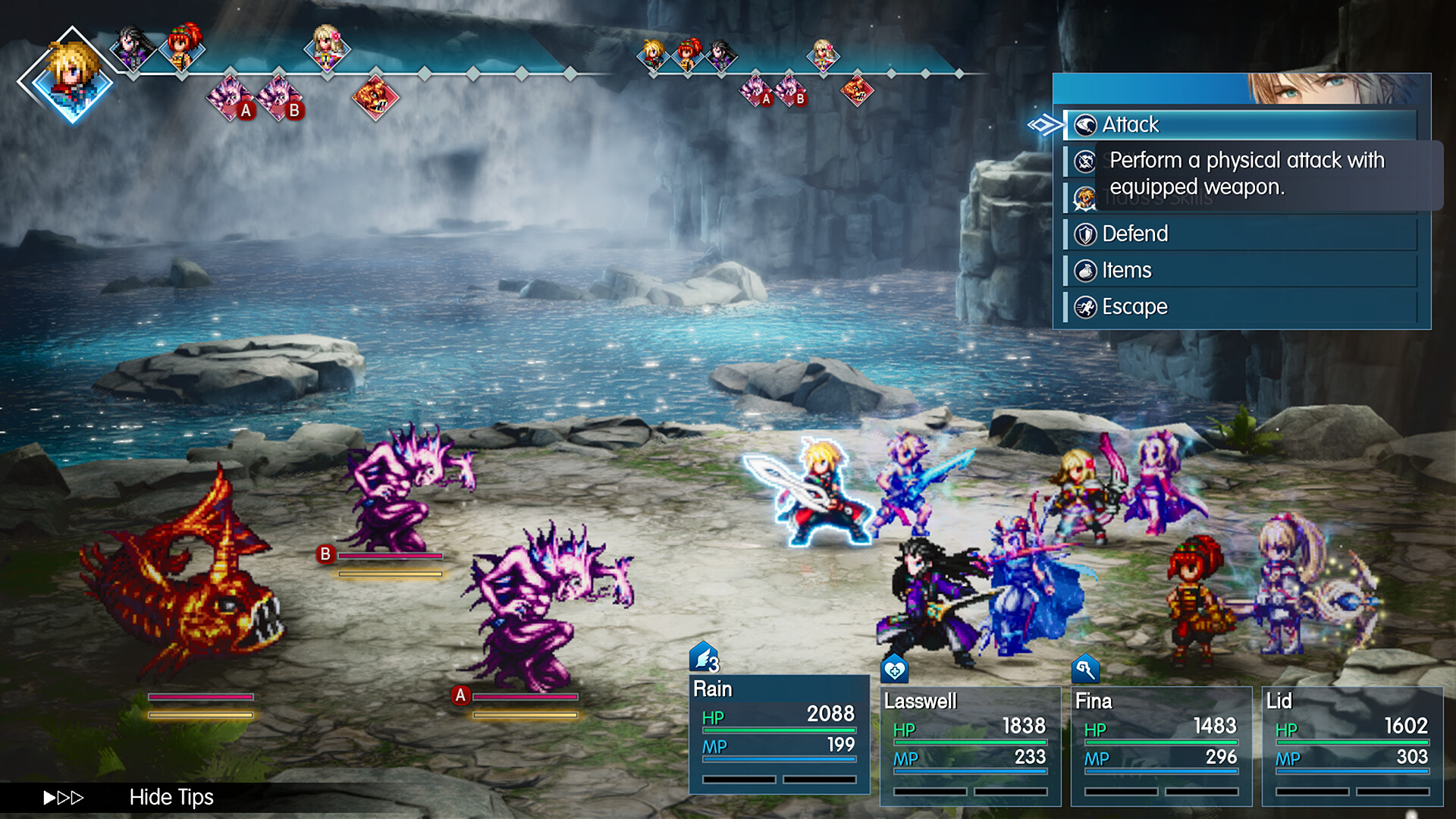
Combat Is the Heart of the Game, but Not Every Battle Makes the Most of It
There's no real-time action here, nor an ATB gauge that keeps filling while you choose a command. Characters take their turns in a visible order: to gain the upper hand, you target enemy weaknesses, deplete their stagger gauges, and capitalize on the window in which they cannot retaliate. Staggering every enemy gives the party extra actions and lets you finish with a Resonance attack tied to an equipped Vision. The appeal lies in setting up that sequence, not simply choosing the spell that deals the most damage.
Critics generally agree that those foundations work very well. RPG Site rates the combat among the strongest turn-based systems of recent years, while Gamekult and Everyeye praise the interplay between abilities, elemental weaknesses, and turn order. GamerSky also highlights how older Final Fantasy rules open up unusual possibilities: healing magic can hurt undead enemies, reflected spells can become part of a combination, and certain attacks can even be directed at your own allies. There's more to this system than filling up a gauge.
The problem starts when those possibilities aren't needed. At IGN, Michael Higham explains that several bosses can be beaten mainly by stacking attacks of the appropriate element. It works, but it leaves fewer meaningful decisions to make once the fight starts. GameSpot is more critical: many enemies have so much health that you're forced to repeat the same stagger-and-damage routine without seeing anything that meaningfully changes your approach. RPGFan notices something similar in tougher encounters, where a handful of efficient strategies can eventually replace experimentation.
Significantly, these same reviews also acknowledge much stronger optional bosses and late-game battles. That suggests the rules do have depth: when an enemy changes the conditions, you actually need to adapt. The weakness isn't a badly designed combat system, but a difficulty curve that doesn't consistently make use of everything it offers. Combat is successful overall, yet it can lose some of its appeal when ordinary encounters keep asking for the same solution.
Critical breakdown
Turn-Based CombatRPG Site · Game Informer · Gamekult · Jeuxvideo.com · Play3.de · Galaxus · SpazioGames · Everyeye · Inven · Famitsu · GAME Watch · A9VG · GamerSky · MeriStation
RPGFan · IGN · GameSpot · GamingTrend · Vandal
Visions Give Your Party Freedom, but the Best Strategies Aren't Always the Most Creative
Visions do far more than bring Cloud, Terra, Tidus, and other familiar faces onto the screen. They work like interchangeable classes: equipping one gives a character specific skills, and continued battles let them master abilities they can retain after switching to another Vision. Offensive moves, spells, passive effects, and support options can all be combined without locking every party member into a permanent role.
This is probably the idea that attracts the broadest praise. Game Informer welcomes the freedom reminiscent of older Final Fantasy job systems, while GameSpot notes how Resonance turns what used to be random prizes in the mobile game into tools you discover and develop by playing. You no longer obtain characters through paid draws: you explore the world, discover shrines, and expand your party-building options. That change affects the game itself, not just the way it's sold.
The disagreements concern how useful that freedom remains in practice. RPGFan finds that certain builds become so effective, particularly against bosses with enormous health pools, that there's little incentive to try anything else. IGN notes that knowing a boss's weakness in advance sometimes lets you prepare a specialized team and win without much improvisation. GameSpot adds that characters who join later have fewer mastered abilities to work with, making party changes less immediately rewarding.
There are practical frustrations, too. A9VG points to awkward menus, while Jeuxvideo.com criticizes the inability to save multiple party setups. These issues matter in a game that encourages frequent equipment and ability changes. Visions remain one of Resonance's strongest features. The question isn't how many combinations exist, but whether the game rewards less obvious choices and makes them easy enough to manage.
Critical breakdown
Visions and CustomizationRPG Site · Game Informer · GamingTrend · GameSpot · Gamekult · Jeuxvideo.com · Play3.de · Galaxus · SpazioGames · Everyeye · Inven · Famitsu · GAME Watch · A9VG · GamerSky · MeriStation · Vandal
Pacing and Difficulty: Stronger Enemies Don't Necessarily Mean Better Battles
Resonance is more focused than many modern JRPGs. The main story can be finished in a relatively modest amount of time, but the Colosseum, superbosses, and other activities offer plenty to do afterward. A9VG sees that structure as a strength: on normal difficulty, you aren't required to spend long stretches grinding levels, and the journey keeps moving.
Your total playtime also depends heavily on the chosen difficulty and optional content. IGN describes a fairly easy first half, followed by a late game that finally demands several turns of forward planning. Everyeye draws a clear distinction between the generally approachable normal setting and the harder options. But raising the difficulty doesn't automatically improve battles. RPGFan and GameSpot both describe bosses with enormous health or stagger gauges: a fight can last longer without asking you to make any new decisions.
GamingTrend finds the opening too slow, and other reviews note that the game takes time to put its systems to full use. Famitsu, by contrast, describes an adventure that remains rewarding after the credits, while Jeuxvideo.com praises its pace. These impressions can coexist: a story may move along briskly while numerous smaller fights still slow down travel.
The distinction is between challenge and endurance. A boss that forces you to change your party or respond to a status ailment adds a new problem to solve; one that demands five more cycles of the same combo mostly uses up your time. Resonance offers both situations. Higher difficulties can be demanding, but they don't always make combat more strategically interesting.
Critical breakdown
Pacing and DifficultyJeuxvideo.com · Famitsu · GAME Watch · A9VG · GamerSky · Gamekult
IGN · RPGFan · GameSpot · Play3.de · SpazioGames · Everyeye · Vandal · MeriStation
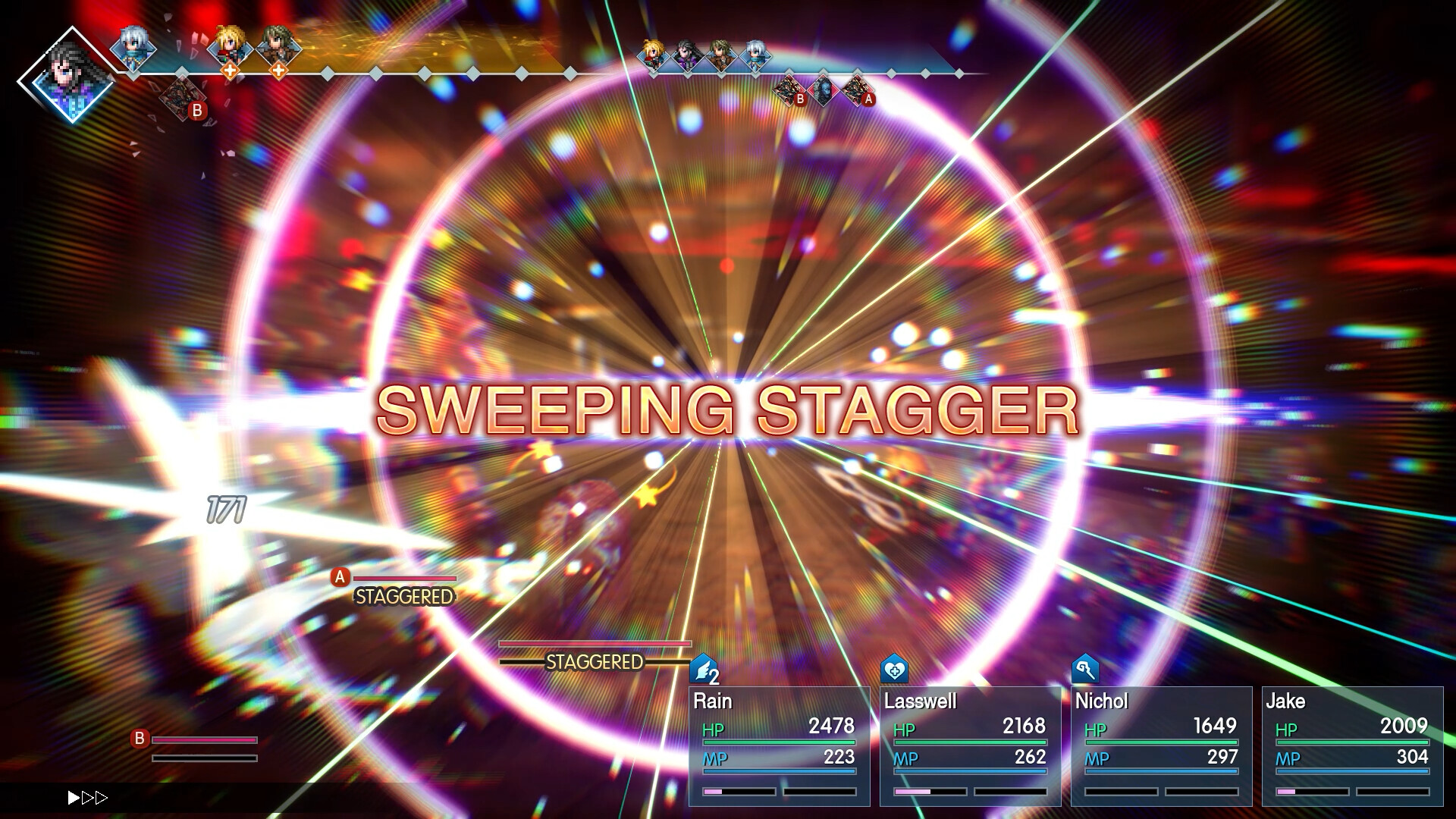
The Story Divides Critics Far More Than Combat
Rain and Lasswell are two knights bound by a long friendship. After an attack on one of the crystals protecting their world, they set out with Fina, a mysterious young woman, and gather more allies as they pursue the attackers. The classic Final Fantasy ingredients are immediately familiar: kingdoms in conflict, magical powers, hidden identities, family ties, and a party that grows as the danger escalates. The plot draws on the first season of Brave Exvius, but has been rewritten and rearranged to work as a standalone RPG.
For Jeuxvideo.com, it's among the best stories in the series. Benjamin Annequet praises the characters' growth, their relationships, and the themes explored later in the adventure. Everyeye comes to a similarly enthusiastic conclusion, while GameSpot sees the revival of Rain, Lasswell, and their companions as one of the strongest reasons to recommend it. Game Informer acknowledges that the characters follow familiar archetypes but enjoys their company and the life they bring to the journey. So this isn't just nostalgia for people who played Brave Exvius: some critics judging Resonance on its own merits also praise its writing.
RPG Site views many of those same elements almost the opposite way. Hayes Madsen likes the cast but argues that the story lacks a strong central theme capable of bringing its different events together, especially toward the ending. IGN criticizes overly long dialogue and underdeveloped villains, although it finds several relationships between the protagonists compelling. GamingTrend goes further, calling the narrative too derivative to leave a lasting impression after the credits.
These arguments need to be separated. A traditional story isn't necessarily a badly written one: GameSpot and Galaxus appreciate the straightforward way Resonance revives a classic adventure. The more substantial criticism is that dialogue and revelations sometimes fail to give the underlying conflicts enough weight. Critics recognize warm character moments and spectacular scenes, but disagree on whether they add up to a memorable story. That makes the writing only partly successful: there's an enjoyable party to follow, without an equally convincing narrative arc from beginning to end.
Critical breakdown
Story and CharactersGame Informer · GameSpot · Jeuxvideo.com · Galaxus · Everyeye · Famitsu · GAME Watch · GamerSky
RPGFan · Gamekult · Play3.de · SpazioGames · Inven · A9VG · MeriStation · Vandal
RPG Site · VGC · GamingTrend · IGN
Exploring the World Is Rewarding; the Dungeons Are Less Convincing
Resonance brings back a classic structure. You leave towns, cross an overworld, find hidden passages, reach new continents by airship, and tackle optional bosses or side quests. Random encounters regularly interrupt travel. That's a deliberate choice, but not every reviewer finds it pleasant after dozens of hours.
RPGFan calls exploration one of the game's best qualities: moving around and finding hidden rewards makes curiosity worthwhile. GameSpot enjoys discovering items tucked into the corners of maps and side quests that reveal more about the characters. Game Informer also likes the overall adventure structure, while admitting that dungeons are often simple. Famitsu and GAME Watch describe a world that gives players reasons to return to optional activities after finishing the story.
Others are less persuaded. MeriStation finds some dungeons forgettable; Vandal points to repetitive battles during travel. A9VG criticizes conservative exploration and menus that slow certain activities down. SpazioGames and Everyeye also note that frequent random encounters can interrupt the pleasure of simply reaching somewhere new.
None of this erases the pleasure of finding a shrine or a special enemy off the main route. But an enjoyable world to travel across isn't the same as a collection of dungeons full of surprises. Resonance does the former better: exploration rewards curiosity, while individual routes often remain basic and leave combat to fill much of the time spent inside them.
Critical breakdown
Exploration and Side ContentRPGFan · Game Informer · GameSpot · IGN · Jeuxvideo.com · Famitsu · GAME Watch
Gamekult · SpazioGames · Everyeye · A9VG · GamerSky · MeriStation · Vandal
Art and Music Do Far More Than Recall Older Final Fantasy Games
Presentation is the area where critics agree most readily. Resonance keeps pixel-art characters but places them in three-dimensional environments with carefully considered lighting, depth, and cinematic framing. During dialogue and major scenes, the camera doesn't always stay in one place. It moves closer, changes angles, and lets animation convey emotion. That attention to detail is one reason several reviewers see the project as far more ambitious than a simple repackaging of a mobile game.
IGN praises the HD-2D cutscenes for expressing emotions more effectively than some of the dialogue, despite its broader objections to the story. RPGFan and Gamekult see a step forward in direction compared with other games using a similar visual style. Inven, Famitsu, and GamerSky praise the character movement and animation, which bring an intentionally old-fashioned world to life.
Not everything blends together so well. Some Resonance abilities use CGI footage inherited from Brave Exvius, and SpazioGames, IGN, and A9VG find the switch away from pixel art jarring. This isn't necessarily a complaint about the quality of those individual cinematics. Rather, after becoming accustomed to such a consistent visual language, the sudden change can weaken an attack meant to be the climax of a battle. Seeing the same special moves repeatedly also diminishes their initial effect.
The music earns equally strong praise. IGN highlights how the soundtrack establishes different moods across towns and major battles; GameSpot, RPG Site, and RPGFan consider it central to why the journey works. Even critics who are unmoved by parts of the story acknowledge that music and direction lift its best moments. The conclusion here is clear: Resonance isn't carried by nostalgia alone. Its audiovisual presentation is one of its most convincing achievements, with narrower issues around mismatched CGI sequences and repeated animations.
Critical breakdown
Visuals and SoundtrackRPG Site · RPGFan · Game Informer · VGC · GamingTrend · GameSpot · Gamekult · Jeuxvideo.com · Play3.de · Galaxus · Everyeye · Inven · Famitsu · GAME Watch · GamerSky · MeriStation · Vandal
IGN · SpazioGames · A9VG