

Marvel's Wolverine: What Critics and Players Think
21 professional reviews · 2,231 Metacritic user-review texts · reviews dated through 29 September 2026
Critics and players often recognise the same strength: Wolverine's brutal close-range fighting makes an immediate impression. They also raise similar concerns about repetition, guidance and how much the player can actually influence the action. The Metacritic responses are sharply split, though, and some reviews are written in answer to the online argument around the game rather than just the game itself.
Consensus map
Where press and players meet
| Aspect | Press | Players | Relationship |
|---|---|---|---|
| Combat | Vivid and satisfying at first; its depth over time divides reviewers. | Many praise the brutality even when they criticise repeated encounters. | Shared observation, different weight |
| Guidance | A focused campaign is acceptable; excessive cues draw criticism. | Some complain about trails and automatic sequences; others say they are overstated. | Players divided |
| Logan and story | Logan and the performances fare better than the plot structure. | Many enjoy the cast; others reject the characterisation or the ending. | Broad overlap, sharper disagreement |
| Enemies and bosses | Enemy repetition is a recurring weakness; boss fights divide critics. | Positive comments on spectacle sit beside complaints about difficulty and repeated patterns. | Shared issue, different weight |
| Length and price | A compact adventure can help the pace, but limited variety affects value. | Some are happy with its length; others advise waiting for a sale. | Price matters more in player reviews |
| Presentation and bugs | Strong art and animation; technical assessments vary. | Praise for graphics coexists with reports of glitches and crashes. | Mixed, dependent on version |
The player column summarises the supplied Metacritic texts. Each player theme bar uses a qualitative sample of 36 review texts mentioning that topic, with unclear judgments omitted. The score chart below describes all submitted scores, not verified purchases or all PS5 players.
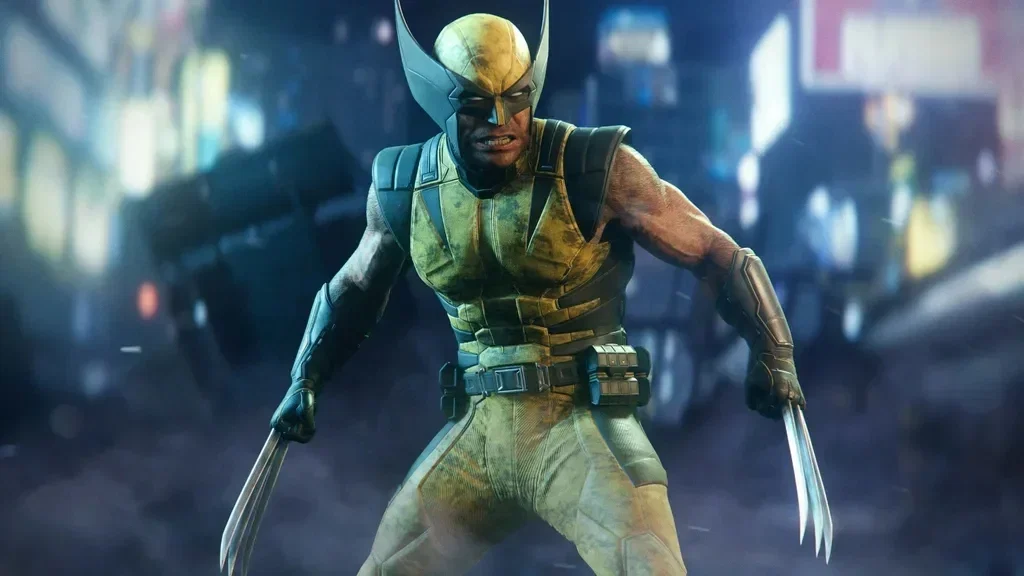
The first fights feel like Wolverine; the question is how long that lasts
Critics agree that claws, healing and close-up violence make an impact. ACG sees the aggressive systems and environment as a strong starting point, while Game*Spark connects the push to keep attacking with Wolverine’s ability to survive. IGN and The Guardian are less convinced that the same fights keep developing once their opening impact wears off.
That difference also runs through the player texts. Plenty call the combat visceral and enjoyable from start to finish. Others enjoy the early hours but say familiar finishers, repeated enemies and limited tactical demands eventually take over. A positive overall score does not erase a criticism of combat: some high-scoring reviews make exactly that distinction.
The question comes once you learn the rhythm: do enemies make you change how you fight? Several critics in our first analysis saw too few enemy types and said new skills rarely changed the best way to fight. GameMeca was a useful counterexample: it saw enough differences among Reavers, Hand fighters, Sentinels and environmental situations to reward adaptation. Other critics found that the same reliable answers worked for too much of the campaign. Both views can be true even when enemies look different. Variety on a list is not necessarily variety in decisions if the player rarely needs to alter timing, positioning or the use of a particular ability.
The bosses make the split clearer. Our first press analysis found complaints about how bosses play, alongside praise for how they look; A9VG, for instance, treated major confrontations as highlights despite its reservations about ordinary enemies. Player comments likewise move between memorable spectacle and frustration with repeated patterns or forgiving difficulty. A boss can succeed as a dramatic scene without satisfying someone who wants a sustained test of the combat system. The same distinction applies to progression. Unlocking more attacks can make Logan feel stronger, but a larger list of moves does not automatically create a reason to use more of them. That is the difference between having options and being pushed to master them.
Difficulty matters too, and the reviews do not tell us how everyone played. Some favourable user reviews recommend a higher difficulty and describe parries, dodges and unlocks as rewarding. Other users report that healing or generous defensive windows let them repeat a small set of actions. Those are accounts of different encounters with the same rules, not proof that one side failed to understand the game. For us, the fights make Wolverine feel powerful. How demanding they are remains open to debate. Whether the challenge matters most depends on how much the player expects ordinary fights to resist a powerful Wolverine.
Critical breakdown
Game*Spark
ACG
IGN · The Guardian
Player breakdown
Brutal finishers and an enjoyable opening loop.
Enjoyable action with reservations about depth later on.
Repeated encounters and little need to change tactics.
A short, linear game can still give too many instructions
The argument goes beyond open world versus linear game. GameMeca values the focused structure, while The Guardian finds inviting environments closed off and CD-Action sees too little room for the player. In the user corpus, some appreciate getting a complete story without a sprawling map; others object to bright navigation cues, obvious paths, simple puzzles, bike segments and quick-time events that they feel demand too little input.
The date matters here. Insomniac’s v1.001.005 made Scent Trails and Audio Sense indicators less intense. v1.001.006 added switches for optional whisky-bottle trails, material-crate clues and Nightmare Door roots, while story-critical Senses still appear. Early complaints that none of those optional indicators can be switched off must therefore be dated; the broader debate about how strongly the main story guides the player remains.
A focused route and a guided route are related but separate design decisions. The first limits the size and order of places you can visit; the second determines how much thinking is required inside those places. A player can happily choose a linear campaign and still want to decide when to use Logan's senses, notice a side path unaided or work out a simple puzzle before the answer appears. This is why criticism of hand-holding should not be read as a demand for an enormous open world. In the phase-one press analysis, ACG and GameMeca accepted the compact structure, while other outlets focused on how little uncertainty remains along the route.
The environments can make this feeling stronger. A large, carefully made environment may suggest several reachable places, yet the permitted path can be narrow. A9VG's review describes that gap between the apparent breadth of some locations and the surfaces or routes actually available to Logan. The Guardian and CD-Action approached the same issue through restrictive spaces and repeated structures. For a player interested mainly in the next scene, a firm route may preserve momentum. For someone who starts testing the boundaries of an environment, the same presentation can make the limits more conspicuous. The argument is therefore about expectations the game itself creates, not simply the absence of a map full of icons.
The Metacritic posts show why players disagree. Some reviewers welcome a game that leads straight from one substantial moment to another and does not ask them to clear dozens of optional markers. Others say that scent trails, heavily signposted collectibles, simple puzzles and sequences with little meaningful input make them feel like spectators between fights. A few favourable reviews defend the linear structure while asking for less obvious secrets or manual control over scent tracking. That middle position matters: a person can like the pace and still want the interface to wait until help is requested. It is more informative than sorting every comment into either pro-linear or anti-linear camps.
Critical breakdown
GameMeca
Gameblog
The Guardian · CD-Action
Player breakdown
A compact route keeps the pace moving.
Linear structure works, but direction can feel too strong.
Too many cues and too little room to discover the path.
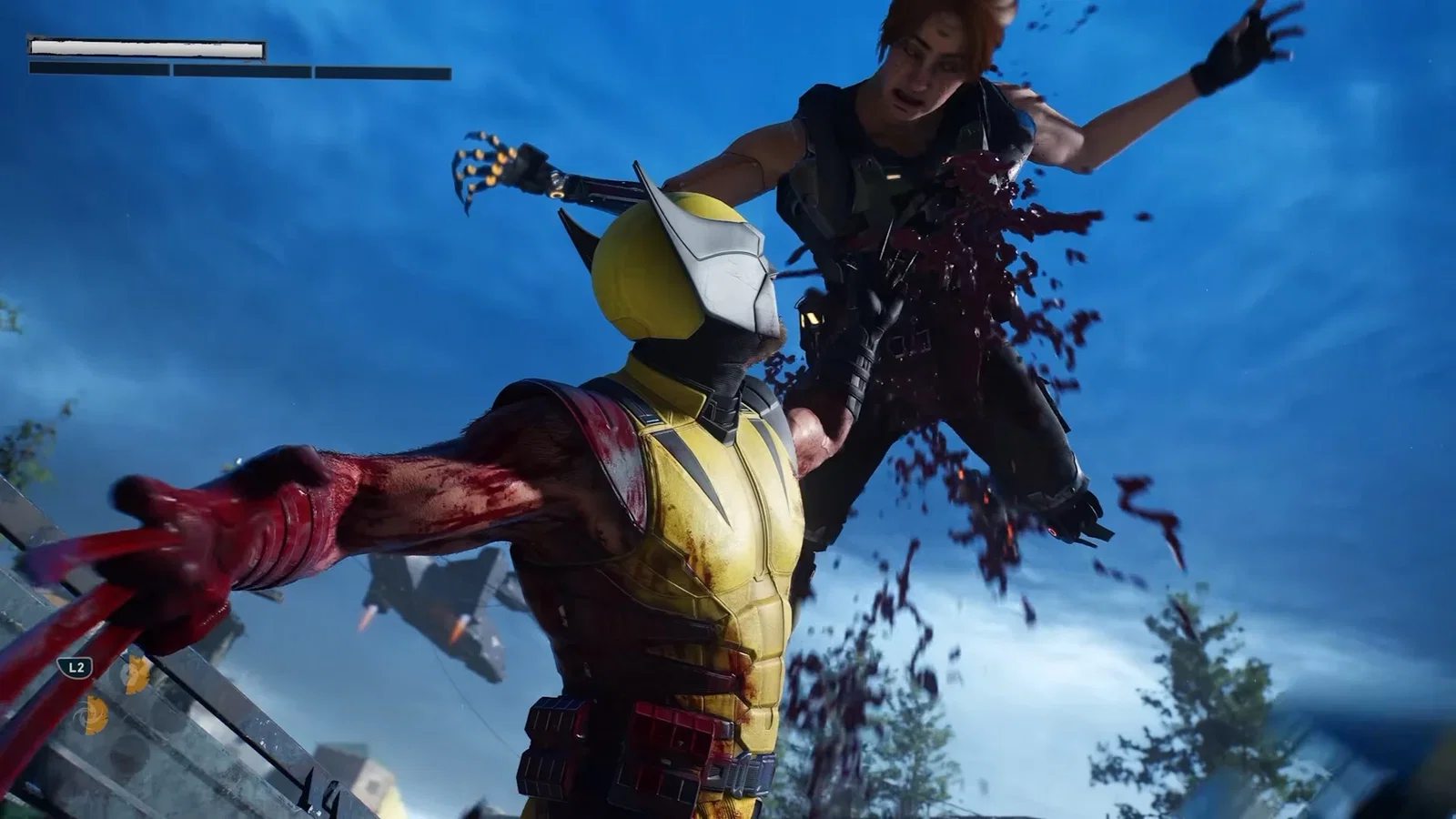
Logan lands more consistently than the plot around him
IGN and The Guardian find a compelling Logan even where they question the larger game. TechRadar likewise sees the cast as part of the appeal; Gram.pl is much colder on this interpretation. Users are similarly split. Positive reviews single out Liam McIntyre, Jean and the emotional side of the story, while others find Logan too restrained, the supporting cast uneven or the finale too interested in what comes next.
The sharpest player disagreements are not merely about how many story scenes there are. They are about which version of Wolverine these scenes deliver. SpazioGames finds the story solid but some character revelations less surprising, while GamesRadar+ calls the larger plot messy. Some player texts also attack the game through political labels or alleged outside influence without explaining a scene or writing decision. Those claims are part of the reaction around the release, but they cannot be treated as evidence about the plot or its production.
This version of Logan is a more particular choice than the word 'brutal' suggests. The combat presents someone frighteningly capable of violence, while the story often asks him to interact with allies, memories and the possibility of caring for other people. For many viewers, that tension gives the violence a character rather than merely a body count. Gram.pl and some users react less warmly to a Logan they perceive as too restrained or softened. Their objection is not disproved by the number of violent finishers: it concerns how he speaks, makes decisions and relates to others outside the fights. The strongest disagreement therefore concerns the person the game imagines behind the claws.
The supporting cast reveals a related gap between an appealing idea and its use in the campaign. In phase one, several reviewers welcomed the X-Men connections and the relationship with Jean, while the press analysis also recorded complaints that Mystique sometimes functions mainly as the voice directing the next objective. A cameo, familiar name or striking introduction can enrich a scene without giving that character much to do afterwards. Players who wanted a wider mutant story often judge those appearances against that expectation; others are content when they serve Logan's focused journey. Neither response can be reduced to whether someone recognises the reference. It is a question of whether a character alters the drama or just briefly decorates it.
Another part of the story also divides people. The earlier comparison noted that the Japan portion was criticised by one review for disrupting the overall arc and valued by another for its energy and setting. A claim that the entire section succeeds or fails would erase that split. Several user comments instead focus on whether the last stretch resolves Logan's immediate conflict satisfactorily before pointing to future events. Those are reasonable questions to ask of the story without disclosing twists in an analysis meant for readers who may not have played. Political accusations in some Metacritic posts do not establish who influenced production; concrete complaints about a scene, character or ending give us a firmer basis for discussion.
Critical breakdown
IGN · The Guardian · TechRadar
SpazioGames
Gram.pl · GamesRadar+
Player breakdown
Strong performances and a Logan worth following.
Enjoyable characters alongside doubts about the plot.
A softer interpretation and an uneven story.
A focused length has different value at full price
Gameblog and GameMeca see value in a campaign that does not stretch its story across an open world. ACG enjoys much of the action but is more cautious about the asking price once the range of activities is considered; Game*Spark and CD-Action also question whether the compact scale and repeated play justify paying full price. This is not a disagreement over a single objective number of hours. It is about what those hours contain.
The player texts reproduce that split. Some are relieved to finish a focused story without dozens of hours of map-clearing. Others enjoy the combat and performances but still recommend a sale because of the price, side content or replay value. The corpus contains different claimed playtimes, which are self-reported and do not establish one objective campaign length.
The price comments in the corpus are especially revealing when they come from people who enjoyed part of the game. Some praise the presentation or Logan and still recommend waiting for a discount; others say that a focused, polished experience met their expectations at the price they paid. We cannot infer a single universal value threshold from those posts. Prices vary by region, edition and date, while the file does not verify purchases. What can be compared is the reasoning: one side pays for a tightly produced campaign and wants little filler, while the other expects greater mechanical variety, replay value or optional material before paying full price. Those are distinct priorities rather than a dispute that a stopwatch can settle.
Presentation is a major part of the value proposition, and it deserves more than a passing compliment. The phase-one analysis found widespread praise for animation, faces, gore and cinematic direction. Yet the close camera illustrates how a strength can also have a practical cost: it makes Logan's attacks feel intimate, while some critics found that it can obscure threats around him. ACG's preference for the responsiveness of 60 fps on a base PS5 is another reminder that spectacular images and the feel of controlling a fight are connected. We should not turn different hardware and mode impressions into a single measured performance claim; they describe what particular reviewers valued during their sessions.
User reports of crashes and glitches require the same attention to time and version. Insomniac's v1.001.005 note says it addressed crashes affecting a small percentage of players. Its v1.001.006 note lists additional fixes, including reported crashes, a possible mission blockage and a rare visual issue. Those notes support saying that known problems were targeted, not that every player's issue is gone or that every negative report was false. Conversely, a review written during launch week cannot establish the state of a later build. For readers deciding whether to play now, the useful question is which criticism concerns the underlying design and which one may have been changed by an update.
Critical breakdown
Gameblog · GameMeca
ACG
Game*Spark · CD-Action
Player breakdown
Some players welcome the focused length.
Some enjoy the game but find its price or optional content harder to justify.
Short duration, limited variety or an asking price they find too high.
The argument around the score is part of the story, but not proof of who played
Of the 2,231 rows supplied, 667 carry a 10 and 409 a 0: together, the two endpoints make up 48.2% of the file. Some users openly say they scored the game higher to counter very low scores. Other posts accuse their opponents of review bombing, and some very low scores discuss the developer or cultural politics more than specific play. Yet there are detailed criticisms at low scores and detailed praise at high scores too. Neither endpoint can simply be thrown out.
The CSV has no account identifier, proof of purchase or language field. Seven review texts appear more than once after whitespace and case normalisation; keeping all rows or dropping those exact repeats leaves the 7–10 share at 58.5% when rounded. These numbers describe the submitted Metacritic corpus, not a representative survey of Wolverine owners. A review scoring the game 1 can even praise its combat: scores are not a safe shortcut to the writer’s opinion on a particular feature.
The score chart stands out, but it needs care. A 10 can reflect intense enjoyment, a wish to counter perceived hostility, or both. A 0 can accompany a detailed account of disappointing systems, a protest about the game's direction or very little discussion of the game at all. The text shows examples of these motives, but the CSV has no way to identify every writer's intent. Calling all low scores bombing, or treating all high scores as pure enthusiasm, would turn suspicion into a fact. The distribution tells us that the responses in this supplied file are polarised; it does not tell us how many owners would vote the same way.
We grouped the scores into three bands to make them easier to read. A score of 7 sits in the 7–10 group, yet a writer giving 7 may spend most of their review explaining reservations. Likewise, someone giving a 3 might praise a performance or a particular fight. The combat example in the corpus makes this point concrete: a very low overall score can still contain approval of that feature. Theme-level statements therefore come from what the text says, while the chart counts the scores exactly as entered. Neither the chart nor a thematic bar should be read as an estimate of the percentage of verified PlayStation owners who like the combat, story or game as a whole.
That is why the reasons behind the reviews matter more than a contest between average scores. Reviewers and users repeatedly notice the same ingredients: an imposing Logan, forceful close combat, a narrow route, repeated foes and a highly produced presentation. They differ in which cost they are willing to accept. For one person a clear route removes friction; for another it removes discovery. For one, a compact length protects momentum; for another it magnifies repetition at full price. The important result is a map of those trade-offs. It helps a prospective player decide which side of each disagreement resembles their own preferences without pretending the corpus produces a universal verdict.
Descriptive bands for the 0–10 user scores. These bands are not theme-level sentiment or verified-owner satisfaction.
2,231 texts dated 16–29 September 2026; 667 scores of 10 and 409 scores of 0. No language or account ID was supplied.