

Marvel's Wolverine: What Critics Think
21 professional reviews · press coverage through 13 September 2026
Across the selected international reviews, Marvel's Wolverine is easier to agree on than its scores suggest. Critics broadly recognise a strong portrayal of Logan, exceptional physicality, and combat that immediately sells the fantasy of being Wolverine. The disagreement begins once that first impact has settled: some see a focused blockbuster whose simplicity keeps the pace moving, while others see a highly guided action game that reveals too little mechanical depth across its campaign.
Consensus map
Where the critical consensus holds — and where it breaks
| Aspect | Consensus | Dissent / Weight |
|---|---|---|
| Logan and performances | One of the game's clearest strengths | Gram.pl is notably colder on this interpretation of Logan |
| Combat impact | Visceral, readable, and immediately satisfying | The dispute is how long that satisfaction survives limited evolution |
| Linearity and guidance | Deliberately focused rather than open world | Ranges from welcome discipline to patronising over-guidance |
| Enemies and bosses | Repetition becomes a recurring concern | GameMeca sees stronger adaptation; A9VG is much warmer on bosses |
| Story | Character work lands better than the overall structure | Pacing, the Japan act, and the finale divide reviewers sharply |
| Production values | High-end visuals, animation, gore, and cinematic direction | Polish does not settle the argument over depth or value |
This is a qualitative synthesis, not a score average. It reflects recurring arguments and meaningful disagreements across the selected reviews.
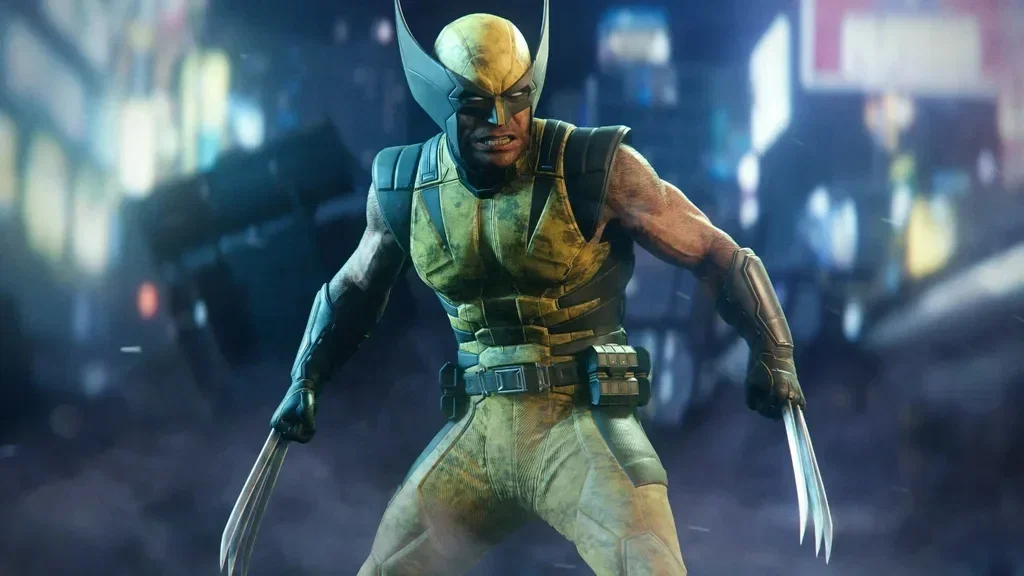
Wolverine is stronger than the game built around him
The most stable positive argument concerns Logan himself. IGN calls the story's portrayal of him surprisingly nuanced even while scoring the game 6/10, and The Guardian similarly finds a compelling, conflicted lead inside a more ordinary action framework. TechRadar, Jeuxvideo.com, and Tom's Hardware Italia also treat the character work as one of the main reasons the campaign holds together.
ACG is warmer than expected on the story and on Liam McIntyre's performance, while Skill Up separates its broader criticism of the game from several things it likes in the cast. Its Logan is more patient and more comfortable operating with others than many familiar versions of the character; Nathaniel Essex is singled out positively, and parts of the Logan–Jean relationship work. Mystique, however, is seen as underused, too often reduced to the voice delivering the next objective.
The main outlier here is Gram.pl, which is much less persuaded by the chosen interpretation of Logan and by the relationships surrounding him. That dissent matters because it shows that the broad praise is not merely a reaction to production values: most of the corpus is responding to a specific version of the character, while Gram.pl rejects that version on its own terms.
Violence sells the fantasy; depth decides whether it lasts
The first hours produce unusually broad agreement. Wolverine's claws, visible regeneration, Rage, finishers, dismemberment, close camera, and aggressive gap-closing give combat an identity that is instantly legible. ACG emphasises the intimacy and brutality of the camera, the use of environmental attacks, parries, dodges, special moves, and the way Rage connects to Logan's ability to heal. Game*Spark reaches a related conclusion from a different angle: the most character-specific part of the system is how healing and survival reward continued aggression.
The split appears when critics ask how much the system changes after that first impact. GameSpot finds a solid foundation but too little weight, flow, or challenge in its cooldown-driven abilities and forgiving defence. IGN says the action shows its hand early; GamesRadar+ finds the Rage system and progression less consequential than they initially appear; and SpazioGames argues that an interesting combat system is weakened by permissive difficulty and passive AI.
This is also where Skill Up is most severe. It finds the opening catharsis appropriate to Wolverine but argues that the player masters both the kit and the enemy design too quickly, after which the game does not develop enough new demands. ACG reaches a less negative version of the same diagnosis: combat remains fun and improves as more skills and adaptations accumulate, but the mechanical sophistication never quite matches the ferocity of the presentation.
Linear by design, guided by default
There is much less disagreement about the absence of an open world than the review discourse might suggest. ACG considers a linear format appropriate for Wolverine, and GameMeca sees the focused structure as a strong fit for the character and the story. Gameblog and Tom's Hardware Italia likewise accept the game as a deliberate blockbuster rather than a failed Spider-Man-style sandbox.
The criticism begins when linearity becomes a question of agency. Skill Up argues that Wolverine constantly anticipates, highlights, or explains what the player should do, turning navigation, secrets, traversal, and even simple problem-solving into heavily signposted routines. That is the foundation of its broader warning about AAA design: the game is not merely accessible, in this reading, but actively unwilling to let the player be uncertain or make a mistake. GamerSky observes the same strong visual guidance in a much less hostile way, while Gameblog describes investigation and traversal as very guided and SpazioGames connects the larger issue to low difficulty and limited resistance from the AI.
The Guardian, GamesRadar+, CD-Action, and A9VG all approach the problem from slightly different directions: restrictive environments, corridor-like staging, repeated structures, or spaces that look freer than they actually are. Together they suggest that the central concern is not simply linearity, but the gap between visual scale and the amount of meaningful choice that scale permits.
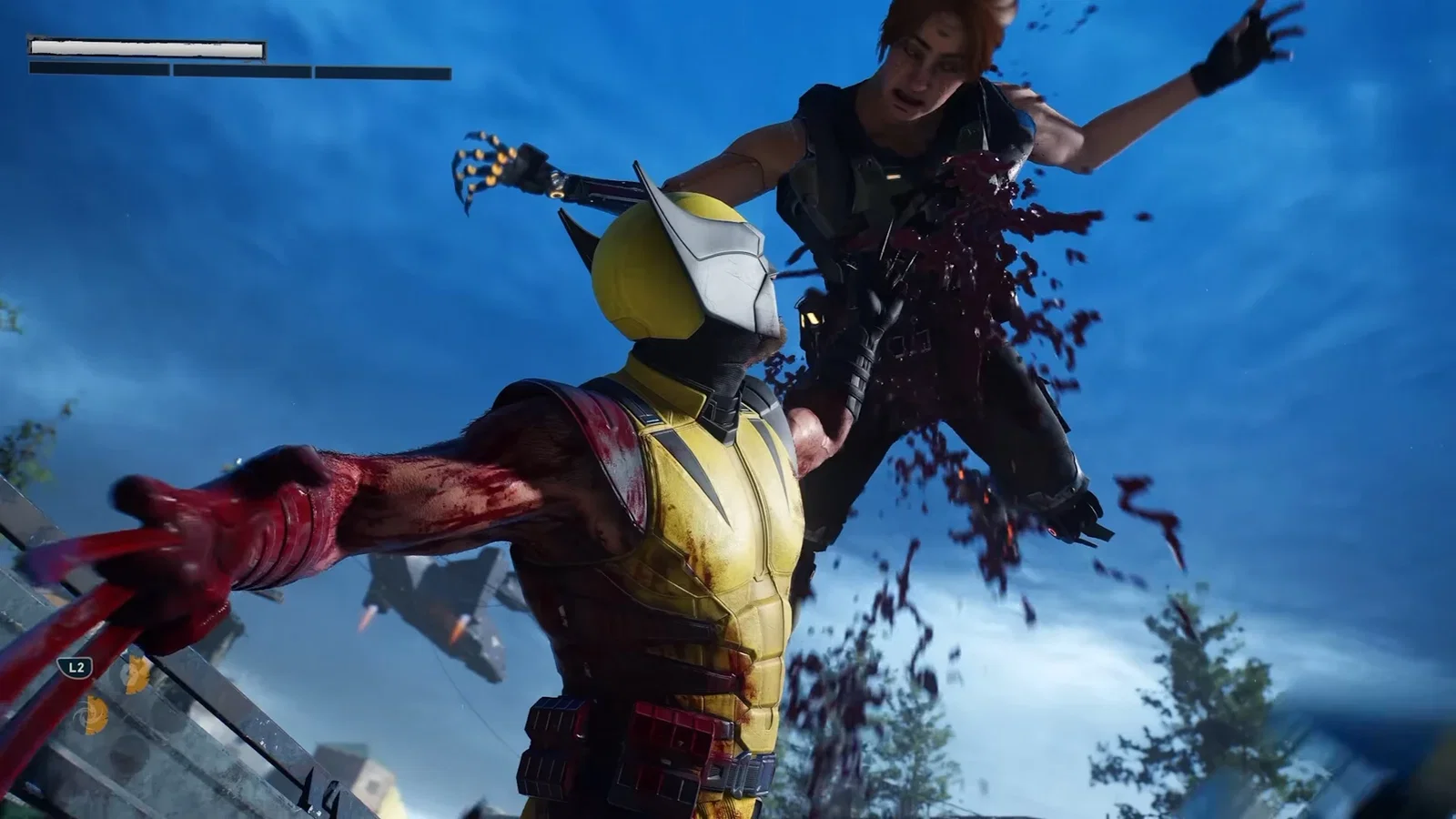
Enemies, bosses, and progression expose the limits of the combat loop
Enemy variety is one of the closest things to a negative consensus. Skill Up, The Guardian, GamesRadar+, GamePro, Inven, CD-Action, Gram.pl, GamerSky, and A9VG all describe some combination of repetition, limited archetypes, or encounters that stop creating new problems. The important counterexample is GameMeca, which argues that Reavers, the Hand, Sentinels, and environmental gimmicks introduce enough specific counters to keep adaptation meaningful.
Bosses are even more polarising. Skill Up judges them harshly and treats the Sentinel as a particular low point; several other reviews complain about their number or variety. A9VG, however, sees the core boss battles as some of the game's best set pieces. SpazioGames is also warmer on boss pattern readability and challenge at higher difficulties. The disagreement suggests that boss design may depend heavily on what the reviewer values: mechanical pressure and novelty on one side, spectacle and authored pacing on the other.
Progression produces a similar pattern. ACG sees the combat improve as the kit expands, but GamesRadar+ questions how the unlock curve is paced, Gram.pl finds too few upgrades genuinely transformative, and A9VG argues that the skill tree can be exhausted without creating much specialisation. Across these reviews, the recurring distinction is between having many options and being given compelling reasons to change how you play.
Strong relationships sit inside a more disputed story structure
The narrative consensus is more precise than “good story” or “bad story.” Character work is usually praised; pacing and structure are not. ACG is positively surprised by the story, IGN says the character writing carries much of the campaign, and The Guardian responds strongly to Logan's conflicted identity. Skill Up, however, describes the plot as padded and poorly paced, with the final stretch increasingly occupied by setup and sequel bait rather than resolution.
The Japan act is a useful example because the same material produces opposite judgments. Skill Up sees the second act in Japan as part of the structural problem, while GamesRadar+ considers Tokyo one of the livelier and more successful parts of the campaign. That disagreement makes it difficult to reduce the middle of the game to a universally weak section. What does recur more widely is the feeling that the story moves in blocks rather than always building momentum cleanly from one act to the next.
The wider X-Men universe creates another split. Skill Up and Gram.pl think Insomniac leaves too much of that potential unused, whereas SpazioGames, CD-Action, A9VG, and GameMeca are more satisfied with the gallery of mutants, villains, references, and relationships. Again, the difference is partly one of criteria: the game contains substantial Marvel material, but reviewers disagree on whether that material meaningfully changes the structure of the adventure or mainly enriches its presentation.
High-end production cannot settle the argument over value
Visual production is rarely the source of disagreement. GamerSky, GamePro, TechRadar, SpazioGames, and Tom's Hardware Italia all praise some combination of animation, facial work, environments, gore, cinematic staging, and overall polish. The camera is more complicated: ACG sees its closeness as central to the brutality but also a practical source of trouble, while Inven treats that same intimacy more positively and GamePro, CD-Action, and Gram.pl all note moments where readability suffers.
Performance impressions are broadly solid, but the preferred mode depends on the hardware and the reviewer. ACG, playing on a base PS5, strongly prefers 60fps because 30fps makes close combat feel heavier and less responsive. Reviews conducted on PS5 Pro, including GamerSky and TechRadar, focus more on the strength of the visual presentation, while SpazioGames reports a convincing Performance mode that largely holds 60fps with expected reductions in image quality.
Duration is not a simple weakness either. Several critics finish the campaign in roughly the mid-teens of hours, while others extend closer to twenty depending on optional content. Jeuxvideo.com, Gameblog, Tom's Hardware Italia, and GameMeca often treat that concentration as a benefit to pacing. ACG, Game*Spark, and CD-Action are more sensitive to the price-to-variety equation: a compact game can justify full price, but repetition, thin side content, or limited mechanical growth make the same runtime feel less generous.