


Planet Zoo 2: What Critics Think
12 professional reviews · press coverage through October 13, 2026
Building a zoo, choosing the animals, creating habitats that meet their needs, and keeping the finances under control. Planet Zoo 2 follows the formula of the first game but adds aquariums, aviaries, and wildlife reserves where you can release the animals you've raised. You still have to look after visitors, staff, and facilities, but now you can also take part in conservation efforts beyond the zoo itself. We've compared what we consider the most authoritative international press reviews available when the embargo lifted. The overall reception is positive, but one problem comes up repeatedly: Planet Zoo 2 gives you an enormous number of possibilities without always making the work required to use them enjoyable. And reviewers can't even agree on how challenging the financial management really is.
Consensus map
Where the press agrees and disagrees
The main points of agreement and disagreement across the reviews.
Animal models and animations receive widespread praise.
TakeawayThe animal presentation is one of the game's greatest strengths.
Plenty of systems, but disputed economic difficulty.
TakeawayMore work doesn't necessarily mean a better challenge.
Enormous freedom, often complicated controls.
TakeawayGreat possibilities, less consistent tools.
Aquariums and aviaries greatly expand the possibilities.
TakeawaySuccessful additions that don't reinvent the formula.
A great idea with disputed management depth.
TakeawayThey give conservation a new purpose.
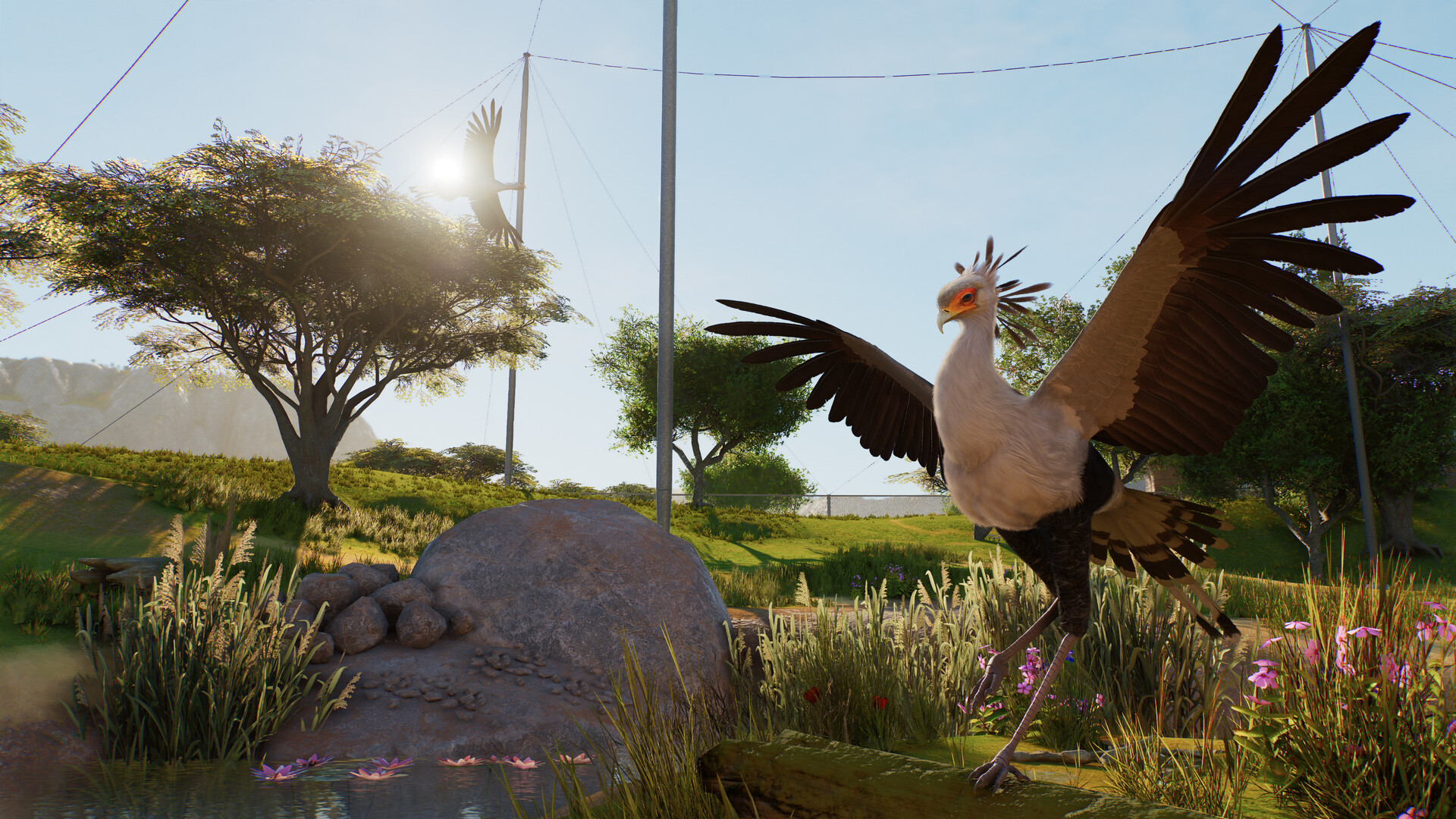
The animals are the main reason Planet Zoo 2 works so well
One thing that stands out across the reviews is just how much attention has gone into the animals. It's not simply about the number of available species, but how they move, react, and interact with their surroundings. You can watch a tiger scratching itself against a tree, a group of animals moving together, or creatures playing and fighting with one another. These little details make the habitats feel like places inhabited by living animals rather than enclosures filled with 3D models.
It's probably the clearest point of agreement in the entire analysis. Even PC Gamer, which gives the game just 60/100, considers the animals exceptional. Its review praises the models, animations, and sounds, describing animal watching as one of the most enjoyable activities. Destructoid is equally enthusiastic and highlights how different species behave in different ways. The quality of their movements is one of the main reasons behind its 9.5/10 score.
ACG describes a series of small disasters at his zoo, from escaped zebras and damaged fences to visitors running for the exits. He enjoys how the player's decisions create consequences and unexpected situations, although not every strange event is necessarily intentional. Some animations and collision problems can produce rather unbelievable results. Reviewers also praise the vegetation, changing seasons, lighting, and variety of environments.
The animals themselves are therefore a clear success. That doesn't mean every movement is perfect, but the quality achieved here makes the rest of the experience more rewarding. Building a habitat takes time; watching the animals actually use it is what makes that work worthwhile.
Critical breakdown
Animals and presentationPC Gamer · IGN · Destructoid · ACG · Push Square · Xboxygen · Gameswelt · Galaxus · GRY-Online · PCMGames · Pizza Fria · ID.nl
Managing the zoo is interesting, but critics disagree on the economic challenge
Planet Zoo 2 is first and foremost a management game. You have to buy animals, build habitats, hire staff, and keep your facilities running. At the same time, you need to attract visitors, manage shops, control expenses, and invest in research. Animal welfare depends on many factors: food, space, temperature, vegetation, and social relationships. And every species has different requirements.
Many reviewers enjoy having so many systems to manage. Xboxygen appreciates how organisational decisions require attention, while Gameswelt considers the relationship between staff, animals, and conservation well designed. ACG also finds it satisfying to deal with the consequences of his own decisions. Neglecting a fence or assigning staff poorly can lead to some serious problems.
The disagreement is about whether all this complexity creates a genuinely challenging experience. IGN argues that the economy requires careful management. Its review describes an experiment involving a small zoo, just a few animals, and expensive tickets. Simply building a few attractions and waiting for the money to come in doesn't work. You have to think about staffing, prices, visitor satisfaction, and reputation.
PC Gamer reaches the opposite conclusion. According to the publication, once you've built a few shops, installed donation bins, and kept hiring under control, making money becomes fairly easy. The reviewer describes spending a lot of time adjusting habitats without seriously damaging the zoo's finances. Galaxus also finds that the economic challenge largely disappears after a good start.
There's another criticism worth separating from the financial challenge. PC Gamer argues that the game constantly asks you to monitor specific conditions, but solving problems often means selecting objects, modifying terrain, and navigating menus. Adjusting temperature, vegetation, or habitat size can become repetitive. Pizza Fria offers a more positive perspective, appreciating the work performed by employees and the opportunities to automate certain tasks.
Management remains a strength because developing a zoo involves plenty of decisions. But having deep systems doesn't necessarily mean the economic challenge is equally deep. If keeping the business profitable becomes easy while habitat maintenance continues to demand constant attention, the game risks giving you lots of work without making that work especially challenging. That's the main limitation emerging from the comparison.
Critical breakdown
Management and economic simulationIGN · Destructoid · ACG · Push Square · Xboxygen · Gameswelt · PCMGames · ID.nl
You can build almost anything, but the tools aren't always enjoyable to use
One of the main reasons to play Planet Zoo 2 is the freedom to design habitats exactly how you want them. You can modify terrain, choose plants and decorations, construct buildings, and even customise the interiors of certain facilities. Many objects can be resized, and you can use ready-made blueprints or build everything piece by piece. You can also download community creations through the Frontier Workshop.
Critics almost universally recognise this freedom. IGN particularly appreciates being able to customise the interiors of restaurants, shops, and staff facilities. Destructoid highlights improvements to the terrain editing tools, especially for aquatic environments. These changes make more elaborate constructions possible than in the original game.
The problem appears when you try to perform relatively simple tasks. Laying down a path, positioning a decoration, or selecting the right object can take several attempts. ACG acknowledges that the path-building system has improved, but still encounters problems aligning certain elements. Gameswelt also points out that finding a particular function isn't always straightforward, as some settings are buried in unintuitive menus.
These difficulties are more noticeable on consoles. Push Square appreciates the creative possibilities on PS5 but describes an interface filled with menus and controls that take time to learn. Xboxygen reports similar problems on Xbox Series X, especially when precise terrain editing is required. Not every review is equally critical, however. Pizza Fria, reviewing the PC version, finds the interface relatively intuitive after the first few hours.
Building is therefore successful in terms of possibilities, but less consistent when it comes to actually using the tools. Powerful features matter, but so does being able to use them without constantly fighting selections, paths, and menus. Ready-made blueprints reduce some of the workload, but the problem remains for anyone who wants to create original environments. And that's a significant weakness because building is central to the entire experience.
Critical breakdown
Building and interfaceIGN · Destructoid · PCMGames · Pizza Fria
ACG · Push Square · Xboxygen · Gameswelt · Galaxus · GRY-Online · ID.nl

Aquariums and aviaries are the sequel's most convincing additions
The most obvious difference from the first Planet Zoo is that you can now keep fully aquatic animals and birds that fly freely. It's not just a matter of adding new species. You also have to construct different kinds of habitats, with specific requirements involving water conditions or flying space.
In aquariums, you can create customised tanks, shape the underwater terrain, and build viewing tunnels. You have to monitor water temperature, quality, and salinity, as well as install appropriate filtration systems. Some species can live together, while others have incompatible needs. This adds new decisions to both construction and management.
ACG considers aquariums one of the game's best additions. He describes spending a surprising amount of time simply watching the animals swim, but also enjoys managing water conditions and the various environmental requirements. Destructoid is just as positive, particularly about the movement of fish and the habitats designed specifically for aquatic species.
Aviaries follow a similar approach. You can construct enclosures with different shapes and heights, while flying birds add vertical movement to the environments. Some reviews point out that the selection of bird species could be larger and that certain animations are occasionally unconvincing.
Pizza Fria is more cautious about how much these additions change the experience. It finds them interesting but notes that their management remains similar to land-based habitats. PC Gamer also appreciates the birds without considering them a fundamental change to the simulation. The result is still positive: aquariums and aviaries make zoos more varied and introduce different requirements. They don't reinvent the formula, but they add content the original game was genuinely missing.
Critical breakdown
Aquariums and aviariesIGN · Destructoid · ACG · Push Square · Xboxygen · Gameswelt · Galaxus · GRY-Online · PCMGames · ID.nl
Wildlife reserves give animals a new purpose, but not everyone finds them deep enough
In the original Planet Zoo, you could release animals into the wild, but that action essentially marked the end of their journey. Planet Zoo 2 introduces actual wildlife reserves where you can prepare ecosystems and observe animals after they're released. You have to choose suitable vegetation and environmental conditions, look after biodiversity, and make sure the species have an appropriate place to live. You can also drive around the reserves and photograph the animals.
Destructoid considers this addition particularly successful. Its review describes approaching a young elephant during a photography mission and triggering a reaction from the herd. It's an example of how these reserves can be more engaging than expected. ACG also appreciates being able to follow animals after their release, because it creates a real connection between raising animals at the zoo and protecting wildlife.
Opinions change when reviewers consider the depth of the management systems. IGN finds the reserves interesting to visit but relatively shallow as ecological simulations. Tasks such as removing invasive plants simply require selecting and deleting them, without organising specialist staff or dealing with more complicated systems to maintain the environment over time.
ID.nl makes a similar criticism. The game asks you to consider relationships between predators, prey, and the environment, but doesn't always simulate those relationships in much depth. Once the required species are present, certain conditions are considered satisfied without demanding careful population management. PC Gamer also finds the activities rather uninteresting and believes the constant travel between zoos and reserves makes the campaign more cumbersome.
The distinction is fairly clear. Wildlife reserves work well as an extension of the conservation theme because they finally show what happens to animals after they're released. They're less convincing as independent ecosystem simulations. For players who enjoy observing and photographing wildlife, they add variety. Anyone looking for complex environmental management, however, may find them too simplistic.
Critical breakdown
Wildlife reserves and conservationDestructoid · ACG · Push Square · Xboxygen · Gameswelt · Galaxus · PCMGames
IGN · GRY-Online · Pizza Fria
The campaign helps you learn, but technical problems remain
Planet Zoo 2 offers three main game modes. Career gradually introduces the mechanics through scenarios with specific objectives. Sandbox lets you build freely while adjusting numerous simulation rules. Franchise connects different zoos and reserves, allowing players to trade animals with one another.
Reviewers appreciate the amount of content, but not everyone finds the campaign particularly interesting. Destructoid considers the opening missions rather dull, although useful for learning the mechanics. IGN also describes Career primarily as an extended tutorial. Pizza Fria, whose reviewer hadn't played the original game, appreciates the explanations and the way the management systems are introduced gradually.
The technical side varies considerably between reviews. Xboxygen reports slowdowns on Xbox Series X, particularly when modifying wildlife reserves, along with animals occasionally passing through fences. These are significant problems in a management game where controlling habitats is essential.
The PC reviews aren't entirely consistent either. ACG describes a generally stable experience, although very complex structures can affect performance. Destructoid reports occasional slowdowns and visual issues without considering them particularly serious. Pizza Fria notices frame-rate fluctuations even on modern hardware, while Gameswelt reports relatively minor technical problems.
Career succeeds at its main purpose, which is gradually introducing players to a complicated simulation. Technical polish is less certain: the reported issues vary in severity, and there's no basis for assuming that a single problem affects every version. Control difficulties, however, are particularly well documented on consoles, where they add to an already complicated interface.
Critical breakdown
Technical performance and stability