


Star Wars: Galactic Racer: What Critics Think
14 professional reviews · press coverage through October 2, 2026
Star Wars: Galactic Racer gives critics plenty of reasons to keep racing. The vehicles feel different, collisions matter, and choosing when to push your machine is part of the fun. The bigger question is what happens after you lose. Are you excited to rebuild and try again, or annoyed that you have to work your way back through familiar races? Across these fourteen reviews, the driving gets a much clearer recommendation than the campaign built around it.
Consensus map
Where critics agree—and where they don't
The main strengths and reservations across the professional reviews.
Strong handling, speed and vehicle differences.
Learning the harder machines can be demanding.
TakeawayThe clearest reason to play.
Upgrades make another attempt worth considering.
Late defeats can make repetition tiring.
TakeawayGood ideas, with a substantial cost for failure.
Several reviews describe unclear routes.
VGC finds the tracks easy to follow.
TakeawayA weakness that matters when crashes are costly.
Familiar tracks give you room to improve.
Some reviewers want new places much sooner.
TakeawayLearning the tracks helps; repetition still has limits.

The racing gives you reasons to ease off, too
You're closing on another racer, the track is narrowing, and you could use a little more speed. But pushing the machine also means dealing with heat and damage. That's the kind of decision these reviews keep coming back to. Going faster matters, but so does knowing when the extra risk is worth taking. Destructoid praises the handling, while VGC enjoys how aggression and racing fit together.
The vehicle classes give you different ways to approach that pressure. IGN makes much of how differently the machines handle. Changing class means learning another way to take corners and manage the race. That helps explain why critics aren't just praising the sensation of speed: they also find things to learn once the initial excitement wears off.
Some machines ask considerably more of you. Game Informer finds the required podracer races frustrating within the campaign. A difficult vehicle can be fun when you choose to practise with it, and much less welcome when struggling with it threatens a run you've already invested time in.
So the driving deserves a clear positive judgment. The reviews describe a game that rewards control, timing and adapting to the machine, which gives you reasons to keep improving. The harder classes don't undo that strength, although the campaign can introduce them in a way that makes mistakes feel expensive. If fast arcade racing is what brought you here, this is the part most likely to justify staying. It has enough going on behind the speed to support more than a few spectacular races.
Critical breakdown
Driving and vehicle classesVGC · Game Informer · Destructoid · GameSpot · IGN · ActuGaming · Gamekult · PC Games · Gameswelt · MondoXbox · UAGNA · GRYOnline · GameOnly · Game*Spark
Choosing upgrades changes what you do on the track
Before the next race, you have to decide what your machine needs. More help with cooling? Something that lets you survive collisions? A combination that encourages you to attack other racers? The interesting part is having to race with that choice afterwards. GameSpot enjoys trying different combinations, and MondoXbox finds that preparing the vehicle adds a lot to the campaign.
Some combinations go further than improving an individual statistic. IGN describes upgrades that work together around takedowns, autopilot and battery use. Those connections give you something to plan around. You can start thinking about which actions will help the whole setup work, rather than picking whichever part has the most attractive number.
The catch is how much control you have over getting the setup you want. IGN dislikes losing favourite upgrades and having to find them again. Game*Spark also points to the resources shared between different choices. Finding a promising part doesn't mean you can freely put together every combination you'd like.
The upgrades are therefore a genuine strength, because they give the racing another decision to work with. A useful setup changes how you approach opponents, risk and the next track. The weaker part is access: the campaign sometimes takes away the combination you wanted to keep developing. That can encourage experimentation, but it can also interrupt it. The fair judgment is positive on what the upgrades let you do, with a reservation about how often you're allowed to build the machine you actually want.
Critical breakdown
Upgrades and vehicle buildsVGC · Game Informer · Destructoid · GameSpot · ActuGaming · Gamekult · PC Games · Gameswelt · MondoXbox · UAGNA · GRYOnline · GameOnly
Losing means more when you've already won several races
The campaign groups races into runs. You build up your machine as you go, but enough failures end the attempt. Some progress stays with you; the temporary setup doesn't. The campaign's acts give that restart a boundary, so losing doesn't always send you back to the beginning of the whole story. It still means doing more than retrying the race that stopped you.
GameSpot loves the tension this creates. Taking a risk matters when you have something to lose. PC Games also finds the repeated attempts rewarding. Better driving and a different set of upgrades can give the next run a reason to exist.
But Destructoid questions how much the structure stretches the campaign. MondoXbox describes the frustration of losing late in an attempt. Keeping permanent progress softens that defeat, but it doesn't give you back the time spent getting there. And GameOnly's complaints about aggressive opponents show why the cause of a failure matters, too.
This makes the campaign mixed, for a concrete reason. It succeeds at making your decisions feel important: you're protecting an attempt, rather than treating every race as disposable. It works less well when the route back to the difficult part starts feeling like work you've already done. Changing upgrades helps, but doesn't guarantee that every repeated race becomes interesting again. If you enjoy rebuilding after a defeat, the structure gives the driving a strong purpose. If you mainly want to keep moving forward, it can get in the way of the game's best part.
Critical breakdown
Run-based campaignVGC · Game Informer · GameSpot · Gamekult · PC Games · UAGNA · GRYOnline · Game*Spark
Destructoid · IGN · ActuGaming · Gameswelt · MondoXbox · GameOnly
You need to see where the race is going
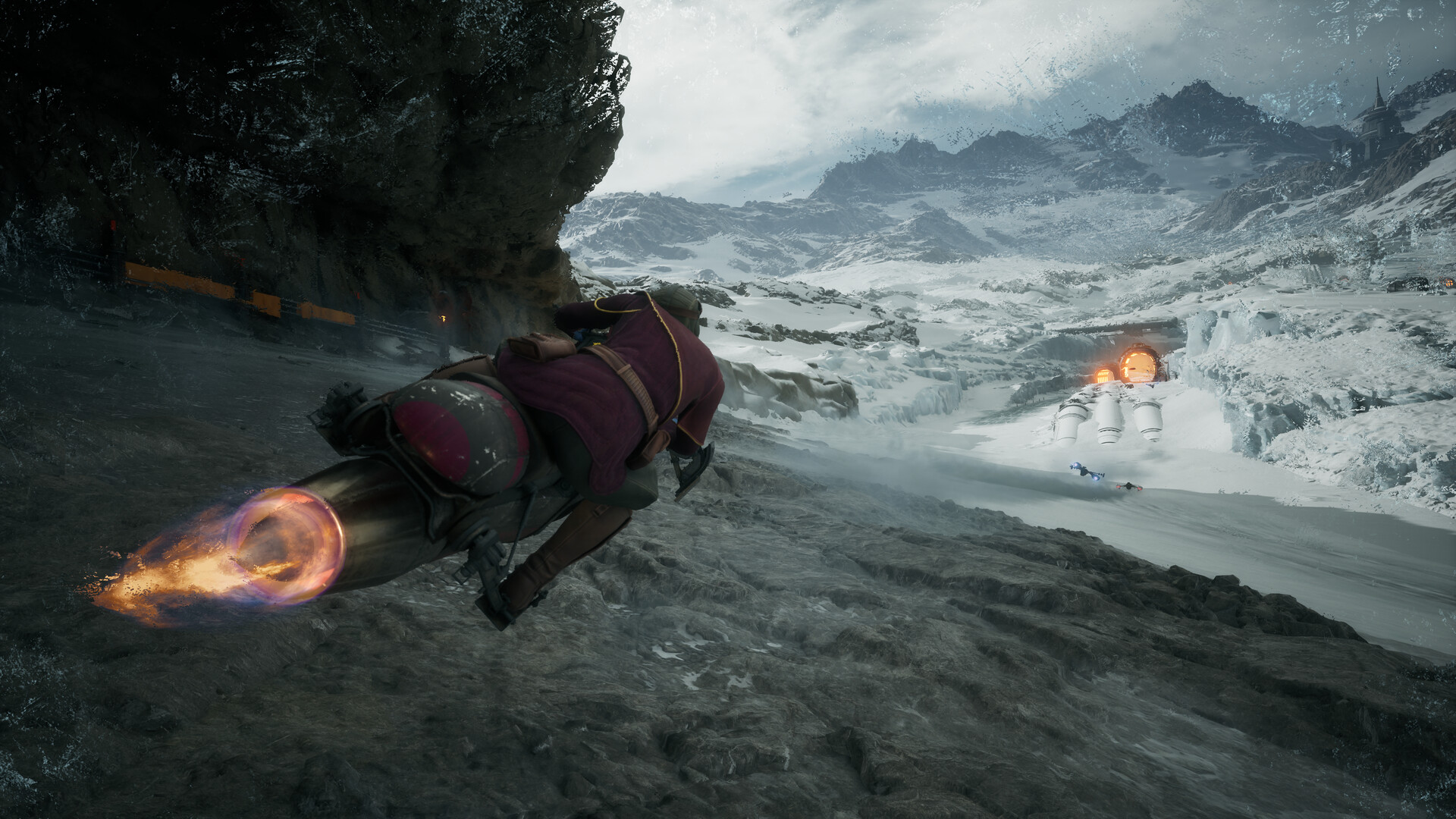
A track can ask you to learn a difficult corner. That's fine. It's more troublesome when you're unsure which opening is the route and which one will send you into a wall. GameSpot points to unclear signs on Jakku, and GRYOnline describes similar trouble understanding where to go.
UAGNA also finds that lighting, smoke and effects can make the route harder to read. Game Informer gets more comfortable as it learns the courses, but describes an initially confusing experience. That's an important distinction: becoming familiar with a route can solve your uncertainty without making the original presentation clear.
Not everyone has this problem. VGC praises track readability. We shouldn't turn the complaints into a claim that every course is confusing for every player. But the same concern appears often enough, with specific examples, that it deserves more than a passing warning to practise.
This is a weakness in how the racing is presented. You can reasonably be asked to improve your braking or manage heat better; you also need enough information to make those decisions. When a crash starts with uncertainty about the route, the campaign's punishment becomes harder to justify. Familiarity can reduce the problem, so it doesn't cancel out the strong handling. It does mean the game sometimes makes learning more frustrating than it needs to be, especially while you're still discovering the tracks.
Critical breakdown
Track readabilityGame Informer · Destructoid · GameSpot · UAGNA · GRYOnline · Game*Spark
A familiar track can still be good—but you'd like a new one eventually
On your first visit, you're trying to survive the course. Later, you know where you can push harder and which corner needs care. GameSpot values that growing familiarity. Reusing tracks gives you a chance to do something better with them, rather than constantly moving on before you've learned much.
That doesn't answer every complaint about variety. IGN wants more planets, and ActuGaming gets tired of returning to the same locations, including in the extra activities. You can enjoy improving your racing line and still want the next event to take you somewhere you haven't already spent hours.
Even some enthusiastic reviews want more places to visit. PC Games recognises the advantage of learning the tracks while wishing there were more planets. Gamekult remains very positive but notices the campaign slowing down later on. Enjoying the game and noticing repetition can happen together.
The tracks appear to support repeat racing better than they support a long succession of discoveries. That's a mixed result. Their value doesn't disappear after one visit, because the vehicles and your own improvement give you more to do. But that value has limits, especially when failed runs and extra events bring you back again. More locations wouldn't simply add scenery; they could give the campaign another way to keep your interest. The existing variety is workable, but it's one of the clearest limits on how long the game can stay fresh.
The paddock makes the league feel real, then sometimes keeps you waiting
Between races, the paddock lets you spend time around the people and machines involved in the competition. IGN appreciates how much this adds to the Star Wars setting. The racing feels like something happening in that world, with participants who have lives outside the next starting grid.
The story has supporters, too. Destructoid finds more to enjoy in it than expected from a racing game. GameSpot, though, finds the initial mystery more interesting than its payoff and criticises stiff characters. Giving the competition a story doesn't automatically make every conversation worth stopping for.
That's where the paddock can become a problem. ActuGaming finds the repeated visits tiring, and GameOnly would sometimes prefer to get on with things through a menu. Once the surroundings and conversations become familiar, another visit has to offer more than the atmosphere that impressed you the first time.
The paddock works better at making the league believable than at keeping the campaign moving. That makes it a worthwhile addition with uneven pacing. It gives the races people, context and a place in Star Wars, so removing it entirely would lose something. But the story isn't consistently strong enough to make every interruption welcome. It's a useful reason to care about the competition; it looks less reliable as a reason to delay your return to the track.
Online racing has promise, but the reviews only show part of it
Online races also let players develop their machines across a series of events. Gamekult enjoys the competition. Racing against people could give familiar tracks another source of surprises, because the other drivers don't have to behave the same way each time.
Game*Spark raises a more specific concern: rewards can help the leaders grow stronger across the series, making it harder to catch up. Meanwhile, several reviews describe limited sessions or limited access to opponents. They don't give us a complete picture of how matchmaking and balance will hold up with a wider player base.
So online racing is promising, but it doesn't yet deserve a firm recommendation of its own from this material. The driving gives it a good starting point; the unanswered question is whether a whole series remains enjoyable when you're behind. That's something longer play with a larger population needs to establish. The absence of split-screen is already a clearer limitation: if your plan was to race someone on the same screen, the online mode doesn't meet that need.