


Warhammer 40,000: Boltgun 2: What Critics Think
18 professional reviews · press coverage through October 21, 2026
Warhammer 40,000: Boltgun 2 is a first-person shooter inspired by the fast-paced action of classic DOOM and Quake. You keep moving, gather ammunition and armor, hunt for keys and secrets, and tear through the forces of Chaos with heavy weapons and melee attacks. You can play as Ultramarine Malum Caedo or Sister of Battle Nyra Veyrath, taking different routes through a campaign that visits a wide range of worlds. We compared what we consider the most authoritative international press reviews available after release. The clearest improvement is the level design; the biggest question is how long the firefights can maintain their initial excitement.
Consensus map
Where Critics Agree
The main differences between the available professional reviews.
Powerful weapons, but uneven encounter variety.
TakeawayWeapon feedback is stronger than encounter depth.
Different fighting styles, disputed execution.
TakeawayNyra changes movement, not the campaign itself.
Locations and navigation are much improved.
TakeawayThe clearest improvement over the original.
Conflicting views on challenge and variety.
TakeawaySome shine; others rely on endurance.
Atmosphere and environments earn widespread praise.
TakeawayStrong presentation, with some reported technical issues.
This first analysis covers professional reviews only.
Shooting Still Feels Great, but Violence Alone Doesn't Create Variety
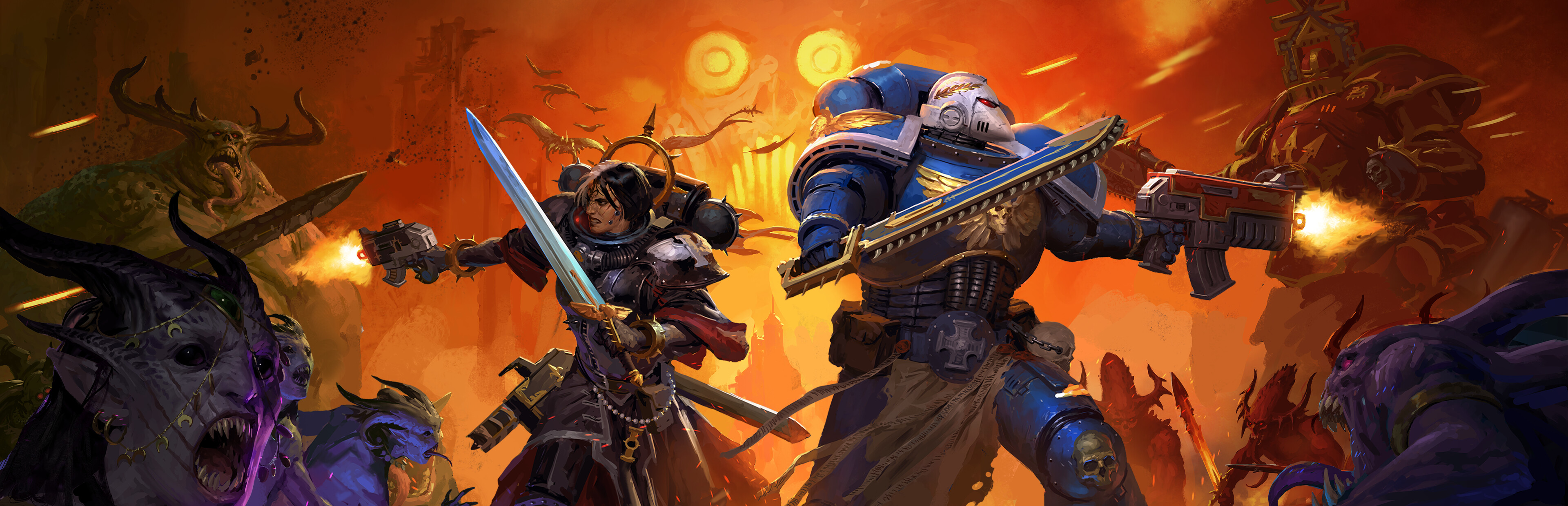
The first Boltgun understood one basic principle: a bolter should feel like an enormous weapon even when you're only seeing it on a screen. The sequel retains the weight of each shot, the roar of gunfire, and enemies bursting into showers of pixels. You aren't meant to stay behind cover. You move, pick up supplies, and decide which threat to eliminate first. Weapons have different ranges and strengths, while melee attacks help you keep up the assault without stopping completely. This is combat designed to feel good in your hands before you start analyzing it.
GamingTrend and WayTooManyGames see a clear step forward. Both praise the encounters and the opportunities to use parts of the environment against enemies. GamingTrend, for example, describes collapsing a structure onto an armored opponent by destroying its supporting pillars. UAGNA also praises the balance between the new weapons and close-range attacks. Yet GamingTrend misses one feature of the original: the numerical indicators for weapon strength and enemy resistance have disappeared, removing a useful way to judge which tools are most effective.
ComicBook reaches almost the opposite conclusion about combat. Michael Leri finds the weapons satisfying, but argues that most encounters don't demand enough from the player: you can often keep shooting as enemies fill an arena. COGconnected and GameSpew are more positive, although both acknowledge that the constant pressure and repeated searches for keys can make some stretches exhausting. The criticism isn't that Boltgun 2 lacks firepower. It's that even a great arsenal can become repetitive when the game rarely changes what you need to do to survive.
Combat works, and its sheer impact is a major reason to play Boltgun 2. But its strongest moments are the ones where an environmental hazard, enemy positioning, or a new threat forces you to make a different decision. Without those changes, the spectacle can only hide the simplicity of an encounter for so long.
Critical breakdown
Combat and WeaponsGamingTrend · WayTooManyGames · IGN · Windows Central · Gamesurf · UAGNA · Xboxygen · GameStar · 3DJuegos · MeriStation · Pizza Fria · GameBlast · BeyondGaming
COGconnected · GameSpew · JVMag · Gameliner
Malum and Nyra Change How You Move, Not the Entire Campaign
The most obvious addition is a choice of protagonist. Malum Caedo returns with his heavy armor, chainsword, and a charge that lets him smash into enemies. Nyra Veyrath is less durable but slides and jumps more quickly, carries a powered sword, and uses weapons such as a flamer. This isn't just a visual distinction. Malum lets you force your way through a position, while Nyra encourages you to strike, reposition, and get back into the fight. You can't freely switch between them during the same campaign, however.
Xboxygen is especially enthusiastic about Nyra because her mobility helps her respond to faster enemies, while Windows Central considers the two styles different enough to make revisiting missions enjoyable. Pizza Fria praises the melee options and how they change the approach to groups of opponents. GamingTrend is less convinced by Nyra's arsenal: her movement brings something new, but some of her weapons are less satisfying than Malum's.
Gameliner and ComicBook raise a more fundamental objection. Once you get past the difference in speed, fights are approached in much the same way, and missions aren't designed around either character's exclusive abilities. JVMag also feels that Nyra's addition hasn't been explored as fully as it could have been. Two separate story campaigns wouldn't be necessary, but choosing a protagonist ought to have more consequences than different animations and weapons.
The characters do improve the immediate variety and give you a sensible reason to come back. They don't transform the rules of the adventure as much as you might expect. This is a successful alternative approach to combat, but a less convincing attempt to change how each mission actually plays.
Critical breakdown
The Two ProtagonistsXboxygen · Windows Central · IGN · UAGNA · Pizza Fria · Gamesurf · WayTooManyGames · 3DJuegos · MeriStation · GameBlast · BeyondGaming
The Levels Are the Sequel's Biggest Improvement
In the first Boltgun, it was easy to waste time looking for the way forward among similar corridors and rooms you'd already visited. The sequel moves between Chaos-infested swamps, industrial facilities, enormous ships, and fortresses devoted to enemy gods. Levels are often shorter and offer more things to interact with. These aren't just new backdrops: there are machines, collapsing structures, hazardous areas, and opportunities to use the surroundings to kill an enemy. That's how the action gains variety without abandoning its core formula.
GamingTrend is very positive about room layouts, vertical spaces, and environmental hazards, considering them among the most important advances. 3DJuegos also puts level design at the center of its recommendation: many missions recall the best shooters of the 1990s in the way they lead you from one encounter to the next. Pizza Fria notes that a map and clearer navigation aids make it easier to work out where to go without eliminating the search for secrets. GameSpew likes the alternate routes, although it points out that constantly searching for keys can still interrupt the pace.
JVMag finds the game too dependent on repeated patterns. Once the initial excitement wears off, the reviewer keeps recognizing the same sequence of rooms, firefights, and blocked passages. Gameliner acknowledges the visual and structural improvements but thinks many situations will be familiar to anyone who spent several hours with the first game. Those criticisms matter, even if they don't erase the fact that several other outlets report fewer moments of getting lost and a wider variety of locations.
Level design is probably this sequel's clearest success. It doesn't reinvent exploration in retro-inspired shooters, but it makes moving from one area to the next more enjoyable and gives environments a practical role in combat. Repetitive stretches still exist, yet they appear to matter less than they did in the original.
Critical breakdown
Levels and ExplorationGamingTrend · WayTooManyGames · IGN · Windows Central · Gamesurf · UAGNA · Xboxygen · GameStar · 3DJuegos · MeriStation · Pizza Fria · GameBlast · BeyondGaming · GameSpew
More Enemies and New Bosses, but AI Can Let Them Down
The forces of Chaos no longer come from just the same factions. The roster includes enemies associated with Nurgle, Khorne, Tzeentch, and Slaanesh, from cultists and corrupted Space Marines to much larger daemons. They differ in size, speed, attacks, and how urgently you need to deal with them. If one enemy fires from a distance while another rushes you, you have to keep moving and choose when to bring out your heavier weapons. On paper, that's exactly the kind of pressure needed to make battles more interesting.
GamingTrend praises the bosses, especially those that let you use the environment to your advantage, while WayTooManyGames finds the major encounters more varied than in the first game. UAGNA calls them memorable. GameBlast, however, finds some easier than their appearance suggests and criticizes enemies that absorb too much damage. That's a meaningful disagreement: a spectacular boss isn't necessarily a good challenge if defeating it mostly means pouring ammunition into a huge health bar.
Enemy AI is another recurring concern. Windows Central describes enemies and bosses getting trapped in the geometry, unable to return fire. 3DJuegos reports unconvincing behavior that can undermine the action, and Pizza Fria notes similar incidents. These observations don't prove that every enemy behaves badly. They do show that a larger roster isn't always matched by equally convincing reactions.
The expanded enemy variety is a real improvement, but the quality of the encounters remains uneven. The best bosses reward awareness and use of space; the weaker ones rely too heavily on endurance. Overall, this area works well, although its shortcomings are too concrete to call every battle an upgrade.
Critical breakdown
Enemies and BossesGamingTrend · WayTooManyGames · UAGNA · Xboxygen · Gamesurf · IGN · GameSpew · BeyondGaming
Windows Central · COGconnected · GameStar · 3DJuegos · MeriStation · Pizza Fria · Gameliner
Alternate Routes Give You Reasons to Play Again
The campaign isn't a fixed sequence of levels that everyone completes in the same order. At certain points you choose between alternative missions, leaving the other path to discover on another run or through level selection. GamingTrend played 23 missions and reports 33 in total. That doesn't mean a single playthrough takes you through all 33. The structure is designed to let you finish the adventure in a reasonable time and then explore what you missed.
COGconnected appreciates discovering new locations without committing to one enormous campaign. Gamesurf and GameSpew also like the replay value, supported by the two protagonists. Secrets and optional activities give curious players something to search for beyond the next firefight. Windows Central notes that branching paths and hidden items help make returning to earlier levels appealing.
Gameliner is much more skeptical. Its criticism is that choosing a path changes little about the story and can require replaying sections to reach a mission you skipped. Level selection and accessibility options soften that drawback, but they also underline the fact that these branches aren't separate narrative campaigns. They're primarily a way to distribute content.
This design succeeds by keeping the main journey manageable while offering a clear reason to start again. It would be misleading to suggest that each route transforms the story. The replay value comes mainly from unseen missions and the pleasure of tackling familiar challenges with the other protagonist.
Critical breakdown
Structure and Replay ValueGamingTrend · COGconnected · IGN · GameSpew · Gamesurf · Windows Central · WayTooManyGames · Pizza Fria · 3DJuegos · MeriStation · BeyondGaming
Pixel Art Makes Warhammer Brutal, with a Few Technical Missteps
Boltgun 2 combines pixel-art characters with three-dimensional environments to give Warhammer 40,000 the look of an old-school shooter without sacrificing scale. Gothic fortresses, factories, and daemon-corrupted locations share the same oppressive atmosphere, yet change in color and shape often enough to avoid feeling like one endless corridor. Explosions fill the screen, and every weapon sounds vicious. Violence is a fundamental part of the presentation, not a decorative extra.
COGconnected likes the attention given to enemies and locations but finds the abundance of effects tiring at times, with metal music that doesn't always stand out. Windows Central, by contrast, praises the soundtrack too. Their views on the graphics are much closer: across the reviews, the Warhammer setting is depicted convincingly, and you don't need to know every faction to feel the force of its battles. Mick Gordon contributed one track for the final boss encounter, not the entire soundtrack.
There are technical reports that shouldn't be ignored. IGN describes issues that can interrupt combat or hinder progress; Gameliner mentions audio and interface problems, while GameBlast reports a bug that prevented normal progression. Windows Central, on the other hand, reports smooth performance on the setup tested. Auroch Digital also acknowledged certain progression bugs and slowdowns, announcing fixes for the week following launch. None of this establishes that the same problems affect every platform, or that the game is generally unstable.
The art direction is successful and contributes a great deal to the pleasure of combat. Technical issues deserve attention, but these reviews don't support a universal verdict on the stability of every version. Presentation remains one of the sequel's strongest selling points.
Critical breakdown
Visuals, Audio, and Technical PerformanceGamingTrend · Windows Central · WayTooManyGames · UAGNA · GameStar · Xboxygen · 3DJuegos · MeriStation · Pizza Fria · BeyondGaming · Gamesurf · GameSpew
IGN · COGconnected · GameBlast · Gameliner · JVMag