Between May 11 and May 17, 2026, four very different games stand out for very different reasons. There is the sci-fi horror of Directive 8020, the underwater survival of Subnautica 2, the slow-burn freedom of Outbound and the high-speed return of Forza Horizon 6. It is a week that moves from tension to exploration to driving, with two projects still evolving and one racing game that puts Japan at the center of everything.
Directive 8020
Directive 8020 keeps Supermassive’s choice-driven structure, but pushes it further toward survival adventure territory. The setup is a space mission gone wrong: the Cassiopeia crashes on Tau Ceti f, and the crew is forced to deal with an alien organism that can imitate its prey. The premise leans hard on mistrust, pressure and decisions that can alter the shape of the story.
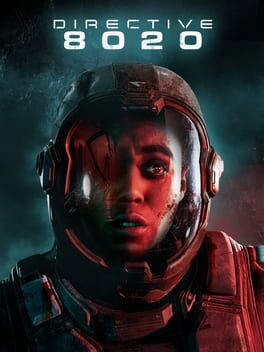
In the previewed section, the game focuses heavily on stealth and risk management. You move through the ship’s corridors while avoiding creatures that may be posing as crew members, with a companion over comms telling you when to hide, which doors to use and when to run. The path is not fully locked down, though: you can explore, take chances and try to escape even after being spotted. There are tools to stun enemies briefly and to trigger distractions through environmental objects, but the window for mistakes is small. What stands out is the way direct control and narrative choice are interwoven, making the game feel closer to a tense survival adventure than a straight interactive movie.
Subnautica 2
Subnautica 2 is one of the biggest releases in this selection in terms of scope and expectation. It is an underwater survival adventure set in a brand-new alien world, designed first as a single-player experience but also supporting online co-op for up to four players. The setup is one of forced relocation: humanity is looking for a new home, but the journey does not go as planned and the mission continues anyway, no matter how unstable everything becomes.
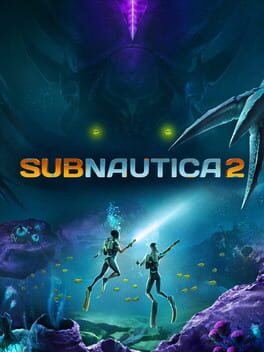
The core loop is still about going deeper, scanning lifeforms, studying ruins and building bases. The Tadpole submarine helps with traversal, while early access is set to expand tools, equipment, vehicles and story over time. Players can choose from four preset characters, with more options and customization available during early access. The game is also open about its current state: bugs, work-in-progress features and performance issues are all part of the package. For series followers, the appeal is obvious; for newcomers, it is a survival game trying to balance wonder, pressure and cooperation without losing its sense of discovery.
That long-term structure is part of what makes it such an important release this week. Even in its current form, Subnautica 2 is framed as a world that will keep growing, with additional biomes, creatures and construction options planned over time. The promise is not just a bigger map, but a deeper set of systems that can support more experimentation and more reasons to return. If the first games were about learning how to survive the ocean, this one looks ready to make the ocean itself feel even less predictable, and that uncertainty is exactly where the series tends to shine.
Outbound
Outbound goes in a very different direction, which is exactly why it stands out here. It is an open-world crafting adventure built around van life, with a slower, more grounded approach to survival. The goal is not to rush from objective to objective, but to build a routine in nature, moving through side roads, points of interest and small practical problems along the way.

Progression revolves around exploration, blueprint hunting and keeping the electric camper van running. You gather materials, repair obstacles, craft tools and install upgrades that improve engine power and battery capacity. The van itself becomes a mobile base, complete with a workbench and equipment to upgrade. The world does not seem to follow a single fixed route: there are detours, trails, signal towers and places that reward patience. The overall tone is closer to a relaxed survival sim than a harsh one, with the pleasure coming from moving, maintaining the vehicle and discovering the landscape at your own pace.
Forza Horizon 6
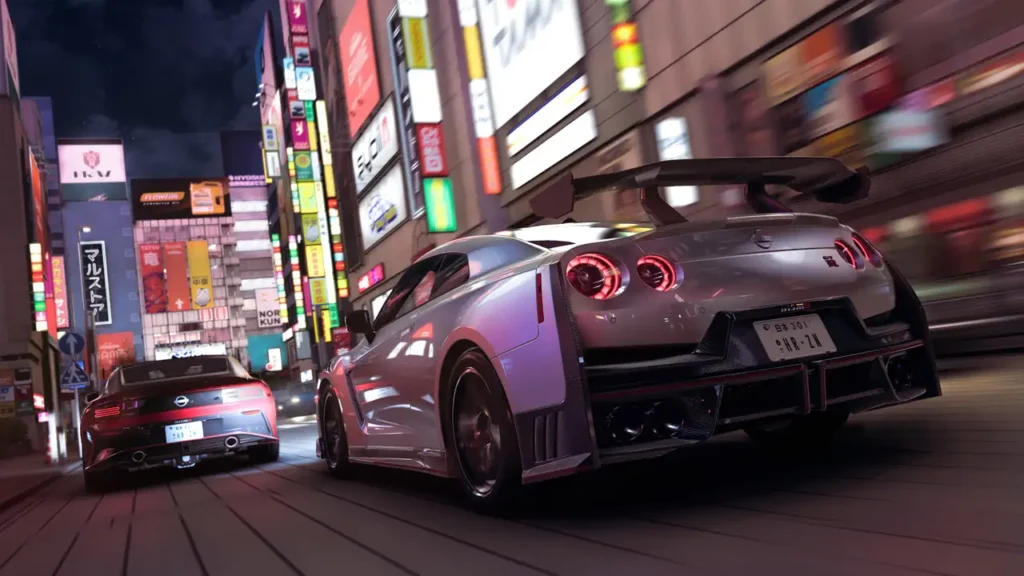
Forza Horizon 6 closes the week with the most immediate pull. The series heads to Japan, with a map that mixes urban areas, rural roads and mountain routes, plus a Tokyo described as the largest in the franchise so far. The car list goes beyond 550 real vehicles, and pre-ordering the Premium Edition unlocks an exclusive tuned Ferrari J50. For this week, though, the key detail is the release window: May 15 is early access for players who pre-order the Premium Edition, while the full launch for everyone else lands on Monday, May 18.

The game leans heavily into variety: standard races, meetups, time attacks, modes such as Eliminator and Hide and Seek, plus EventLab and CoLab for shared creation. There is also a fully playable co-op campaign that follows the player from tourist to Horizon Festival contender. What stands out most is how Japan is used as both a driving playground and a progression framework, from Tokyo’s streets to touge roads, from customizable garages to a valley estate where players can shape their own space. It is the broadest game in the lineup, but also the one whose ambitions are easiest to read: racing, social play and customization, all filtered through a strong Japanese identity.