


Diablo IV: What Critics and Players Think
20 professional reviews cross-referenced with 76,765 Steam user reviews · Steam corpus through 18 September 2026
Diablo IV is not the same game critics reviewed in 2023. Its strongest qualities were already clear at launch: the combat felt good, Sanctuary had recovered the darker identity many players wanted, and the five classes offered very different ways to play. What changed much more was everything built around that foundation. Loot, progression, endgame, seasonal structure and the role of paid expansions have all been revised over time, so the most useful way to read Diablo IV today is to separate what was already strong from the parts Blizzard has spent three years changing.
Consensus map
Where press and players meet
| Aspect | Press | Players | Relationship |
|---|---|---|---|
| Combat | One of the strongest parts of the game | Praised even inside many negative reviews | Strong agreement |
| Atmosphere and presentation | Dark, detailed, and technically impressive | A stable strength across three years | Strong agreement |
| Story | From series high point to uneven campaign | Often liked, but pacing and replay value divide opinion | Same strengths, different weight |
| Loot and builds | Promising but disputed at launch | Clearly warmer after major redesigns | Changed over time |
| Open world and dungeons | Ambitious, sometimes repetitive | Freedom for some, chores for others | Same phenomenon, different weight |
| Endgame | A major launch disagreement | Reception changes strongly with updates and seasons | Players divided over time |
| Monetization and expansions | Only partly testable at launch | A major recurring criticism | Mostly a player-side issue |
The player column reflects recurring arguments across the full 76,765-review Steam corpus. Aggregate figures use every review returned in that corpus. The Recommended/Not Recommended flag is not used as evidence about an individual theme.
The core game was already strong in 2023
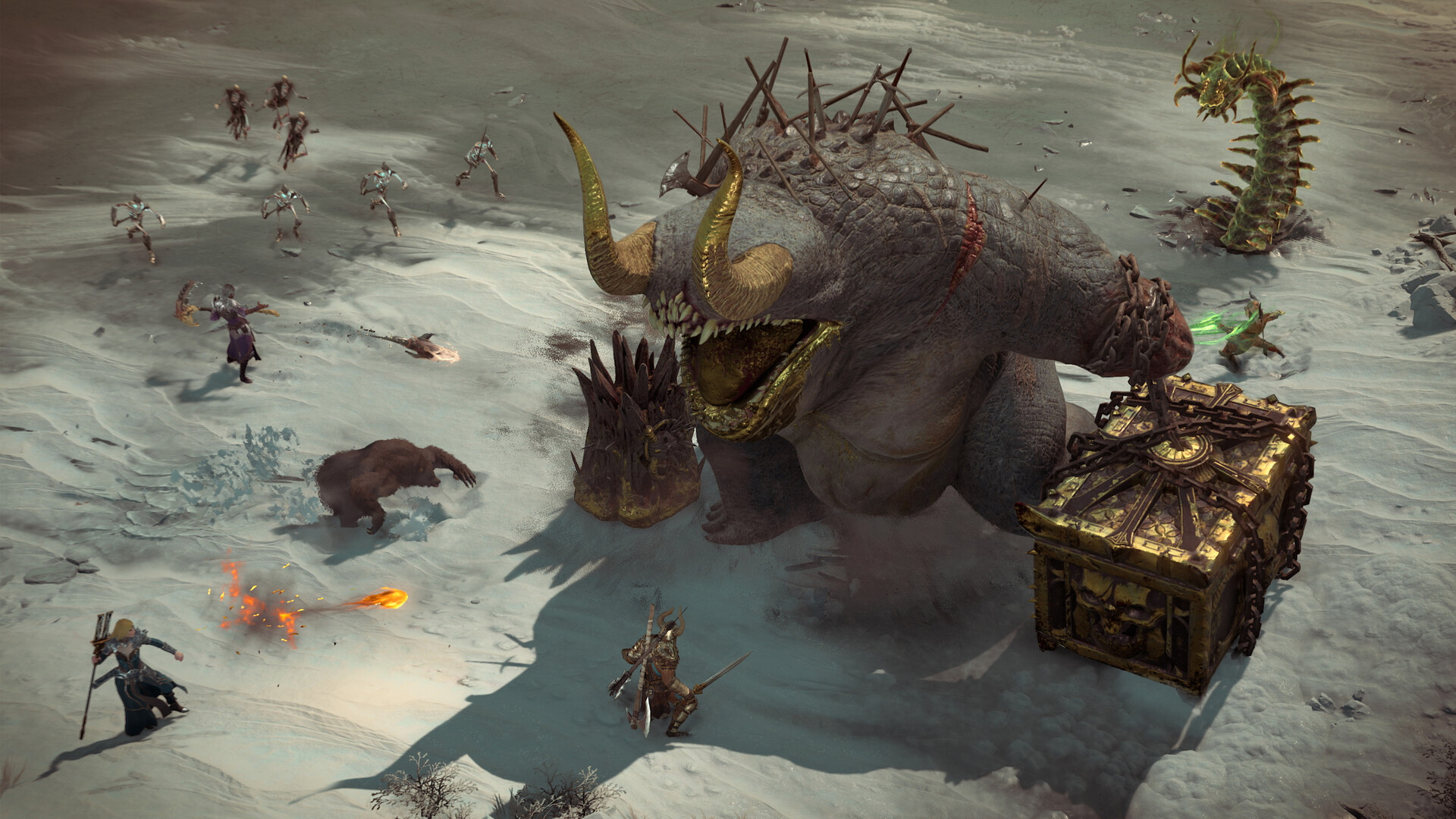
The most consistent part of the launch reviews is also the part that has aged best. GamesRadar+, Gamekult, Everyeye, Inven and several other outlets praised the return to a darker Sanctuary, but the point was not simply that the game looked less colourful than Diablo III. The stronger result came from the way art, sound, music, animation and environmental detail worked together. Towns felt worn down, dungeons looked hostile rather than decorative, and combat had enough weight that even a routine pack of enemies could be satisfying to clear. Three years later, the Steam corpus still returns to the same qualities, including in many reviews that are negative about other parts of the game.
The same is true of the basic combat. Critics disagreed about progression, endgame and live-service structure, but very few argued that controlling a character was the main problem. IGN praised how different the launch classes felt, while GamesRadar+ focused on the strength of the kill-and-loot loop and GameStar found enough variety in combat and character building to support a very long playtime. Steam reviews often make the same distinction in simpler terms: a player may dislike the grind, a season or the business model and still say that fighting groups of enemies feels excellent. That is important because it explains why Diablo IV has been able to recover from weak periods. Blizzard has repeatedly changed the systems around combat without needing to rebuild the combat itself.
The class design gives that combat much of its staying power. Each class starts from a clear fantasy, but the better builds also change how that fantasy is played: a Sorcerer can become a mobile glass cannon, a Necromancer can lean into minions or sacrifice them, and a Rogue can move between close-range aggression and ranged control. Famitsu and GAME Watch both saw this balance between accessibility and depth as one of the game's strengths. Positive Steam reviews often describe the same pleasure without using technical language: find a class that feels right, discover a combination of skills that clicks, and then improve it until ordinary enemies disappear almost instantly. For players who want short sessions rather than a second job, that loop can remain enjoyable even when they ignore the hardest content.
The campaign is less settled, but even here the disagreement is useful. GameSpot treated Lilith and the campaign as a major step forward for the series, while Skill Up praised the darker tone and the way Sanctuary feels like a damaged human world rather than a simple backdrop for demons. IGN liked Lilith too, but felt that the middle of the campaign wandered and that the payoff was weaker than the setup. Steam players show the same split. Some still see the story as one of the best reasons to buy Diablo IV, while long-term seasonal players often treat it as something to finish once and then skip. Both views can be true because a campaign can work well as a first journey without becoming the reason someone stays for hundreds of hours.
Progression was the first major weakness
Once the reviews moved beyond combat and presentation, the picture became much less stable. IGN saw one of the strongest day-one buildcrafting toolsets in the genre, with skill trees, class mechanics, legendary effects, Paragon boards and gear all pushing a character in different directions. PC Gamer also liked the possibilities, but thought the game placed too many limits around them. Respeccing cost resources, level scaling reduced the feeling of outgrowing an area, and the endgame could make experimentation feel expensive just when the player wanted to try a different build.
Skill Up pushed that criticism further and focused on a basic ARPG pleasure: finding something that suddenly makes the character feel much stronger. In the original version, many items were full of small conditional bonuses, so an upgrade could be mathematically better without feeling exciting. Dynamic scaling made the problem more visible because enemies kept following the player's level. The character was gaining power on paper, but the world did not always make that power easy to feel. That does not mean scaling was universally disliked; some players preferred a world that remained usable at every level. The problem was that several systems were working against the simple sensation of becoming stronger.
The early Steam reviews repeat this point often. Diablo IV arrived on Steam in October 2023, more than four months after its original release, so the corpus does not capture launch week directly. It does, however, include many players who had already spent a great deal of time on Battle.net before buying or reviewing the Steam version. Their complaints cover level scaling, too many affixes, costly build changes, slow travel and the feeling that there are many systems but fewer truly good choices than the menus suggest. Some wanted more freedom to experiment, while others simply wanted the game to make useful upgrades easier to understand.
Those differences matter because “progression problem” does not describe one single flaw. One player disliked scaling because an old area never became completely harmless; another accepted scaling but disliked how slowly gear created a clear jump in power. Some enjoyed following a strong meta build, while others disliked feeling pushed toward external guides. What connected these complaints was not a demand for the same solution, but a shared sense that the original progression could feel more complicated than rewarding. This is also the area where the old reviews need the most context, because Blizzard later changed the loot and progression systems so much that several specific complaints from 2023 no longer describe the current game.
Loot Reborn answered many of those complaints
The clearest break with the launch version came in May 2024 with Loot Reborn. Blizzard reduced the number of ordinary affixes, made dropped items easier to read, changed the Codex of Power, added Tempering and Masterworking, and rebuilt Helltide. The important point is that these were not small seasonal bonuses designed to disappear a few months later. The item changes also reached the Eternal Realm, so Blizzard was effectively rewriting part of the base game after less than a year.
The Steam corpus becomes noticeably warmer around the same period. From the Steam release in October 2023 to Loot Reborn, 63.0% of the reviews in this corpus are positive; between Loot Reborn and Vessel of Hatred, that rises to 71.7%. The number alone cannot prove that Loot Reborn caused the improvement, because discounts, returning players, other patches and normal changes in the audience also matter. The review text, however, points in the same direction. Many players who had left earlier describe Season 4 as the moment when loot became clearer, leveling became faster and building a useful character required less time spent comparing small percentages.
That improvement created a new trade-off rather than solving every argument. Diablo IV gradually moved toward faster progression and clearer rewards, which makes it easier to return for a new season and reach a working build without a long period of confusion. Some players love that pace because they can try more classes and spend more time on the endgame. Others miss a slower hunt in which rare items feel more mysterious and a character takes longer to finish. The game is easier to read than it was in 2023, but for part of the ARPG audience that clarity can also make the journey feel shorter.
This is a good example of why the press and the later Steam reviews should not be treated as if they were describing exactly the same product. The launch critics identified real strengths and real problems in the original systems. The players writing after Loot Reborn were reacting to a version that had already answered some of those complaints. The useful conclusion is therefore historical: Diablo IV did not simply receive more content after launch; it spent much of its first years changing the way loot and progression worked at a basic level.
The open world adds choice, but it also adds repetition
The move to a shared open world was one of Diablo IV's biggest changes, and the reviews were divided from the start. GamesRadar+ liked the way regions connect and how public events can bring players together without turning the game into a traditional MMO. Jeuxvideo.com also saw value in exploration, side activities and the Renown system, while Inven thought the larger world still preserved the basic identity of Diablo. From this point of view, the open world gives the player more ways to decide what to do next without changing the combat that sits at the centre of the series.
Other outlets saw the cost of that freedom more clearly. Multiplayer.it praised the game overall but noted that the open world reduces some of Diablo's old immediacy, because more time is spent travelling, preparing an activity or moving through spaces that do not always contain something interesting. GRYOnline.pl described a similar identity problem between the private Diablo experience and the shared world, while Игромания was much more negative about the MMO-like structure. Skill Up liked the idea of a persistent Sanctuary but felt that many side quests, events, bosses and dungeons repeated the same patterns too often.
The Steam corpus makes this criticism even clearer. Repetition by itself is not the issue; repeating content is part of an ARPG. The problem starts when the repeated activity adds time without adding a new decision. Running through another dungeon to activate similar objectives, travelling across the map for a material, or completing another seasonal checklist can make the game feel busy rather than varied. Many negative reviews are not asking Diablo IV to stop being repetitive. They are asking for the repetition to lead more quickly back to combat, better rewards or a new challenge.
Positive reviews often describe the very same structure as convenient. Diablo IV works well in short sessions because a player can log in, run a Helltide, kill a boss, clear a dungeon, improve one item and stop. That rhythm asks for less planning than some deeper ARPGs and can be a real advantage for people with limited time. The disagreement therefore comes from what the player wants from repetition. If the goal is a clear set of activities that can be completed in small pieces, the open world works well; if the goal is to keep discovering new systems and situations after hundreds of hours, the same map can start to feel like a list of chores.
Seasons keep the game alive, but they also reset the relationship
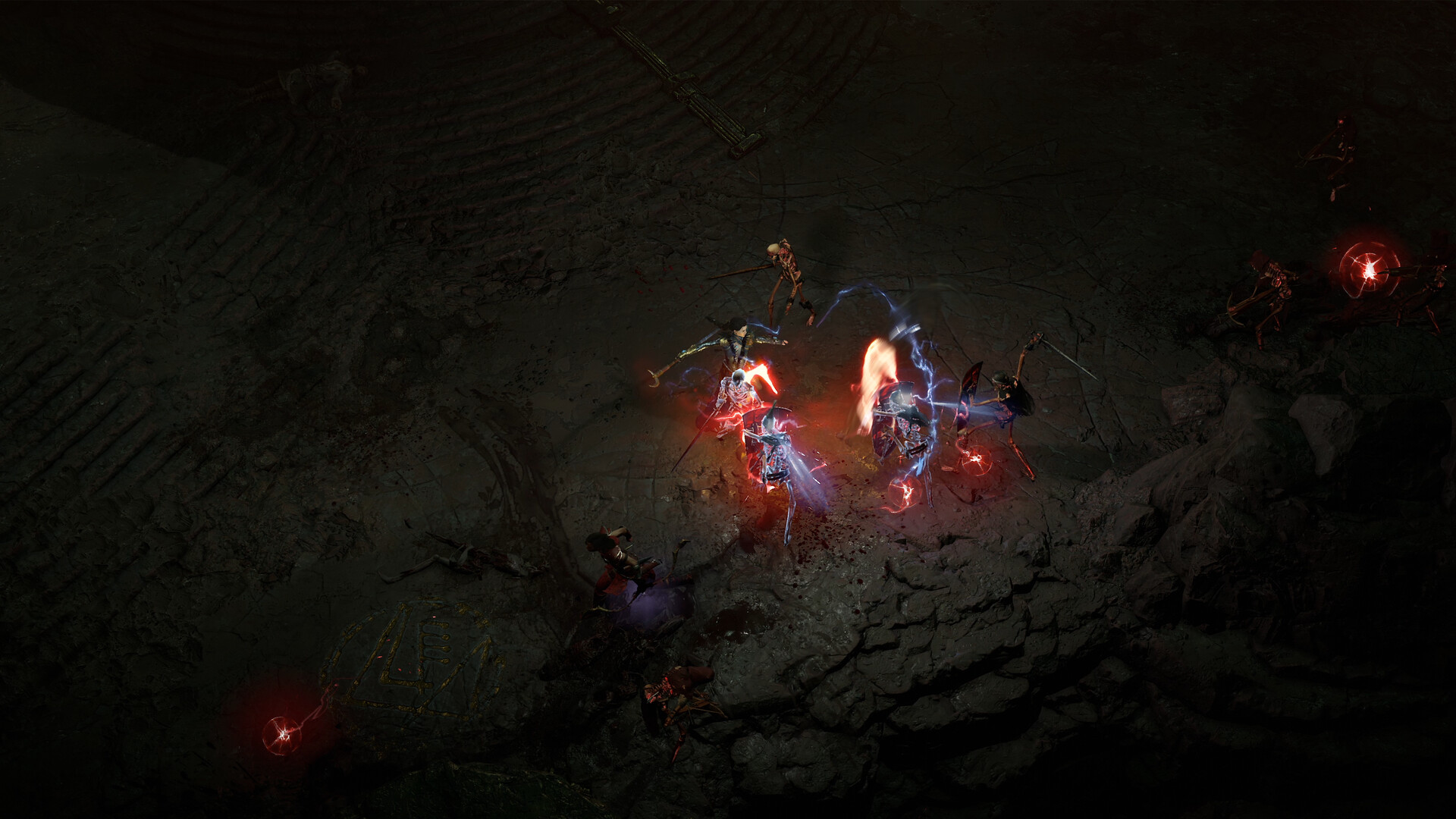
The seasonal model changes the way Diablo IV is judged because it changes the meaning of progress. A new season invites players to start another seasonal character, move through the progression again, try new balance changes or mechanics, and eventually decide when they have seen enough. For many players this is exactly the appeal. They do not need Diablo IV to provide an endless ladder for one permanent character; they want a reason to return every few months, try another class and enjoy the early part of the power curve again.
Other players dislike the same idea because they become attached to the character they already built. The Eternal Realm allows permanent characters to continue, but the newest mechanics, rewards and social attention usually sit around the current season, so some users see the Eternal Realm as secondary. Long Steam reviews often describe this tension very clearly: the player likes the combat and may even enjoy a season, but dislikes feeling that the next season will ask for another restart before the previous character feels truly finished. In those reviews, the problem is not that Diablo IV lacks things to do; it is that the game decides when progress should begin again.
The corpus also shows how quickly the mood can change from one season to another. Some users edit old negative reviews after a strong update, while others keep a positive recommendation but add a later note saying that a new patch or season reduced their interest. The aggregate figures move in the same direction. The positive share is 63.0% from the Steam launch to Loot Reborn, 71.7% from Loot Reborn to Vessel of Hatred, 63.6% from Vessel of Hatred to Lord of Hatred, and 68.6% from Lord of Hatred to the start of Season 15. These periods contain many changes at once, so they should not be read as scores for individual updates, but they show that reception is not stable.
This is one of the clearest differences between Diablo IV and a traditional single-player RPG. There is no single final version that all Steam reviews are judging. A player who wrote in 2023 may have experienced a very different loot system, progression path and endgame from someone writing in 2026, and the same person can change opinion more than once. That makes the history of the reception more useful than a single lifetime percentage: the combat remains the constant, while each season changes the reasons to keep playing.
The endgame is still the hardest part to judge
The launch press already disagreed strongly about the endgame, which is why this question never had a simple answer. IGN considered the day-one structure one of Diablo IV's biggest strengths and praised the route through Whispers, Helltides, Nightmare Dungeons, Capstone Dungeons, PvP and the Paragon system. PC Gamer saw a much more restrictive treadmill. Multiplayer.it delayed its final judgment so it could spend more time with the endgame and still came away positive, while PPE.pl also liked the amount of content available after the campaign. GamePro is particularly useful because its later long-term test lowered the original score once repetition and weaker motivation became harder to ignore.
The difficulty in 2026 is that the endgame has changed too much to judge only through those launch reviews. New bosses, activities, crafting systems, difficulty levels, progression rules and quality-of-life features have arrived over time. Version 3.0, released alongside Lord of Hatred, changed major parts of the base game for everyone, including skill trees, level progression, difficulty structure and the loot filter. Those changes belong to the history of Diablo IV itself even if the expansion's campaign, new classes, region and paid systems deserve a separate review.
Some specific launch criticism is therefore historical. The original World Tier structure, the old Paragon path and the first item progression no longer describe the current game. The broader question has survived every redesign: once a build works, does the game give the player an interesting reason to keep improving it? Negative Steam reviews often say that the answer arrives too quickly, because the next step becomes a longer version of the same material and gear loop. Positive reviews argue that the game works precisely because it does not demand endless complexity and lets players reach a powerful build without turning the process into research.
The current season is too new to settle that argument. Season of Hell's Legacy began on 15 September 2026, only three days before the end of this corpus. It adds returning Prime Evils, seasonal progression, Rebirth, permanent Uniques and further balance changes, so the first reaction is already visible, but there has not been enough time to judge how the season holds up once players reach its later stages. For a live-service game, that distinction matters: a strong first weekend is not the same thing as a strong endgame.
Paid expansions now affect how players judge the base game
Monetization was difficult for the launch press to judge because important parts of the business model were not fully available during the review period. IGN noted that the shop was inactive in its build, while Skill Up explained that the store, battle pass, seasonal content and part of the shared-world experience could not be tested completely before release. Steam reviews have no such limitation. From October 2023 onward, players repeatedly discuss the price of the base game, cosmetic bundles, paid battle passes and the cost of expansions alongside the quality of the combat itself.
Some of those complaints are straightforward. A player buys a full-price game and does not like seeing expensive cosmetic bundles inside it. Other reviews are less opposed to the shop itself and focus instead on the total cost of staying current. A player may enjoy the campaign, the classes and the combat but still feel that the combination of base game, battle pass and expansions asks too much over time. This is why monetization cannot be treated as a separate footnote to the gameplay discussion: in a live service, price and access decide which systems a player can actually use.
The distinction became more important once expansion ownership moved closer to character building. Blizzard's version 3.0 skill-tree overhaul is available to all Diablo IV players, so claims that the entire new skill tree is locked behind Lord of Hatred are too broad. The expansion does, however, add twenty extra transformative skill variants as well as paid systems such as the Horadric Cube and Talisman system. That makes the criticism more precise: the base game still receives substantial free improvements, but some of the most interesting new build options now sit behind an expansion.
The same issue appears in Season 15. Blizzard says that about 15% of the season objectives require Lord of Hatred, including objectives needed to complete Rank VIII and collect every Season Rank reward. This does not mean that a base-game owner cannot play the season, but it changes how complete that seasonal path feels without the newest expansion. Recent Steam reviews talk about this much more than the 2023 press could, because the question is no longer only whether cosmetics are expensive. It is whether the live-service structure makes expansion ownership feel increasingly important to the main game.
Expansion bundles have created another layer of frustration. When Lord of Hatred was announced, its standard package included Vessel of Hatred, and some existing Vessel owners complained that new buyers were receiving more value than people who had already paid for the first expansion. That dispute says nothing by itself about the quality of either expansion, which is why their campaigns, regions and classes should be analysed separately. It does matter to the history of Diablo IV's reception, however, because it changes how long-term players judge the value of staying inside the ecosystem.
Steam also changes the kind of criticism we see
Some of the strongest Steam complaints are not about loot or endgame at all. Diablo IV requires a Battle.net account and a permanent internet connection, so the Steam launch added account linking, authentication and another store layer to a game that was already always online. Early reviews contain many complaints about linking problems, payments, disconnects and the simple frustration of depending on a server even when the player intends to play alone. These problems should not all be treated as permanent technical failures, because individual bugs can be fixed, but the online requirement itself is still part of the design.
Steam Deck reviews make the trade-off especially easy to understand. Diablo IV can work very well as a portable ARPG, and positive reviews often praise the ability to run a dungeon or Helltide away from a desktop. At the same time, an always-online game loses part of the freedom that makes a handheld useful: a weak connection, sleep mode or a reconnect can interrupt the session. Hardcore players have an even stronger reason to care about stability because a disconnect can have consequences that go far beyond a normal lost minute.
The corpus also needs one important explanation. It contains 76,765 unique reviews because the extraction used all purchase types. Of these, 58,794 are marked as Steam purchases and 17,971 are not, which closely explains why the public store count is much lower. Steam's main review score normally focuses on users who paid for the product on Steam, while the full API corpus can also include people who received access in other ways. In Diablo IV's case, some reviews explicitly come from long-time Battle.net players who later arrived on Steam with an opinion already formed.
That makes the larger corpus useful, but it also means it should not be described as identical to the score shown to a new Steam buyer. Steam-purchase reviews in this dataset are 69.7% positive, while the full all-purchase corpus is 65.0% positive. The extraction also kept Steam's default off-topic filter, so review periods identified by Valve as off-topic review-bomb activity are excluded unless that filter is explicitly disabled. In other words, the 76,765 reviews give us a broader history of Steam-facing reception, while the public store score answers a narrower question about direct Steam purchasers.
Reception changes a lot by review language
The language breakdown shows how misleading a single global percentage can be. English is the largest group in the corpus with 26,324 reviews and 68.2% positive. Chinese, after combining Simplified and Traditional Chinese, is almost as large with 20,844 reviews but only 45.1% positive. Russian sits at 69.1%, while Portuguese, Spanish and Turkish are all above 80%. Those gaps are large enough to show that the Steam conversation is not equally warm everywhere, but the percentages alone do not tell us why.
Review language is not nationality, and it does not tell us where a player lives, what price they paid or which service conditions they experienced. The text makes that caution important. Chinese reviews include complaints about account access, regional service, network conditions, pricing and Blizzard policy alongside the same arguments about loot, classes and endgame that appear elsewhere. Japanese reviews from the Steam release period also contain payment and account-linking complaints that are specific to the platform experience. A language group can therefore become more negative for reasons that have little to do with the quality of combat or the campaign.
The chart is most useful as a map of where the conversation is warmer or colder, not as a final explanation. The detailed reviews still have to tell us what sits behind each number. What they show overall is consistent with the rest of the analysis: Diablo IV has a core that many players enjoy across languages, but the systems around that core — service quality, progression, seasonal structure, pricing and expansion ownership — can change the final judgment a great deal.
Share of positive reviews in the 76,765-review corpus. Only language groups with at least 100 reviews are eligible; the ten largest groups are shown.
Corpus total: 76,765 unique Steam review IDs through 18 September 2026, 65.0% positive overall. Simplified and Traditional Chinese are combined as Chinese; Spanish and Latin American Spanish as Spanish; Portuguese and Brazilian Portuguese as Portuguese. The corpus uses all purchase types returned by Steam and keeps Steam’s default off-topic review filter. Review language does not indicate a player’s nationality or location.