

Fire Emblem: Fortune's Weave: What Critics Think
12 professional reviews · press coverage through 16 September 2026
Critics agree on the most important part: the tactical battles are excellent. They also like the four main heroes, the class system, and the way the separate stories eventually connect. The disagreement is about everything wrapped around those battles. Fortune's Weave is huge, and some reviewers love having so much to do. Others think the world map, recruitment, repeated activities, and very long running time make the game harder to enjoy from start to finish.
Consensus map
What critics agree on
| Aspect | Consensus | Dissent / Weight |
|---|---|---|
| Tactical battles | The strongest part of the game | Very little disagreement |
| Four hero stories | The separate routes fit together well | Some critics saw far more of them than others |
| Length | There is a huge amount to do | Either a major strength or the main source of repetition |
| World map | Travel and planning matter | Useful strategy for some, slow routine for others |
| Dungeons | A clear change from normal Fire Emblem battles | Critics strongly disagree on whether they are worth doing |
| Story and cast | The main characters are well liked | The wider plot gets a more mixed response |
| Presentation | A clear step up for the series | Some areas and menus still look or feel rough |
This is a qualitative summary of the selected professional reviews. It does not average their scores, and this press-only edition does not include player reviews.
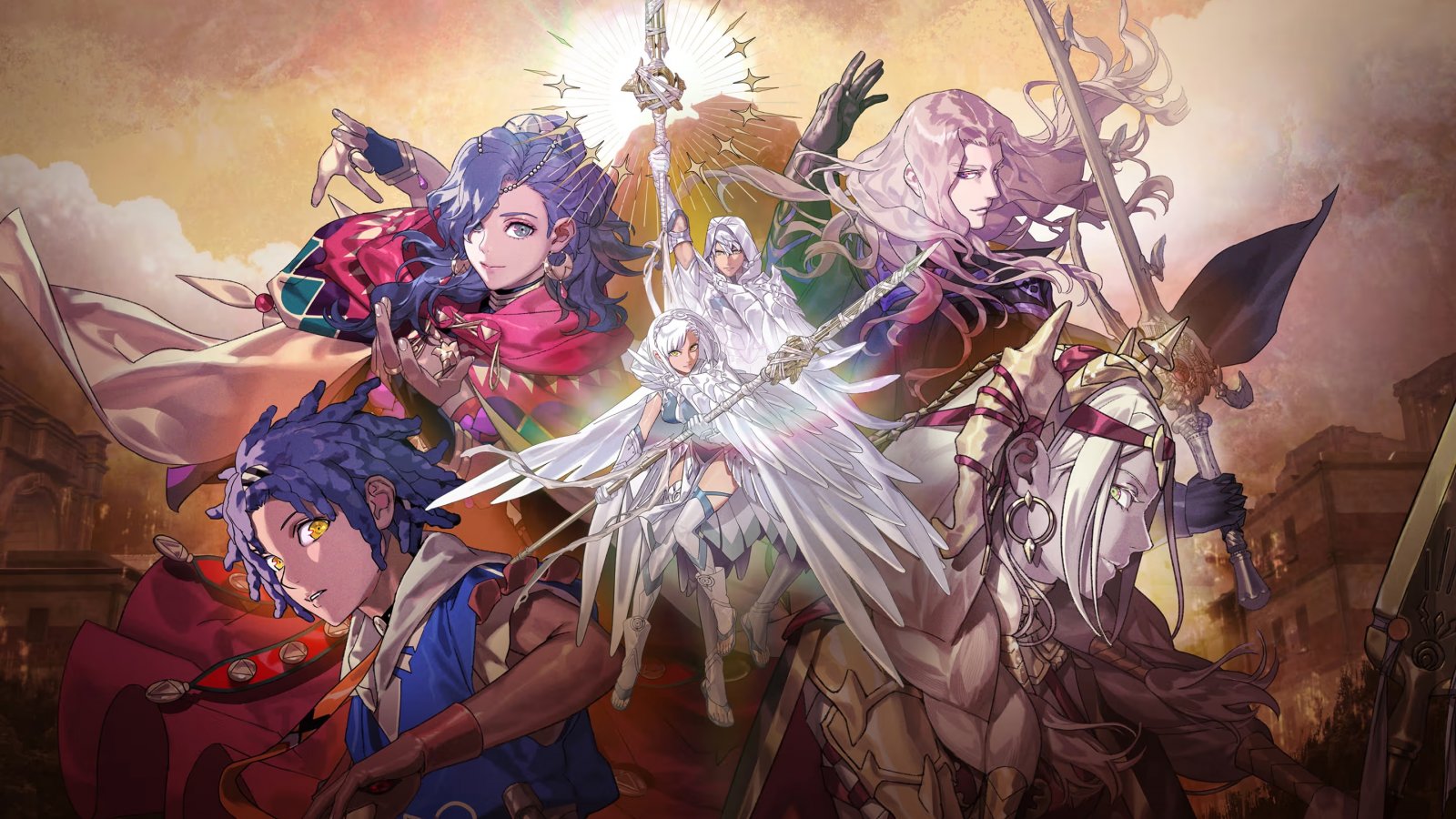
Four heroes, one larger story
Cai, Dietrich, Theodora, and Leda each enter the Heroic Games for a different reason. The player can switch between their stories instead of choosing one route and leaving the others for a later playthrough. IGN likes how each route reveals another part of the same conflict. GameSpot makes a similar point: seeing an event again from another character's side often adds useful context instead of feeling like a simple repeat.
The game also makes it easy to move between routes. A timeline hub lets players return to older chapters and keep different versions of their progress without starting a new save from zero. Geeks and Com' sees this as one of the better changes to the Three Houses formula. Famitsu also likes the idea, although it suggests finishing one hero's story before jumping too often between the others.
The main limit is time. Game Informer needed more than 130 hours to reach the credits. RPG Site spent 161 hours and still found the individual character stories stronger than the full plot. The four-route idea is widely praised; the bigger question is whether every repeated activity around those routes deserves the same amount of time.
The battles are the clear highlight
This is where the reviews agree most. Main missions keep asking the player to change plans, split the army, protect positions, deal with hazards, or react to new enemies. Game Informer praises the larger Heroic Games maps, and GameSpot says the best missions work like tactical problems: the game gives you a difficult situation and lets you work out your own answer.
Combat Arts use weapon durability for stronger attacks. Blaze Arts are more dramatic abilities that cost HP and can do things such as hit several enemies, teleport a unit, or buff allies. Using them too much can create another penalty, so they are powerful without being free. Dengeki Online likes how these ideas add new choices without making Fire Emblem feel unfamiliar. ntower also praises the risk involved in using the strongest abilities.
Classes are flexible, characters can learn many skills, and divine Blessings add another way to recover from bad situations or prepare for difficult turns. IGN says the main missions keep finding new ways to test the player even late in the game. Multiplayer.it, after roughly 160 hours, also treats combat as the game's strongest and most reliable part.
The biggest problem is simply how much game there is
Fortune's Weave can last well over one hundred hours. That is not automatically a problem, but several reviews say the same activities start to lose their value when they are repeated across multiple routes. Meals, gifts, recruitment, travel, training, side quests, and smaller battles all compete for the player's time.
IGN is much more relaxed about this. Its review argues that players should treat the game like a buffet: do the activities that look useful or interesting and leave the rest alone. GameSpot also likes that approach and says the game usually gives enough freedom to choose how much preparation to do before moving on.
Everyeye is more critical. It says the huge number of small tasks can start to feel like administration. ActuGaming also sees the calendar becoming repetitive, while RPG Site says some activities are much less interesting near the end than they are in the opening hours.
Gameswelt is a useful reminder that the reviews did not all cover the same amount of the game. Its reviewer had played more than 50 hours but still felt she had only seen part of it. That makes comparisons about pacing and the final hours less certain than comparisons about the battle system.

The world map adds choices, but also more routine
Between story battles, players move around Dagda on a large map. Travel takes time, so visiting towns, doing side quests, entering dungeons, training units, or returning to the capital all become planning decisions. IGN says this became one of its favorite parts of the game because a trip can be planned around several useful stops. ntower also likes how the four heroes get different abilities on the map.
The system is easy to understand: time is limited, so every detour has a cost. It also connects directly to combat because travel can lead to money, equipment, new recruits, class upgrades, and other useful rewards. Dengeki sees this as one of the reasons Fortune's Weave feels larger than a normal Fire Emblem campaign.
Other critics like the idea more than the execution. GameSpot says moving from node to node can feel clumsy. Multiplayer.it notes that poor planning can waste valuable days. Everyeye is more negative about the repeated errands and resource gathering, especially once the same routine has already been seen on another route.
The dungeons divide the reviews
Dungeons switch to third-person exploration and short turn-based fights instead of the usual grid battles. A small party shares one HP pool, and players choose which unit should attack, defend, heal, or exploit an enemy weakness. Dungeons also contain equipment, materials, and experience.
IGN finds these fights simple but fun in short bursts. GameSpot likes them as a break from the main missions. ntower says they became more enjoyable over time, and Dengeki thinks they still use enough Fire Emblem ideas to fit the rest of the game.
Game Informer is much less convinced and says the dungeons never become especially interesting. Geeks and Com' also finds them shallow. Multiplayer.it says the system becomes easy to automate or skip later on, and ActuGaming clearly prefers the larger tactical maps. Unlike the debate about game length, this is a real split over whether the feature itself is good.
The characters are stronger than the full plot for some critics
Dagda mixes ancient empires, fantasy, gods, and a ruined science-fiction future. GameSpot likes this unusual mix, while Game Informer praises the setting, music, and mythology. The four main heroes also receive strong reviews because each route has its own goal, tone, and supporting cast.
The larger story is less consistent across the reviews. IGN is very positive about the way the four routes come together, especially in the final act. GameSpot also likes how one route fills gaps left by another. RPG Site is more critical: it likes the character writing but says time jumps and events that happen off-screen make the full story feel less connected. Multiplayer.it also has reservations about the later story and its ending.
The large recruitable cast creates another trade-off. There are many characters to find, but not all of them can be important to every version of the main story. ntower sees this as a weakness and misses some of the deeper support relationships from Three Houses. ActuGaming raises a related issue: later in the game, the four main heroes can lose space as the player avatar becomes more important.
The presentation is easier to praise. Several reviews point to better character models, battle animations, music, and voice acting. The common complaints are smaller: some environments look plain, menus can be crowded, and less important story scenes are not staged as well as the major cutscenes.