

Metal Gear Solid: What Critics and Players Think
11 professional reviews cross-referenced with all 367 written Metacritic user reviews · user reviews through 15 August 2026
Metal Gear Solid is still remembered for what made it special in 1998: stealth, cinematic storytelling, memorable bosses, and ideas that even use the console hardware. Critics and later players mostly agree on these strengths. The main question today is simpler: how well do its controls, aiming, camera, and long dialogue scenes still work?
Consensus map
Where press and players meet
| Aspect | Press | Players | Relationship |
|---|---|---|---|
| Stealth | Fresh and tense; very different from normal action games | Still seen as the heart of the game | Strong agreement |
| Story and presentation | Widely praised, but some critics disliked the frequent interruptions | Mostly praised; some users find it too long or too talkative | Same feature, different weight |
| Controls today | Some complaints about movement and aiming | The most common modern criticism | Much stronger among players |
| Bosses and fourth-wall tricks | One of the game's most original features | Among the most remembered parts of the game | Strong agreement |
| Length | Often seen as too short | Rarely a major problem | Clear contrast |
| AI and visibility | Some critics noticed short enemy sight and other limits | Usually less important than controls | Mostly a press concern |
| Music and voice acting | Strong praise across several markets | Still widely praised | Strong agreement |
The player column uses all 367 written Metacritic user reviews collected for this analysis, from December 2010 to August 2026. It covers the written reviews available when we extracted the data, but it does not represent every person who has played the game.
Stealth still holds the game together
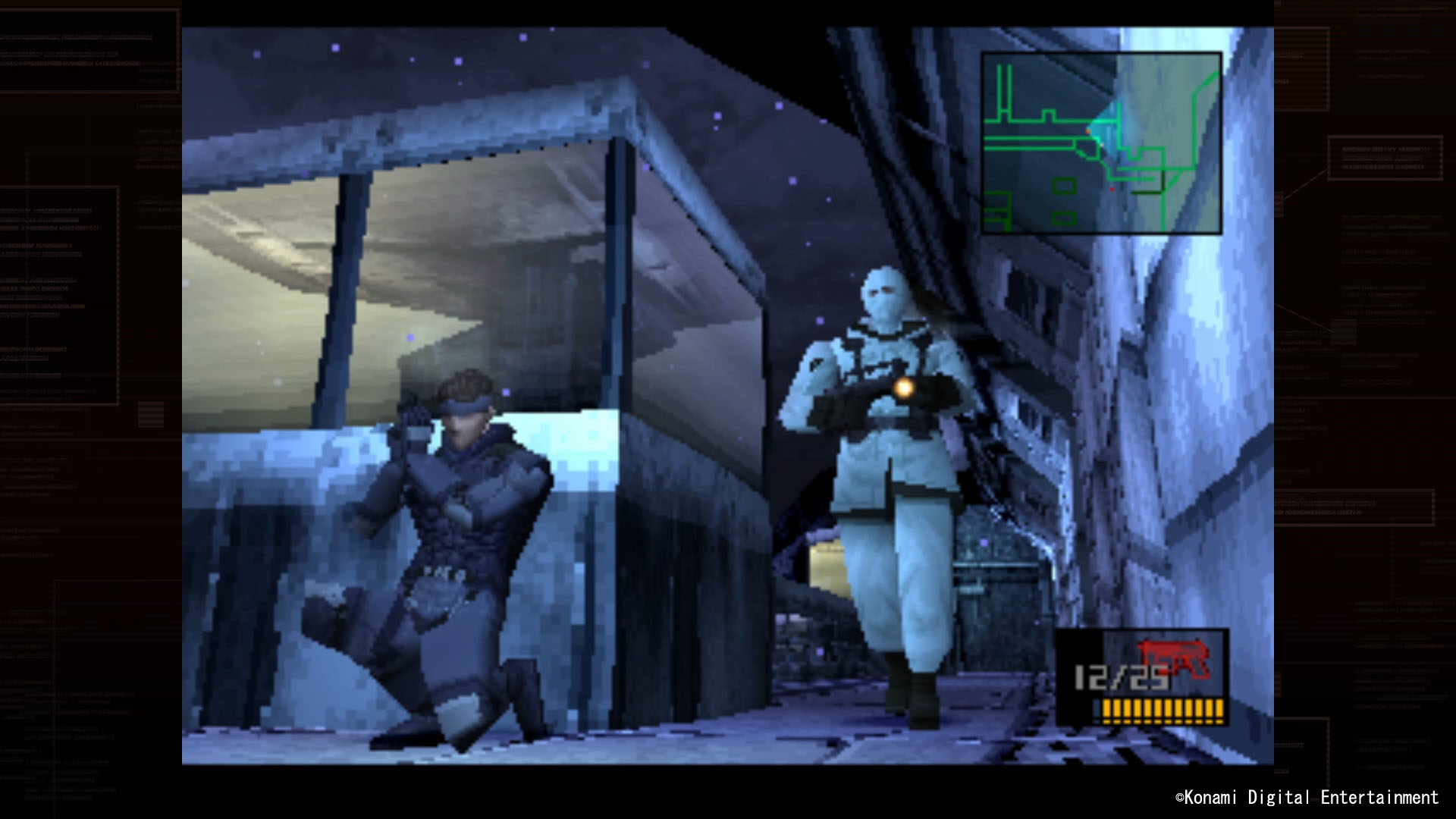
The clearest point of agreement is simple: Metal Gear Solid is about avoiding danger, not winning every fight. GameSpot, Gamekult, MANIAC, and Edge all describe the same basic rhythm. Watch the guards, find the cameras, use cover and sound, then move when the route is safe. When an alarm starts, the goal becomes escaping and hiding.
Later players still like this structure. Many Metacritic reviews say the stealth is simple by modern standards, but also easy to understand. The cardboard box, chaff grenades, mine detector, thermal goggles, vents, and noise all have clear uses. Several first-time players say the game started to click once they stopped treating it like a shooter.
The old top-down camera helps here. It can feel awkward in combat, but it gives a clear view of rooms and patrols during stealth. The system is less flexible than later stealth games, but its rules are easy to learn.
The biggest disagreement is about the guards. GameSpot criticises their short field of view and how quickly they return to normal after an alert. Edge and Computer and Video Games notice the same limits, but see them as useful compromises. Metacritic users rarely focus on enemy AI. When they say the game feels old, they usually blame the controls instead.
The debate over cutscenes never went away
The press was already divided in 1998 and 1999. GameSpot liked the story and presentation, but thought the game stopped too often for cutscenes and Codec calls. GameRevolution made a similar point. On the other side, Gamekult, SpazioGames, Edge, CVG, and IGN saw this mix of game and cinema as one of MGS’s biggest strengths.
The 367 user reviews are also mostly positive about this side of the game. Story, atmosphere, voice acting, and the spy-thriller tone are often praised. Many later players say the story still works even when the graphics and controls feel old. Users also often mention themes such as nuclear weapons, genetics, war, identity, and manipulation.
The old criticism is still there. A smaller group of users finds the dialogue cheesy, too long, or too eager to explain everything. Some like the story but still feel passive during long Codec calls. Others mainly dislike the long speeches after boss fights or near the ending.
That old debate still matters. The technology has aged, but the question is the same: are the long story scenes part of the experience, or do they interrupt the game too much?
Controls are the part that has aged most
This is where modern players add the clearest new point. GameRevolution already found some movement and shooting awkward, and OnPSX later mentioned visibility problems. Metacritic users make this much stronger. Aiming, turning, sniper controls, forced combat, and the fixed camera are the most common reasons people give when they say the game is hard to enjoy today.
First-time players are split. Some say the controls feel strange at first, then become natural. Others find them clumsy enough to hurt the whole experience. Several mixed or negative reviews say some boss fights are difficult for the wrong reason: the player is fighting the controls as much as the enemy. Sniper Wolf and the final fight with Liquid are mentioned often.
Many players also defend the controls by putting the game in its 1998 context. They argue that expecting a modern camera or aiming system is unfair. Some even say the limited controls fit the small spaces and simple stealth rules. That does not make the controls easier for everyone, but it explains why players disagree so much about them.
The graphics cause less disagreement. Even players who call the models blocky usually accept them quickly. The cold colours, snow, industrial rooms, music, alert sounds, and voice acting do most of the work. The atmosphere has aged better than the raw graphics.
The bosses are remembered for their ideas
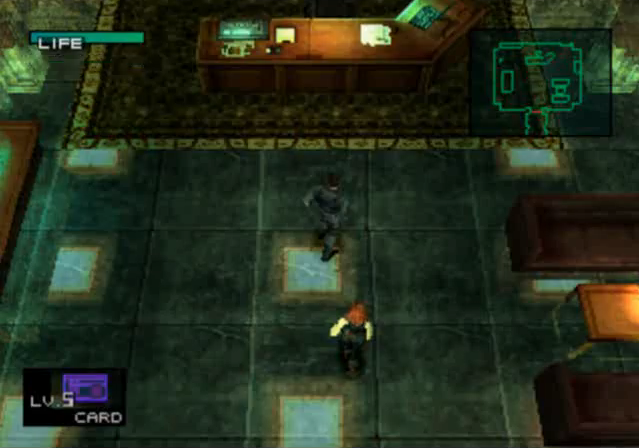
Critics in several countries praised the way bosses change the rules. Psycho Mantis is the clearest example. Sniper Wolf turns the game into a sniper duel. Ocelot changes the rhythm around his revolver. Vulcan Raven makes space and explosives the main problem. Edge sees this constant change as one of the reasons the game stays interesting until the end.
Metacritic users are especially enthusiastic about the fourth-wall tricks. Psycho Mantis reading the memory card, changing the controller port, checking the back of the case for a Codec frequency, vibration, and the torture scene are mentioned again and again. For many players, these ideas are as memorable as the stealth itself.
There is also a modern criticism. Some users love the ideas but do not enjoy playing several of the fights because aiming and movement are limited. Ocelot can feel like a chase around a square room. The tank and helicopter can feel awkward. The second Sniper Wolf fight is sometimes blamed more on the rifle controls than on the boss itself. In these cases, the idea has aged better than the controls.
Even so, players strongly agree with the press on one point: MGS keeps surprising you. Its most famous moments are memorable not because they are complex, but because simple mechanics are used in unexpected ways.
The short campaign bothered critics more than players
Length was one of the most common complaints in reviews from the time. GameSpot, GameRevolution, Gamekult, SpazioGames, and CVG all describe Metal Gear Solid as short or shorter than expected. Gamekult puts a normal run at around six to eight hours. Other estimates vary depending on how much dialogue is watched and how well the player knows the game. Jeuxvideo.com is the clear exception and judges the length much more positively.
Metacritic users care much less about this. Some still say the campaign is short, especially if cutscenes are skipped, but it is rarely the main reason for a negative review. Replays, the Meryl and Otacon outcomes, unlockable equipment, harder difficulty settings, secrets, and VR content are often mentioned as reasons to play again.
This is a real difference between critics and later players. In 1998 and 1999, reviewers were judging a full-price release and expected a certain amount of content. Later users are more likely to see MGS as a compact classic. The same length therefore matters less to them.
Backtracking is a more lasting criticism. OnPSX and some users mention the trip to get the PSG-1 and the PAL key sequence as slow parts of the second half. It is a real weakness, but not enough to change the overall view of the level design.
A classic judged by two different standards
The most useful part of the Metacritic corpus is the difference between nostalgia and first-time play. Some users grew up with Metal Gear Solid and see it as one of the games that defined PlayStation. More interesting are the people who played it for the first time twenty or more years later and still enjoyed the story, stealth, atmosphere, and hardware tricks.
Those new players do not agree with each other. Some say the game feels surprisingly modern once they learn the controls. Others find it frustrating. This is why both “it aged well” and “it aged badly” appear often in the same corpus. Usually they are talking about different things: the ideas and structure have aged well, while the controls and presentation can feel old.
The press had already started the same debate. GameSpot questioned enemy perception, pacing, and the amount of story. IGN saw almost no conflict between technology and gameplay. CVG noticed short length, simple guards, limited controls, and repetition, but gave those flaws little weight. Later user reviews mostly continue the same discussion.
What has survived best is the game's identity. Even critical users usually recognise MGS as something unusual: part stealth game, part spy story, part technical showcase, and full of tricks that use the controller, memory card, game case, and television as part of the experience.