


STAR WARS Zero Company: What Critics and Players Think
16 professional reviews cross-referenced with the first 500 Steam user reviews ranked by helpfulness · Steam data through 15 September 2026
Critics and Steam players mostly agree on what STAR WARS Zero Company does well. It has a likeable squad, strong Star Wars atmosphere and a combat system that gives Jedi, Mandalorians, clones and droids distinct roles. The main disagreement is about depth. Some see its faster turns, Bonds and flexible character builds as a smart update of XCOM. Others think the smaller maps, lighter management and more guided campaign make it less demanding than its main inspiration. The rough PC launch also affected early opinions, although Patch 1.1 has already fixed several serious problems.
Consensus map
Where press and players meet
| Aspect | Press | Players | Relationship |
|---|---|---|---|
| Star Wars identity | Very well connected to both story and combat | Atmosphere and use of the licence are often praised | Positive consensus |
| Characters and Bonds | One of the clearest strengths | Companions are a major reason to stay invested | Positive consensus |
| Tactical depth | Strong combat, but opinions differ on how much it changes XCOM | Split between accessible and too simple | Players divided |
| Difficulty | Can become demanding, especially at higher settings | Veterans often find it forgiving; others report hard spikes | Different experiences |
| Mission structure | Some excellent missions inside a more familiar structure | Memorable scenarios mixed with repeated objectives | Broad consensus |
| Technical state | Clearly rough at launch | A major launch complaint, but not equally severe on every PC | Launch consensus; patches matter |
The player column reflects a qualitative sample of 500 public Steam reviews ranked by helpfulness; the percentages shown later use complete Steam totals by review language.

A Star Wars story built around its crew
One of the clearest strengths is the way Star Wars affects the game itself. Jedi, Mandalorians, clones, droids and mercenaries do not simply look different: they fight differently too. IGN sees this as one reason Zero Company develops an identity beyond its obvious XCOM roots. PC Gamer is even more positive about the mix of tactical combat, cinematic presentation and an original Clone Wars story.
The squad itself earns more consistent praise than the main plot. Hawks sits somewhere between a player-created hero and a fully written protagonist, while the main companions have their own histories and personal missions. Skill Up sees this as one of the game’s biggest strengths and compares the focus on companions to games such as Mass Effect. Game Informer is cooler on the wider story, but still finds the combat strong enough to carry the campaign.
The Steam sample shows a similar pattern. Players often praise individual squad members, voice acting, conversations at the base and the feeling of building a small mercenary team. Opinions on the main story are less stable. Fathom and the Coil work for some players, but many find them less interesting than the characters fighting them.
GameSpot makes a similar distinction: the squad creates a strong emotional link, while the Coil is a more ordinary threat. Skill Up is much more enthusiastic overall, but also finds Fathom less memorable than the larger Clone Wars events happening around Zero Company. The story is at its best when it stays close to the people in the squad.
How much does it really change the XCOM formula?
The connection to XCOM is obvious. Cover, hit percentages, overwatch and permanent consequences all come from the same school of design, and Bit Reactor includes developers who previously worked on Firaxis tactics games. The real question is how much Zero Company changes that formula.
GameSpot believes it changes enough. Different Star Wars archetypes, flexible character builds and several ways to combine abilities give familiar ideas a fresh rhythm. IGN also points to combat that is faster and more aggressive than the XCOM comparison first suggests.
GamesRadar+ reaches a positive verdict for a different reason. It does not think Zero Company needs to reinvent XCOM. The attraction is simply that a proven formula has been combined with high production values and Star Wars abilities that fit naturally into tactical combat. Gameswelt makes a similar point: the execution is strong even if the basic design is fairly cautious.
Steam players are much more divided. Newcomers to this kind of strategy game often describe Zero Company as clear and easy to understand without being boring. Many experienced XCOM players enjoy the three-action system, the shared Advantage pool and the freedom to change builds. Others miss larger squads, fog of war, more destructible environments, deeper base management and stronger reasons to develop a large roster.
This is why “XCOM with Star Wars” is useful but incomplete. Zero Company uses many of the same ideas, but it puts more emphasis on named characters, personal missions and carefully designed battles than on managing a long and unpredictable war.
The combat opens up as the campaign continues
The first hours do not show everything the combat system can do. Operators gain equipment, Bond bonuses and later a second specialisation, which allows much more flexible builds. Gamekult sees the Bond system as one of the features that gives Zero Company its own identity. Skill Up also stresses that character customisation and mission design become more interesting later in the campaign.
Steam players disagree on how well that growth works. Supporters like being able to change specialisations freely and build teams around Advantage, movement, support attacks or specialist abilities. Critics think too many early upgrades are simple stat increases, while some later combinations become powerful enough to make fights much easier.
Bonds create another tension. The system encourages players to mix different operators because new relationships give permanent bonuses. In practice, four-person squads and strong story characters often push players towards a favourite team. Generic recruits can therefore feel like a welcome option or like a system the campaign does not really need.
Difficulty is just as hard to sum up. Skill Up reports a clear spike before second specialisations become available. Several experienced Steam players instead find Hard or Expert much easier than comparable settings in XCOM. Other players describe tense battles and meaningful injuries at the same levels. Experience with the genre matters a great deal here.
Great missions, but a familiar pattern between them
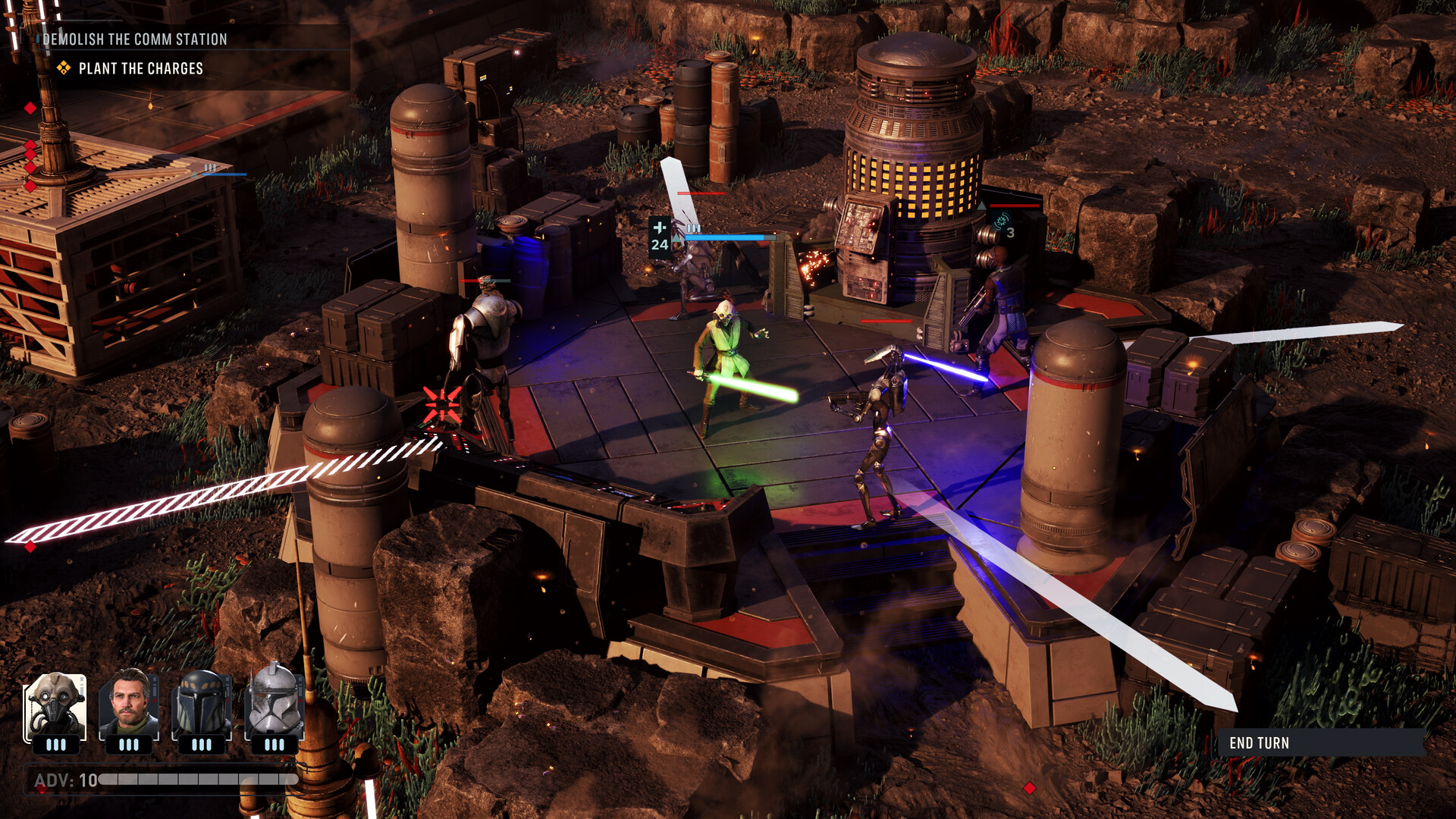
Mission design creates one of the clearest disagreements in the professional reviews. Skill Up considers it a major strength, especially when companion missions introduce unusual enemies or special conditions. Game Informer also praises battles that force players to change their usual plans rather than simply fight more enemies.
Other critics focus on repetition. GRYOnline.pl thinks the campaign runs too long and that some optional activities repeat themselves. iXBT.games also points to repeated side-mission patterns. GameSpot finds that different missions can settle into a familiar sequence of completing an objective, dealing with reinforcements and then escaping.
Steam reviews support both views. Players often remember certain story missions and companion quests as highlights, while also complaining about repeated rescues, sabotage objectives and reinforcement waves between those stronger moments. Zero Company has several excellent hand-built missions, but the structure around them is more familiar.
The short third-person sections before some battles receive similar criticism. Some players enjoy seeing locations from ground level instead of always looking down from above. Others see them mainly as corridors with little to discover. They help the presentation more than the gameplay.
The campaign ends before some systems reach their full potential
Credits, capacitors, Intel, healing and mission deadlines are deliberately limited. That creates choices: players cannot buy every upgrade or complete every mission. For some, this fits the idea of a small mercenary company working with limited resources.
For others, the limits are too strict. Skill Up reports doing a large amount of optional content without earning enough resources to explore much of the base upgrade tree or black market. Gamekult also finds parts of the economy awkward. Similar complaints appear on Steam, where players sometimes reach the ending before they feel they have had enough time to use all the systems available to them.
This leads directly to replayability. PC Games believes different builds, decisions and difficulty settings give the campaign good replay value. PC Gamer agrees that there are reasons to return, but does not see the same long-term freedom offered by XCOM 2. GAMERGEN and GRYOnline.pl place more weight on the limits of a fixed story campaign.
Many Steam players do not reject the campaign length. Instead, they ask for more after it ends: New Game Plus, an endless mode or another way to keep developing Bonds, recruits and the base. Zero Company often leaves players wanting another reason to use systems they already enjoy.
Patch 1.1 fixed major launch problems, but PC performance still varies
The launch version received very similar technical criticism from press and Steam users. PC Games, Gameswelt, GameDonga and iXBT.games all reported combinations of crashes, performance issues, camera problems or broken scripts. Steam reviews add long pauses during animations, Overwatch bugs, softlocks and cases involving damaged or apparently missing Beskar saves.
Several of those problems should no longer be described as unchanged. Patch 1.1, released on 9 September 2026, fixed multiple crashes and visual stutters, Beskar save problems, cases of save corruption after sudden shutdowns, shots missing despite showing 100% accuracy, several Overwatch bugs, camera drift and combat actions that sometimes failed to complete correctly.
That does not mean every PC problem is solved. Performance still varies by hardware, and EA continues to recommend specific graphics settings for some older Nvidia cards. The clearest conclusion is that the launch criticism was justified, but Patch 1.1 has already removed several of the most serious faults.
Share of positive reviews. Only language groups with at least 100 reviews are shown, ordered by review count.
Steam total: 19,812 reviews through 15 September 2026, 82.4% positive. The qualitative analysis uses 500 public reviews ranked by helpfulness. Review language does not indicate a player’s nationality or location.