


The Sinking City 2: What Critics and Players Think
Analysis based on 10 professional reviews and 1,446 Steam user opinions
Press and Steam players converge on a similar picture: The Sinking City 2 is a more focused survival horror than its predecessor, with Arkham, atmosphere, route planning, and resource pressure among its most persistent strengths. In the Steam comments analysed, recurring reservations concern restrictive inventory management, combat stiffness and repetition, and the reduced role of detective work. The main split is not simply positive versus negative: many favourable reviews accept those trade-offs, while returning-player reactions frequently frame the loss of the first game’s investigative identity as the sequel’s defining compromise.
Consensus map
Where press and players meet
| Aspect | Press | Players | Relationship |
|---|---|---|---|
| Atmosphere and Arkham | Distinctive and consistently effective | One of the most recurrent positive themes | Strong positive consensus |
| Survival-horror structure | Tighter and more coherent than the first game | Often welcomed, but the genre shift remains divisive | Broad positive consensus |
| Combat | Functional but stiff and uneven | Improvement is often acknowledged; stiffness and crowd pressure recur | Shared criticism |
| Enemy variety | Too limited for the action focus | Repetition and crowded encounters recur | Negative consensus |
| Investigation | Reduced and often too guided | Its reduced role is repeatedly noted, especially by returning players | Negative consensus |
| Change of identity | Greater solidity versus loss of originality | The same trade-off structures many positive and negative reactions | Main point of disagreement |
The player column summarises recurring themes in the Steam comments analysed, covering 96.75% of the 1,446 user reviews available at the time of the analysis.
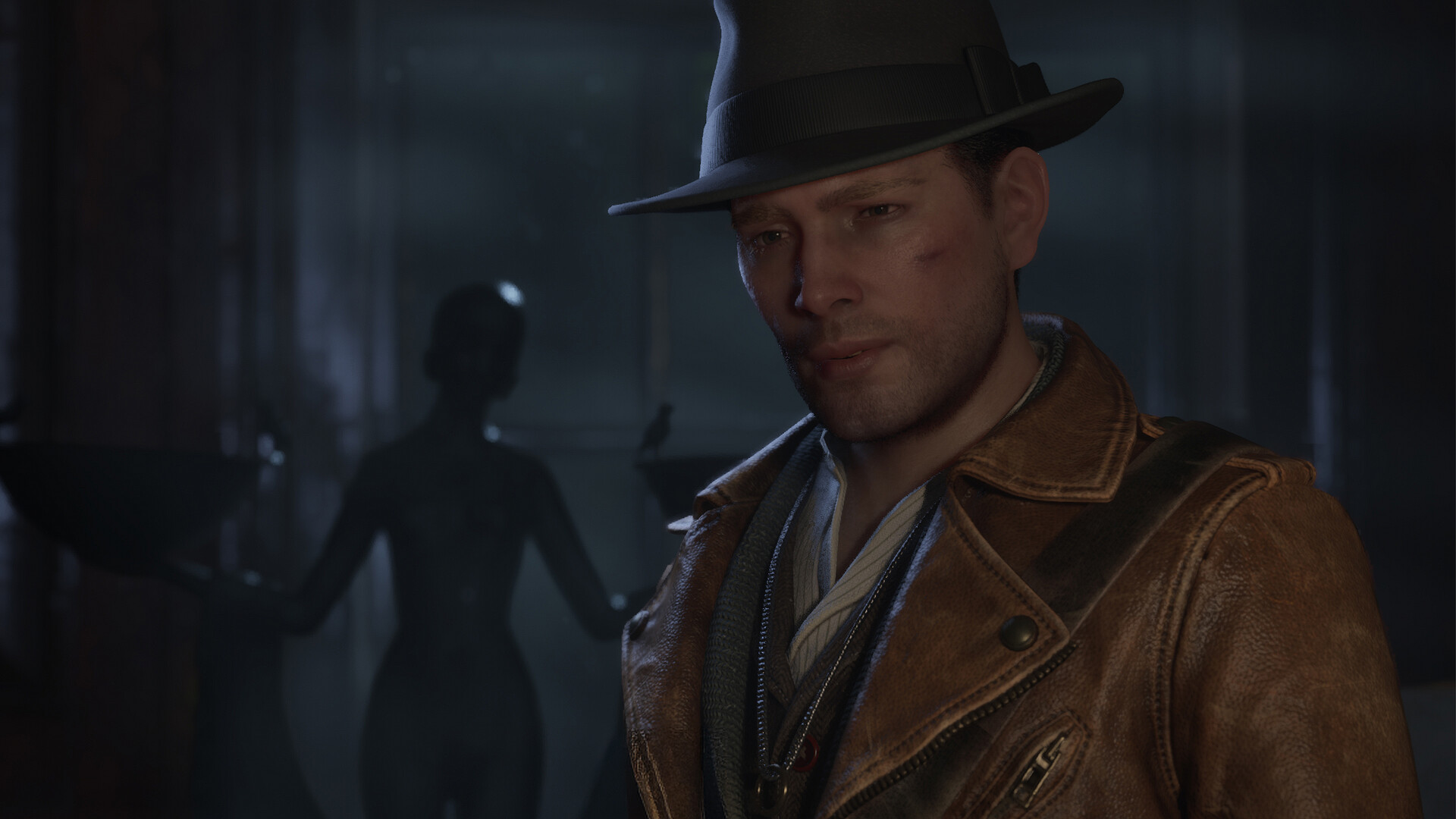
Arkham gives familiar mechanics a personality of their own
The broadest agreement concerns the city itself. IGN describes Arkham as the element that most clearly separates the game from the Resident Evil structure it imitates, praising dense environmental detail, texture work, and sound design. Famitsu reaches a similar conclusion from a different angle: the flooded districts, notes, radio stories, and escalating cosmic implications make the setting feel like an active part of the horror rather than a decorative Lovecraft reference.
Everyeye, GamePro, and Gram.pl also treat atmosphere as one of the sequel’s most reliable achievements. Their praise survives technical reservations about facial animation, water rendering, distant detail, or the visible limits of an AA production. The important distinction is that critics do not confuse visual fidelity with environmental effectiveness: even when individual assets look modest, Arkham’s drowned streets, hospital corridors, fish market, and occult spaces keep the journey recognisable.
In the Steam comments analysed, atmosphere and Arkham are among the most persistent positive themes. Players repeatedly praise the flooded city, environmental storytelling, sound, visual mood, and Lovecraftian references, including in reviews that also criticise combat, animation, or technical roughness. This makes the setting a genuine point of convergence with the professional reviews rather than a by-product of the overall thumbs-up rate.
The story receives a more mixed response. IGN finds an accessible cosmic-horror plot with effective emotional beats, while Famitsu values the way the narrative expands from familiar Cthulhu references into a broader, increasingly incomprehensible threat. Gamekult is much less persuaded, arguing that Calvin and Faye’s relationship, side characters, and staging remain underdeveloped. The disagreement is therefore not about whether the game understands Lovecraftian imagery, but about how effectively that imagery becomes drama rather than atmosphere.
A tighter survival-horror structure also makes the sequel more conventional
The second strong consensus concerns structure. TheSixthAxis calls the sequel much more focused and polished than the original, replacing its open-world detective framework with a sequence of denser areas built around safe rooms, shortcuts, keys, puzzles, limited supplies, and controlled backtracking. Vandal sees that change as a clear improvement in rhythm and tension, while Everyeye emphasises how well the red-and-blue room logic, blocked routes, and unlockable passages support exploration.
GamePro and Gram.pl make the same comparison while stressing how familiar the result is. Manual saving, storage boxes, inventory expansion, crafting, weapon upgrades, colour-coded maps, and persistent pursuers all place the game close to modern Resident Evil. For these critics, familiarity is not automatically a weakness because the systems reinforce one another and produce a coherent survival loop. The question is whether Frogwares has added enough of its own design language once the detective framework is no longer carrying the experience.
The Steam comments analysed confirm two recurring readings of the same structural shift. Many players welcome the Resident Evil-style loop of safe rooms, keys, puzzles, route planning, and scarce resources; others argue that the same design makes the sequel more conventional and less recognisably The Sinking City. Both positions appear inside favourable as well as negative reviews, so a positive recommendation does not automatically mean full approval of the genre change.
The boat exposes the difference between useful concentration and empty connective tissue. TheSixthAxis describes the boating sequences as little more than extended transitions, and Gram.pl likewise regrets that Frogwares has again failed to make water travel mechanically interesting. That criticism matters because the larger levels themselves are usually praised: the problem is not linearity, but the contrast between dense interiors that reward route knowledge and the comparatively thin stretches that connect them.
Combat works well enough to support the game, but not enough to define it
The shift toward action produces a more cautious consensus. Vandal considers the combat functional and suitably tense, especially when scarcity forces the player to decide whether an encounter is worth the ammunition. Gram.pl judges shooting dramatically improved over the first game, with meaningful differences between weapons and a satisfying emphasis on weak points. Everyeye is more guarded: the dodge is so important that it can become an all-purpose solution, while rigid animation sometimes creates situations where correct timing still does not feel fully reliable.
The criticism becomes stronger in PSX Brasil, Gamekult, and ACG. PSX Brasil finds fast enemies, tight corridors, weak melee, and the absence of meaningful stealth or distraction options a frustrating combination. Gamekult goes further, arguing that the new action emphasis is undermined by flat weapon feedback, weak melee, overreliance on dodging, and mandatory arena-style confrontations. ACG’s supplied transcript adds questionable hit detection and inconsistent trap behaviour, while still finding that the alternation between shooting and escape can work well in individual encounters.
In the Steam comments analysed, combat is often discussed as a clear improvement over the first game without being treated as fully polished. Recurring reservations concern weak or risky melee options, slow recovery and hit reactions, aiming or feedback under pressure, crowded encounters, and the friction created when scarce ammunition meets repeated or respawning enemies. Other reviews value precisely the need to disengage, conserve ammunition, and choose which fights are worth taking.
The most consistent problem is not the basic control scheme but repetition. GamePro reports only a very small pool of standard enemies and noticeable miniboss recycling, while Famitsu argues that limited enemy types often reduce later difficulty to crowd management. Gamekult reaches the harshest conclusion because the sequel has made combat central without giving it the variety expected of that role. This is why the same mechanics can be described as competent by one review and structurally insufficient by another: the disagreement concerns weight, not the existence of the flaw.
Puzzles survive the genre change; investigation mostly becomes a reward system
The reviews draw an important distinction between puzzles and investigation. Environmental puzzles are often praised: Gamekult calls several of them one of the game’s stronger elements, Gram.pl lists them among its highlights, and Vandal likes the way documents and environmental clues encourage the player to reconstruct small stories. The criticism begins when the same material is framed as detective work. Connecting related clues on the investigation board is usually optional and grants progression points, but the act of deduction is rarely demanding.
IGN notes that increasing investigation difficulty mainly removes highlighted text and grouping aids without making the underlying deductions substantially harder. Vandal recommends disabling textual guidance because the stronger hints can make solutions feel pre-processed. GamePro considers the clue-board system underdeveloped enough to resemble a leftover from the previous game rather than a core pillar. ACG expresses the same disappointment from the perspective of a player who enjoyed the original investigations: the board works, but too often converts clues into straightforward codes or rewards instead of deeper mysteries.
The Steam comments analysed reinforce the same distinction between puzzles and investigation. Positive reviews can still describe the clue-board mechanics as simplified or secondary, while returning-player reactions repeatedly identify the reduced detective role as a loss of identity. At the same time, other players explicitly welcome that reduction because it keeps the pace closer to a traditional survival horror. The disagreement therefore concerns priorities, not whether the investigative component has been scaled back.
This is one of the few areas where Gamekult’s negative review overlaps almost completely with the more positive sources. Its argument is not that the puzzles are poor, but that calling them investigations overstates what the player is actually doing. The sequel therefore retains Frogwares’ interest in documents, hidden connections, and environmental storytelling while removing most of the uncertainty that once defined the studio’s detective games. For some critics that is welcome streamlining; for others it is the clearest evidence of lost identity.
Resource pressure is effective; inventory friction is more contested
Scarcity is one of the systems most consistently credited with making the new direction work. IGN, GamePro, Vandal, and Everyeye all describe ammunition, healing items, and safe-room planning as sources of tension rather than simple bookkeeping. The game regularly asks whether a fight is worth the cost, and the possibility of retreat gives limited supplies a practical role. Weapon upgrades and inventory expansions then make exploration materially useful even when the detective component is optional.
Inventory management produces one of the clearest mixed reactions in the Steam comments analysed. Many players value scarcity and the need to decide what to carry, but restrictive capacity and repeated returns to storage are also recurrent complaints, including inside positive reviews. The pattern supports a distinction between resource pressure, which often strengthens the survival-horror loop, and inventory friction, which some players experience as tension and others as unnecessary backtracking.
The inventory itself receives a less uniform response. Everyeye considers its limitations part of the survival loop, and Gram.pl finds the small starting capacity manageable because expansions arrive relatively early. PSX Brasil, however, argues that even an expanded inventory remains too restrictive and forces excessive returns to safe rooms. ACG similarly describes a recurring “inventory Tetris” problem in which weapons, ammunition, healing items, keys, and upgrades compete for too little space. The distinction is useful: critics broadly support scarcity, but not all believe that storage pressure creates equally interesting decisions.
Progression has a similar issue of proportion. Famitsu appreciates the map and the incentive to complete areas, but finds that some talent benefits are slow to become meaningful because the stronger options are designed partly around repeated playthroughs. GamePro sees the perk system as simple but functional. These reactions suggest that The Sinking City 2 has enough progression to reinforce exploration, but not enough build diversity to become a major source of identity on its own.
The launch technical picture has already changed, but not every concern is resolved
Technical assessments vary substantially by platform and settings. GamePro reports a strong 60fps Performance-mode experience on PS5 Pro with no meaningful bugs, while TheSixthAxis finds the PS5 Performance preset solid but considers Quality mode impractical because of its frame-rate cost. Everyeye reaches a similar conclusion on PS5: Performance mode is the sensible choice, whereas Quality mode improves image cohesion at the cost of frequent stutter. ACG’s PC review describes playable performance with occasional drops and stuttering, plus inconsistent hit detection and launch omissions including HDR and AMD FSR.
Those launch observations should not be treated as a frozen description of the current build. Frogwares Support lists PC hotfixes 1.0.1 and 1.0.2, with the latter improving some PSO-related hitches, followed by console patch 1.0.1 on 25 August with general performance, optimisation, stability, gameplay, and visual fixes. The studio’s current known-issues page still documents visual and LOD problems, however, so post-launch work has not removed every technical caveat.
Steam comments also show a mixed and time-sensitive technical picture: many players describe smooth or acceptable performance, while others mention stutter, optimisation problems, crashes, or technical roughness. Because those reviews were written across launch and subsequent patches, they are useful as evidence of player experience but not as proof that every reported issue remains present in the current build.
AMD FSR is still listed by Frogwares as unsupported while the studio waits on the required Unreal Engine 5.8 integration. ACG correctly reported HDR as absent at launch; none of the official patch notes checked through 1 September lists HDR support as added, so that criticism should not be presented as resolved. The broader technical consensus is therefore more precise than a simple “polished” or “rough” label: the sequel is far more stable than its predecessor, but presentation quality remains uneven and some platform-specific shortcomings persist.
Share of positive reviews. Only languages with at least 100 complete Steam reviews are shown, ordered by review count.
Language totals were checked again immediately before publication using the same Steam filters. By then Steam had risen to 1,450 reviews; the qualitative analysis is based on the 1,446 reviews available when the player comments were analysed. Review language does not indicate a player’s nationality or location.